
There are numerous rules for tourists in North Korea. The ones around photography are the most complicated, confusing, inconsistent and inconsistently applied. While the rules themselves seem to have been relaxed only very marginally, if at all, since my last visit in 2014 the enforcement of the rules seems not to be as strict – apart from in more remote and less visited parts of the country.
Very few visitors, apart from those who have no camera, make it through a tour of North Korea without being counselled on their photography – or rather, being told off for taking a photo when they should not have. Yes Dear Reader, The Rambling Wombat was reprimanded on two occasions in 2014 and once in 2018 but has lived to tell the tale, as you too would.
This entry is aimed at giving you the jist of the rules around photography. You will need to take the advice of your tour company before you go and that of your guides, the army, etc when you are there.
Your camera – officially no lens size of greater than 150mm can be brought into North Korea. This rule is routinely flaunted and not enforced but be warned it does exist. If a camera or other electronic gear is confiscated it is returned to you (no penalty) when you leave the country.
As many people now use their mobile phone as a camera a short note on mobile phones and there use in North Korea is warranted here.
Mobile Phones
Mobile phones can be brought into the country though are specifically recorded on entry. This is presumably done to ensure that you take the phone out with you when you leave though there appeared to be no checks at the airport in this regard when I departed.
While phones can be brought in, unless you buy a North Korean international SIM card, you will not be able (apart from at the northern and southern borders – another story!) to use it to connect to the internet or make phone calls. There is no roaming in North Korea – on your phone or otherwise!
Foreigners who buy a North Korean SIM Card (available at Pyongyang airport but very expensive at US$ 200 plus high usage charges) can use it to access the Internet and make international calls to all countries except South Korea. Be warned though that coverage is very limited outside Pyongyang so because of this and the cost very few tourists buy a card. The other little quirk is that if you have an international SIM card it cannot be used to make local calls. For me, and indeed for most people, one of the great things about being in North Korea was being able to have a complete phone/internet detox for the duration of my stay. For those who really want to, or need to, phone overseas, calls can be made from many of the hotels used by foreigners. The cost of using the hotel phone system (not the ones in your rooms) in 2014 was extortionate. By 2018 the cost had fallen dramatically but still not to a level where you would want to be spending hours on it.
Of course, the average North Korean is prohibited from making international calls or accessing the internet, full stop. Their locally issued SIM cards only give them access to the North Korean Intranet and lets them make local calls to other local SIM card phones.
Prior to going in in 2018 I sought advice, from my tour company guide, as to whether bringing in Samsung devices (from South Korea) was permitted. He confirmed that there was no issue bringing in South Korean phones adding that today (unlike in 2014 when taking in phones was not permitted) immigration was actually more suspicious of people who did not take in a mobile phone…. How times change.
Photography Rules (mainly prohibitions)
No photography of the military or military installations or equipment. This is probably the most important rule. Given the number of soldiers everywhere it is often hard to take photos without getting one or more in your shot, especially if you are using a wide angle lens. There is one exception to this rule and that is that photography of solders within the Demilitarised Zone on the border with South Korea is permitted – though they don’t like you sticking your camera in their face – who does? This is a rather surprising exception which exists (my assessment) because photography is very restricted for visitors from the South side. The basic rule for a lot of things in the DMZ (especially in the Joint Security Area) is that if it is restricted on the South side, it is permitted or encouraged on the North side – good old propaganda at play.
Be warned that military installations specifically include highway checkpoints. This is a particularly sensitive point and when we approached checkpoints our guide would announce the same by calling out ‘checkpoint’. When this occurred not only were photos not permitted but cameras and phones were to be lowered such that they could not be seen from outside the bus. Our group fell foul of this rule and we were held, for some time, at one checkpoint on the lesser visited eastern side of the country, a short distance from the DMZ, while guides went through a number of specifically identified tourist’s (reported by local people outside the bus) cameras asking them to delete offending photos. Everyone on the bus was then asked to delete photos taken after passing a certain town in the area and we were (group punishment) prohibited from taking further photos in Mt Kumgang region from the bus. Thankfully, we were permitted to take photos at stops.
No photography of bridges, roads, docks, airports, train stations, construction sites and telecommunication infrastructure. Exceptions to this rule – Pyongyang Airport, Pyongyang train station, and the Pyongyang Underground. Of course where you get to go in these paces is extremely restricted.
No photos within the cabin or from the windows of domestic flights – noting that photos were permitted from the plane for about the first 15 minutes of our Pyongyang to Orang flight. While the rule about not taking photos in the cabin appears to also apply on the Beijing – Pyongyang flight it is not enforced, to the extent that you can take a photo of the famous Air Koryo burger and each other!
In 2014 no photography was permitted from your bus/train window except in Pyongyang. This translated to no photographs of the countryside. This rule had either changed by 2018 or was not being enforced in the more regularly visited parts of the country and ‘general scenery’ photos were permitted. In 2018 a ban on photos from the bus was only enforced in the North East of the country (generally poorer area) and around Mt Kumgang in the South East though the latter was a group punishment as referred to earlier. The general rule (below) about not taking photos of anything that might be construed as painting North Korea in a poor or negative light remains in force.
In 2014 no photos were permitted in the dining car on the train out of North Korea – rather ironic given that the food on the train was, in 2014, of the most generous portions we received in North Korea and of the highest quality. I am not sure as to the current status of this rule as I flew out of the country in 2018 though I do know that external photos from the train (other rules e.g military, stations referred to in this review still apply) were permitted.
No close-up photos of people without their permission (fair enough). Locals are generally shy when it comes to tourists though significantly less shy, at least in Pyongyang, in 2018 than they were in 2014. The only instance I found when North Koreans actively seek out to be photographed with tourists is when they are getting married. In Sinuiju (on the Chinese border), on a short walk in the local park in 2014, six or more bridal parties asked me to join them in their wedding photographs.
No photos of statues of the Leaders except for those taken face-on and with the full statue in the frame. You can have your picture taken with the Leaders’ statues but you must stand respectfully in front and under no circumstances are you allowed to use a selfie stick. Correctly taken photographs of statues of the Leaders are very positively encouraged and guides would be surprised if you didn’t want to take lots. One regressive change, very erratically enforced, which I did notice in 2018 is that we were often forbidden to take photos of photos of the Leaders, invariably giving on-the -spot advice or guidance to someone or various groups. Such photos are often enlarged and displayed in foyers of schools, factories and other public buildings in addition to being on display in museums, etc.
No photography of people going about their daily lives. This rule is used to ban the taking of photos of people engaged in heavy manual labour, carrying heavy loads, using horses and carts, manually weeding crops, manually maintaining roads and the like – typical scenes you would encounter in poorer countries anywhere in the world. This rule is closely related to the next two rules.
No photos permitted of anything that might be construed as painting North Korea in a poor or negative light – this I found out in 2014 includes taking photos of an antiquated trolley-bus breaking down in the middle of Pyongyang sending sparks flying everywhere from the powerlines.
No photography of poverty (not that any exists!). This includes children sweeping streets or weeding grass verges.
No photography in the Kumsusan Palace of the Sun (Mausoleum), inside the International Friendship Exhibition in the Myohyang-san mountains or inside some museums and galleries. You must leave your camera/phones etc. in the cloakroom. This, of course, is consistent with rules in similar places elsewhere in the world.
No photography in other places where it is expressly prohibited or where your guide tells you its not permitted.
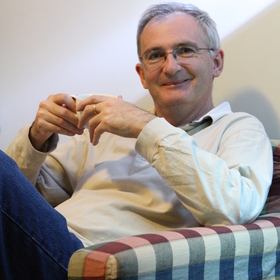
You are free to take photographs of anything else! My, rather tongue in cheek, picture accompanying this review is perfectly permissible unless of course I were to suggest it was of a dinner scene just after the lights went out – which of course it is not – or is it?
Photography in Practice
The rules above (except close-ups of soldiers unless you have a zoom lens) are routinely ignored/breached by tourists, often quite deliberately to stir a reaction from guides.
Interestingly I found that I took photos of the strangest/most mundane of things – things I wouldn’t even dream of photographing anywhere else – just because I could!
Bring in lots of memory for your camera/phone as, notwithstanding the rules, I still managed to take thousands of photos and also because memory cards are not available for purchase within North Korea.
You will not get into serious trouble or be imprisoned for taking an incorrect photo (unless you are a journalist in which case – with a few very isolated exceptions – you should not be in the country in the first place). You may be asked to delete photos at the time or later when you leave the country, especially if exiting by train. While my photos were not inspected when I exited by train in 2014 (granted, after a stopover in Sinuiju) I later heard of one lady who was asked to delete nearly 50% of her photographs. When exiting by plane in 2018 I could see no evidence of any checking of photographs (or anything else outside routine security checks you find in any airport, for that matter) at Pyongyang airport.
Apart from being asked to delete photos there is one important downside to regularly breaking the rules around photography whether you get reprimanded or not (as your activity will be noticed). This is that you will loose the trust of your guide who is personally responsible for your behaviour. This not only impacts on you but the remainder of your group as guides will restrict what the group sees and where you get go if they feel even one member of the group cannot be trusted. Not a good way to make friends with your fellow travellers!
By way of conclusion, act responsibility and consider the potential impact on others, including your guides, before you take a photograph in North Korea.
My next North Korea 2018 – General Review – HERE
Return to the beginning of my North Korea 2018 – General Review –HERE
 The Rambling Wombat
I didn’t know you can take a mobile telephone into DPRK now; that’s very interesting. Your post brought back memories of my visit and our guide telling us not to take photos of a car broken down on the highway – the only car we saw on the highway by the way.
LikeLiked by 2 people
Wow.. didn’t realise you were there. When was that? Like I wrote somewhere they are now more suspicious of people who don’t bring one in !
LikeLiked by 1 person
Our big no-go for photography was oxen – no ox carts, no oxen ploughing. We tried to tell our guides that these were commonly used in many countries in Asia and wouldn’t necessarily be taken as a sign of poverty or lack of progress, but they are very sensitive to the fact that one of the Kims (I forget which – Albert may know) had declared that all farming would be mechanised by now, and it isn’t, so we all had to pretend that it is by not photographing any evidence to the contrary 😉 There was a purge on our images while in Chongjin in the north east, where rules were more strictly enforced, and we had to delete any such photos from our memory cards as they were likely to be searched at the airport – they weren’t btw.
LikeLiked by 2 people
I don’t know the answer Sarah but would guess that it was ( it certainly should have been) Kim Jong-il coming out of the 1990s famine. It also could have been Kim Jong-un when he especially focused on the economy via opening it up to limited private enterprise, though this is less likely. While not technically above board, guides turned a blind eye to us taking oxen photos and we were openly taking them in Pujon County and the Hamhung area.. but certainly not further north. What was totally banned for us was photos of humans pulling small carts. The guides nearly lost the plot when we started taking photo of one instance of this in front of the Hamhung Grand Theatre. I have thought long and hard about publishing ox pictures and as you will see I decided to post some in reviews on our trip to Pujon/ Stone River. In the review I explain why I have posted them. Probably not an acceptable reason to NK but a small counter to the many who post these pictures ( and there are tonnes on the net) to denigrate the country or the Leaders. I honestly think that the only way you would be searched in Pyongyang airport on exit is if there was a tip off from the guides or someone else. Unlikely the guides as them not dealing with the issue at the time may reflect badly on them. Also occasional breach of the photo rules not a major crime unless they have some other reason to hold you.
LikeLike
Very good practical advice here Albert, nice work.
LikeLiked by 1 person
A belated thank you for your response Fergy.
LikeLiked by 1 person
Still not as harsh as trying to take photos in Windsor Castle
LikeLiked by 1 person
When I visited Albania in 1984, some people in our tour group had film removed from their cameras left in hotel bedrooms
LikeLiked by 1 person