
Today was another day mainly spent relaxing by the river, in the glorious winter sun. This was after a less than glorious frost last night, though, wrapped up well and using the diesel heater we really only became aware of the cold when we woke up and stepped outside the van before the sun had done its thing.
In addition to sitting back and relaxing, we did manage to go for a drive and had a look around town, the name of which is derived from the black swans that live in this area on the Murray River.
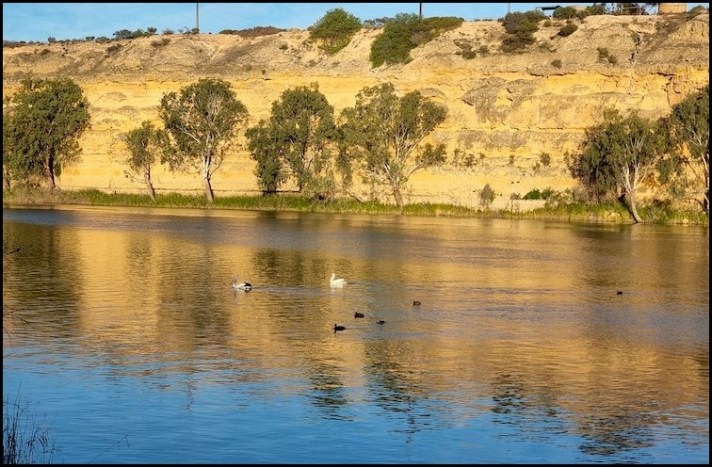
Before heading out for our drive, we had a leisurely breakfast. Who wouldn’t make it a leisurely one with views like these?
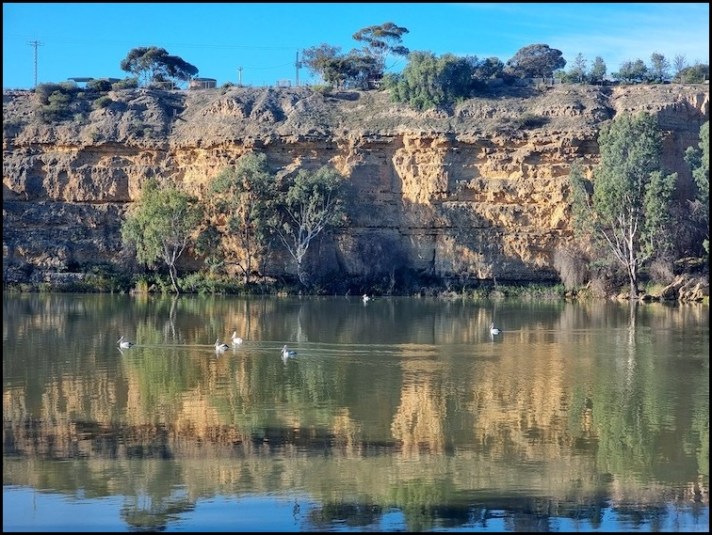
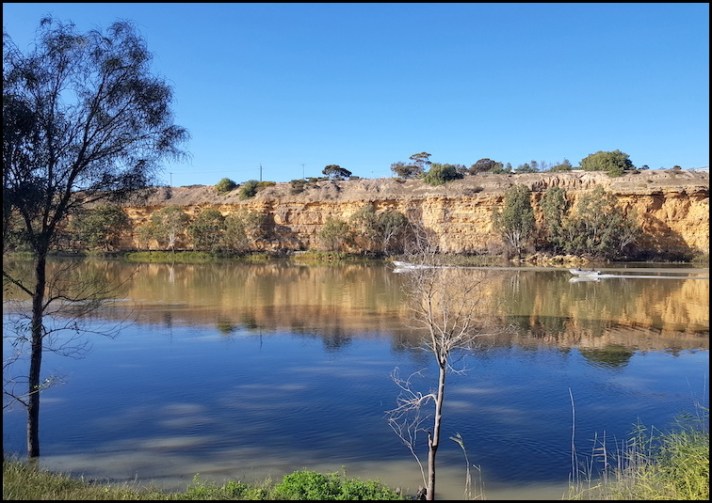

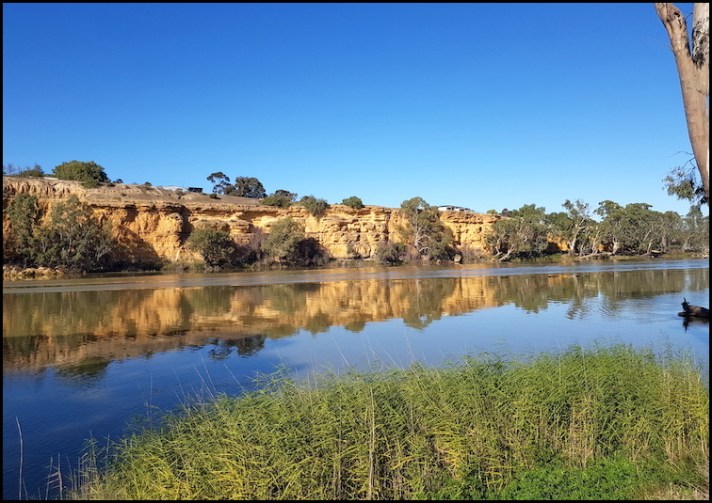
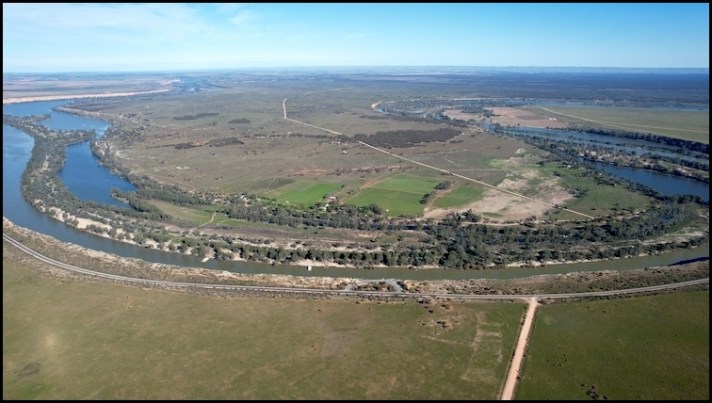
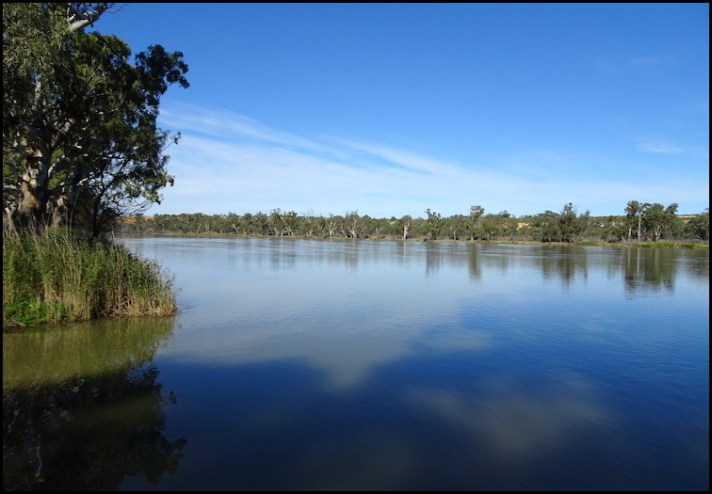
Breakfast finally over, and half the morning gone, we backtracked about ten kilometres towards Murray Bridge to admire the Murray River from Big Bend Lookout, named so because it overlooks a major bend in the river.
A few shots of the ‘bend’ from our drone –


and a couple from the ground –


To further titillate you, I will provide a few facts about the Murray River, which my overseas reader (and most Australians) may not be aware of:
- The Murray is the third longest navigable river in the world, after the Amazon and the Nile. I actually mentioned this in an earlier review as those paying attention will recall! It is navigable for a distance of 1986 kms from Goolwa where it flows into the Southern Ocean to Yarrawaonga on the New South Wales / Victoria border which we will visit later in this trip
- The total length of the river is 2796 kilometres, from its source in the Upper Murray and the Kosciusko National Park in New South Wales
- The river spans three states – New South Wales, Victoria and South Australia
- The river has four major dams, 16 storage weirs and 15 navigable locks
- It is the major domestic water supply for over 1.5 million households
- Along with its tributaries, the Murray is part of the third largest water catchment area in the world.
After leaving the viewpoint, we headed in from the highway to have a look at Big Bend campground, a free camp which we could have used rather than the one we did. While the river was wider and quite beautiful here we felt that the Tenby Hunter Reserve, where we were camped, was the superior campground, not least because it was closer to the pub!
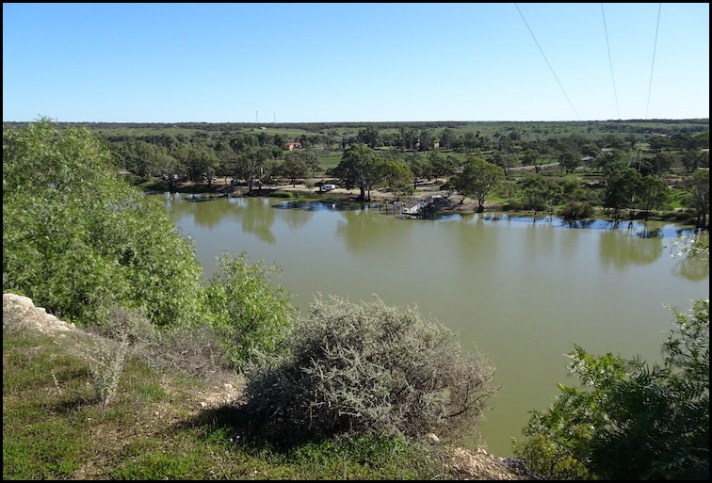
One thing that did stand out here was how high the water rose at this point in the early 2023 floods – note the line on the buildings in the picture below – about 2.5 metres above the bank level.

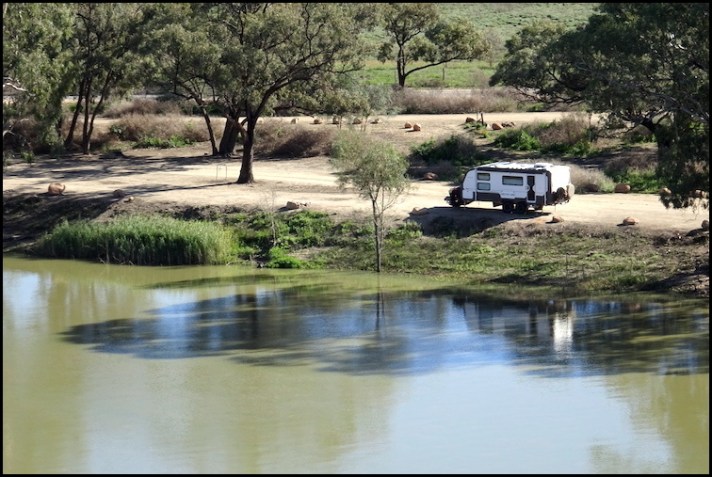
Returning to Swan Reach, our first port of call was the Swan Reach (Graetz) Lookout on the cliff across the river from where we were camping. It offered a great view, and it was nice to see that our caravan was still there, basking in the sun where we had left it earlier.
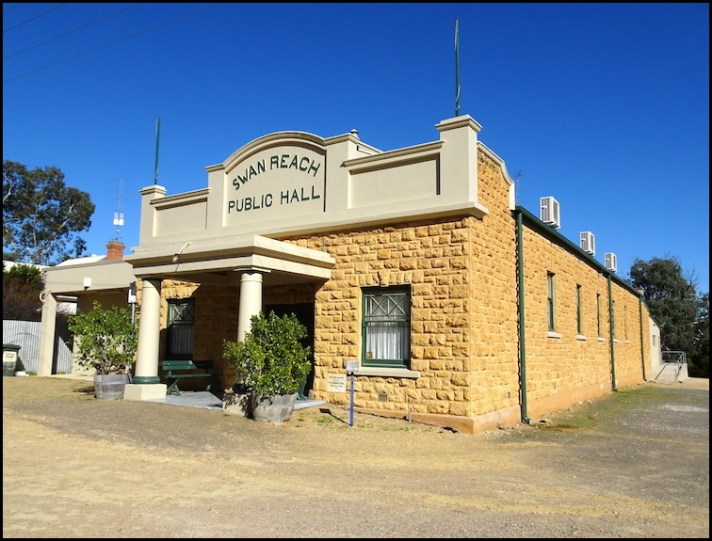
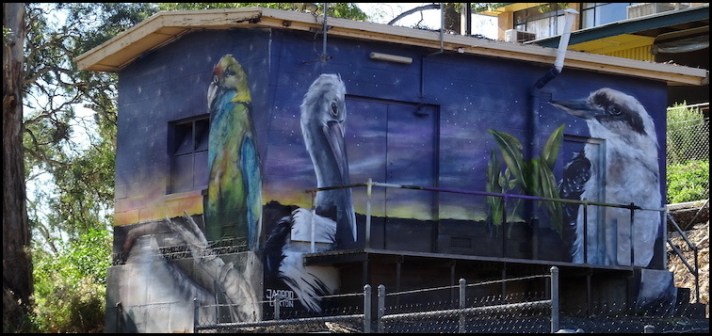
Moving into town we admired some of the older local buildings and other things that caught our attention.

The Swan Reach Hotel where we plan on having dinner tomorrow evening.

Sadly there are no banks operating in Swan Reach anymore.
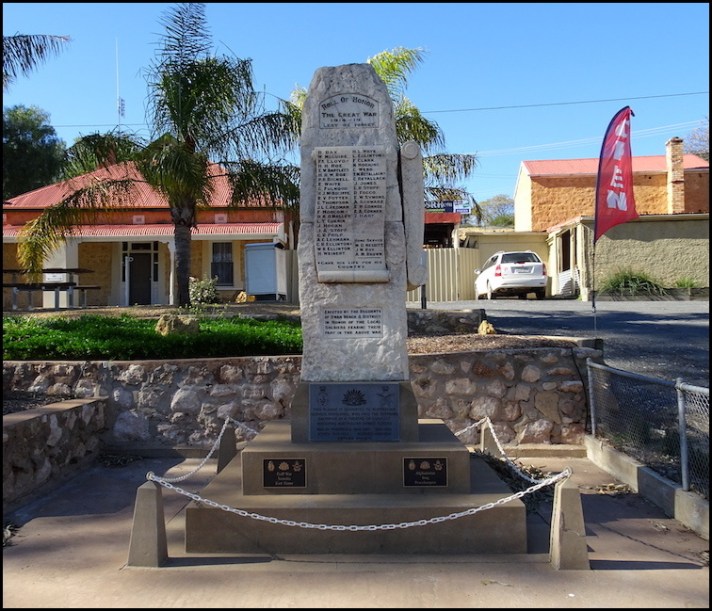
Though the war memorial was originally erected to commemorate those who served in World War One it now commemorates those who have served in the various conflicts in which Australia has taken part, right up to the present.
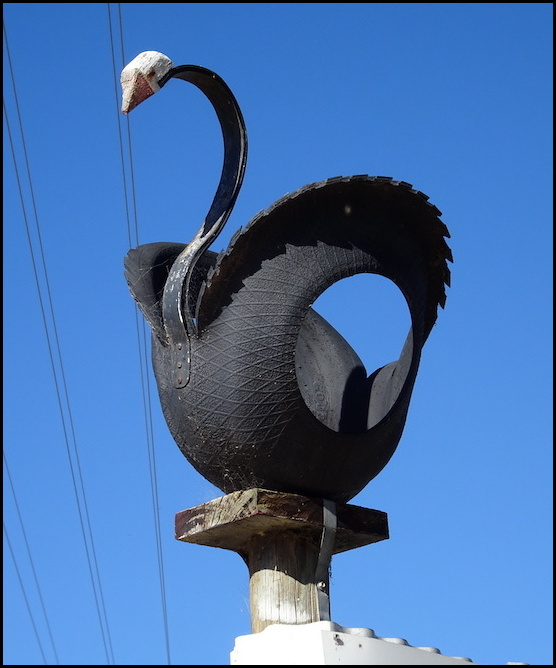
As noted earlier the town’s name is in recognition of black swans which live in this area on the river. The local mechanics/tyre shop has created this wonderful piece of art as an advertisement for their business. Very innovative.
Our last stop before heading back to camp was to pick up some water to take back to our van. We generally travel with as little water as possible if we know some is available at or near our upcoming camp. When leaving Murray Bridge we knew we could get water here but rather than stop to fill the van tanks on our way to our camp site (the most efficient way to do things) we raced through yesterday so that we could get a prime site in the first come first served camping area.
To save us from having to pack up the van, temporarily leave our spot, and go and get water, we carry a 120-litre water bladder which can sit on the back seat of the car. We filled this (note the household-grade filter) and brought it back to the van, which we then transferred into the van’s tanks using a small 12-volt pump. The bladder is a great addition to our kit, not only to let us fill up with water when we run low, without moving the van, on longer stays but also because we sometimes find that taps are located in positions which, while allowing car access, are well nigh impossible to get to with the van.

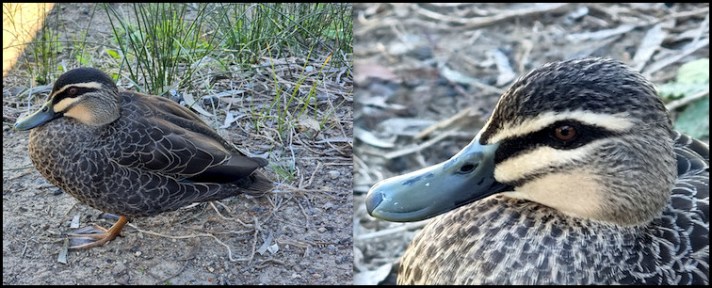
After a late lunch and a short nap it was time to go out and meet a family of ducks which we had befriended late yesterday afternoon – obviously a local family which befriend any camper willing to give them food. We gave them some oats (contrary to popular opinion, bread is not good for ducks). Once they had eaten and ascertained that no further food was forthcoming they moved on to the next van down the bank. So much for loyalty!

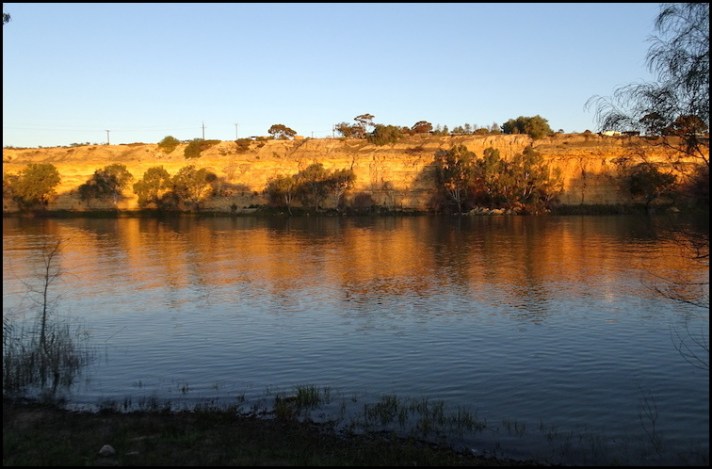
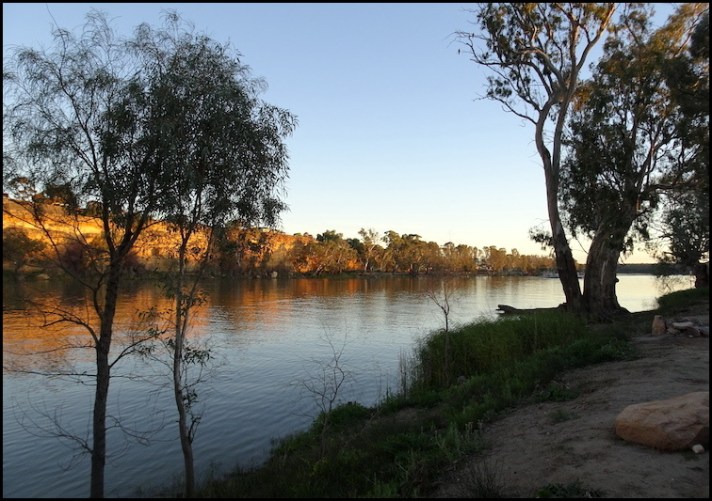
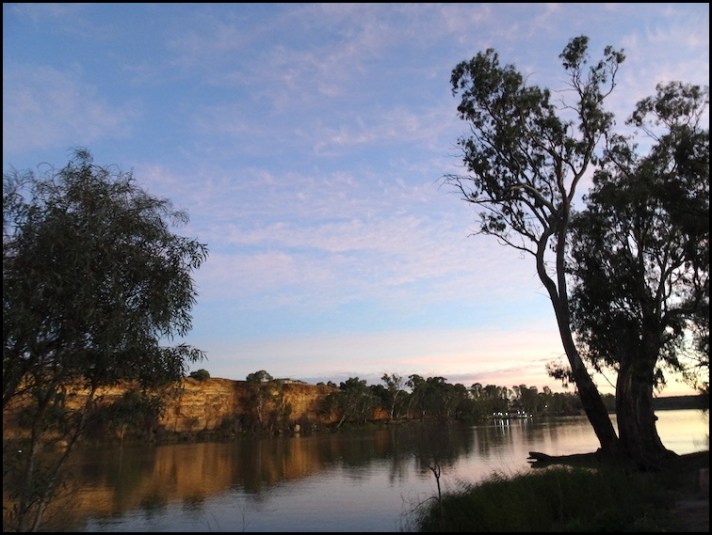
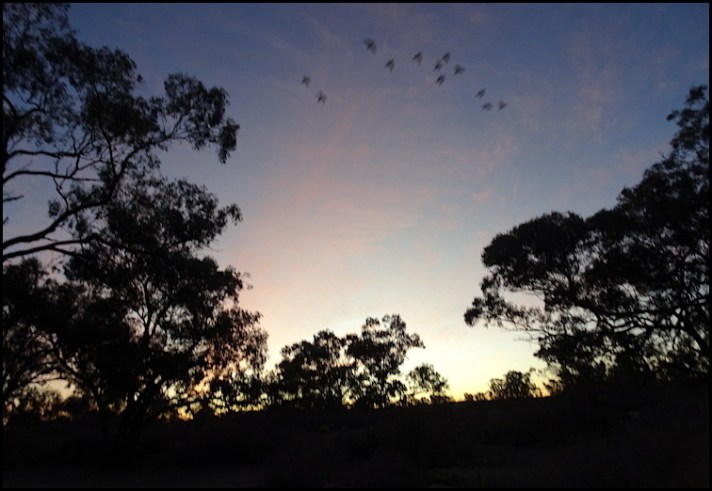
After feeding the ducks we grabbed a beer and some snacks, sat down and enjoyed a beautiful sunset prior to going back into the van for dinner and to call it a day.
The next review from my Adelaide to Canberra road trip can be found HERE.
Should you wish to follow this road trip from the beginning please start HERE.
 The Rambling Wombat
Thanks for teaching me about the Murray River as the third longest navigable river in the world. I need to learn a lot more about Australia! This looks like a lovely place to camp and visit. How interesting too about the black swans for which the town is named.
Thank you too for dropping by my blog after your long hiatus from blogging, Albert. It’s so good to see you again. 🙂
LikeLike
My pleasure and great to catch up with you again too.
LikeLike
Beautiful river views at all times of day and from all vantages. I loved the drone shots of the bend and the lovely reflections. But I see more pelicans (and ducks) than swan!
LikeLiked by 1 person
Indeed Sarah, more ducks and pelicans here. I didn’t see any black swans here but saw some a few days later as you will see in an upcoming post.
LikeLiked by 1 person
A small town not far from where I live is famous for its black swans and they’ve been here for years. I knew they weren’t indigenous and believed they originally came from Australia, but I didn’t know where – and now I do. Did you actually see any while you were here apart from that ingenious tyre sculpture?
LikeLiked by 1 person
Yes, I believe that black swans are indigenous to Australia. Alas I didn’t see any here in Swan Reach but did see some a little further down the river as you will see in a future post.
LikeLiked by 1 person