Today, we had planned to laze around at the campsite and enjoy the winter sunshine that we had been experiencing recently. However, our plans were interrupted by a gloomy morning and a forecast that promised no sunshine for the entire day. As a result, we had to quickly change our plans.
As a former accountant, my Reader will rightly presume that I plan everything to the last detail and, on the whole, that is pretty much correct. That said, all my plans are flexible, and we do not, unless it is absolutely necessary, book campgrounds in advance. While I have a date in mind as to when we will arrive back into Adelaide from this trip, and we will hit it, give or take a day or two, quick changes to plans along the way can be easily accommodated. Based on the last 300 days of travel, the primary reason for changes has been to avoid bad weather or because roads we planned to use were closed, due to bad weather.
So, rather than lounging around in the nonexistent sun today, we took a drive (which I had planned to do a couple of days later from Mannum) mainly in cloudy conditions, though the sun did make a welcome appearance later in the day.
The drive we took is marketed as the Mid Murray Eco Drive and was around 130kms. What the “Eco’ aspect of it was I am yet to work out. The related brochure identified 40 sites of interest though fear not Dear Reader I will not be telling you everything you didn’t want to know about clumps of spinifex, turf farms, things we could not find and other ‘attractions’ obviously added to pad out the drive. While the majority of the supposed attractions were, in my opinion, not worthy of inclusion there was sufficient along the way to make it a worthwhile day out. I hope you agree.
Leaving Swan Reach, it took us about 15 minutes to get to where we would start the circular drive at Shell Hill. Part of the drive was on good, well-maintained gravel roads, though the majority was on bitumen.
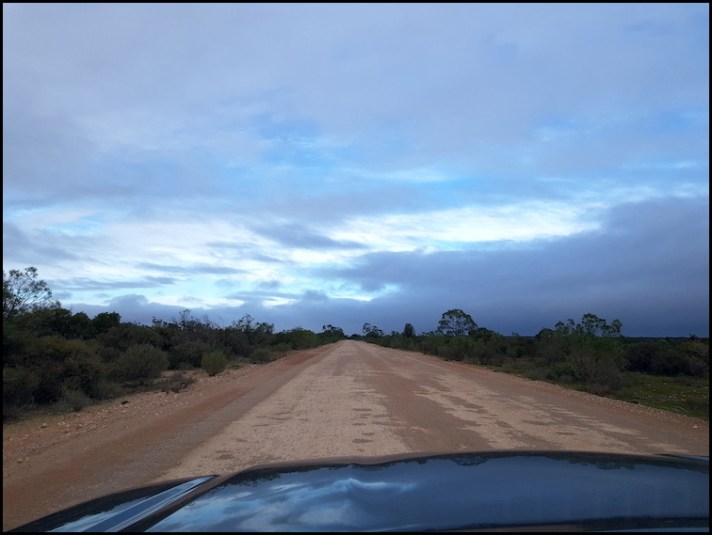
A rather gloomy start to the day but it did brighten up later in the afternoon.
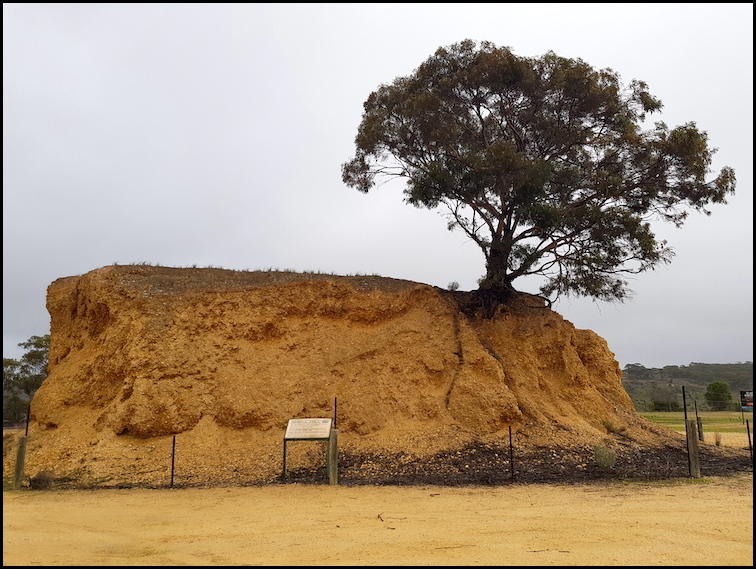
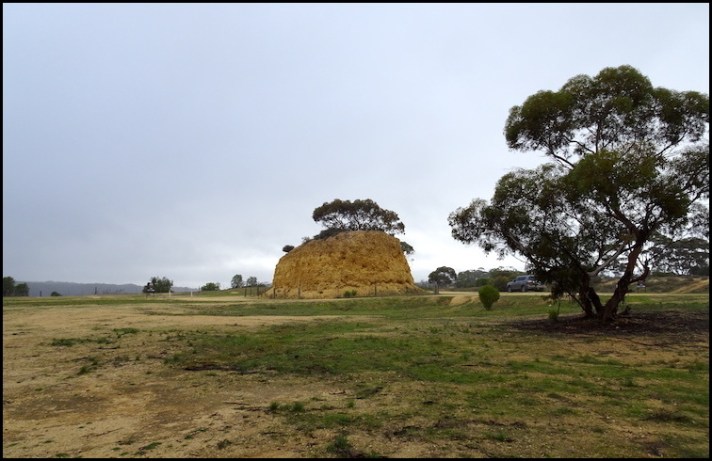
Shell Hill – see also my main picture above – was a total surprise for me. The Hill is the remains of what was a much larger area, up to six metres deep, of fossilised oyster shells located around 100 kms from the sea. Clearly the sea was here some five million years ago when the oyster shells were deposited, the only such deposit known in the southern hemisphere.
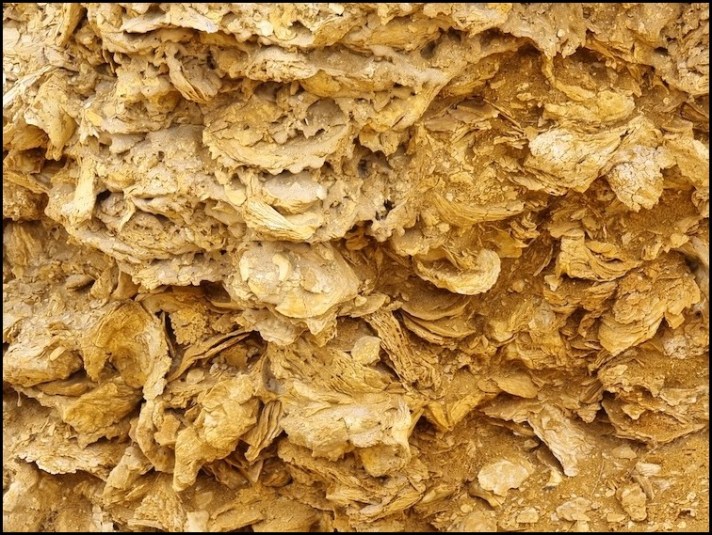
A close up of five million year old fossilised oyster shells.
In 1931 a company called Ellis and Clark realised the value of the shells as a lime based fertiliser and a crushing plant/ mine was set up to capitalise on the find. The resultant fertiliser was used locally, mainly in the Adelaide Hills area to the north of the city. Sir Thomas Playford, a former South Australian State Premier, was a major user of the fertiliser in his Adelaide Hills orchards.
The plant was closed in 1946 and I have no idea why this solitary knob was left behind.
There are a number of short walks in what is now the Shell Hill Reserve but we passed on those as it had started to drizzle rain. In retrospect this was a good thing as the drive ended up taking most of the day and had we spent more time here we would have been unduly rushed.
Our next stop, founded somewhat later than Shell Hill, was the once thriving little community of Black Hill – a source of granite for some of Australia’s best known buildings including New Parliament House in Canberra and the Sydney Opera House (forecourt).
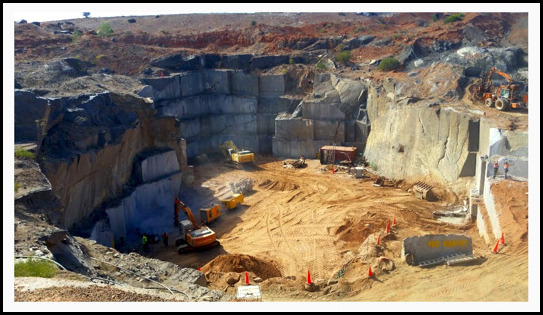
I was certain that I had taken pictures of the mine site, but it seems that I did not. Therefore, I have included this one courtesy of Melocco (http://www.melocco.com.au/our-stone).
The small township of Black Hill on the generally dry River Marne, named after a sister river in France, was first settled in 1890 as a station owned by Thomas R Reynolds. It was then called Friedensthal (Valley of Peace) though like many other places in the area with German names it was renamed during World War 1, to Black Hill, a name derived from the local black granite hills.
The station land was subdivided in 1891 and purchased by families, some of whom still have descendants living at Black Hill today.

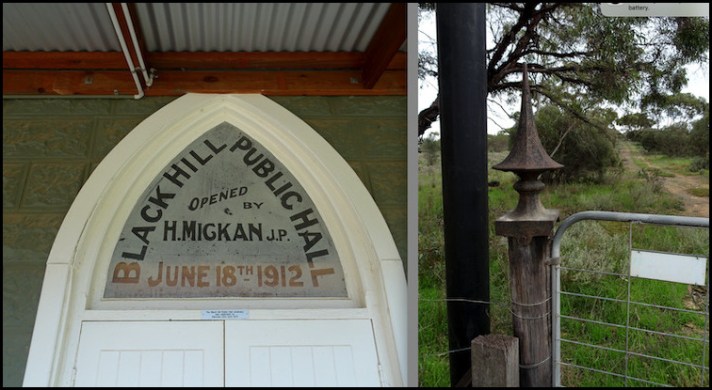
Black Hill Public Hall
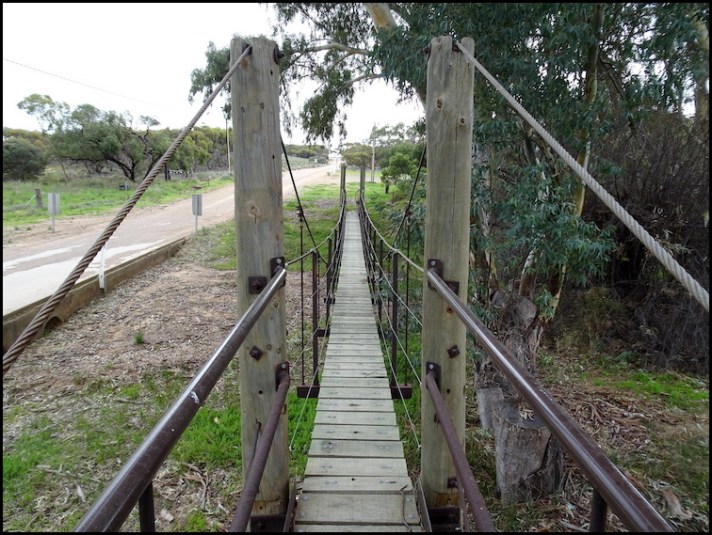
A reconstructed version of an original swing bridge across the Marne River, dating from 1912.
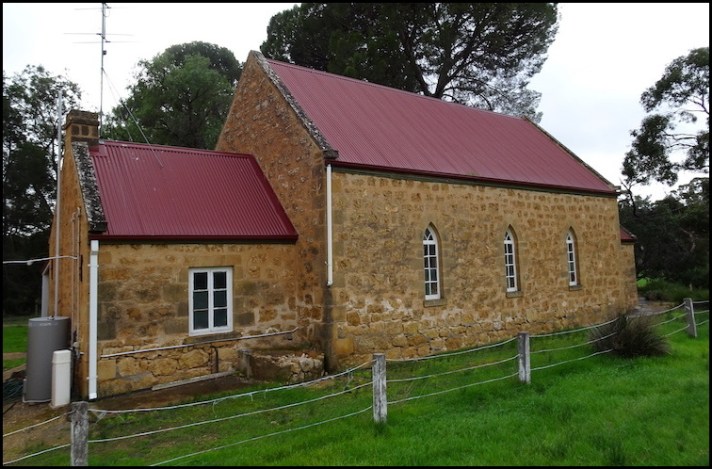
The former Black Hill Lutheran Church was dedicated in 1898. It became a private residence in 2001.

The new cemetery at Black Hill replacing an earlier one, nearby, which was closed as the ground was deemed too sandy. To me the ground looked identical in both.
Moving right along now past many of the attractions that just didn’t do it for me we came to the Glen Roy Homestead outside the ‘village’ of Sanderston.

Glen Roy Homestead
The drive brochure stated that “The Royal family settled in the Sanderston area in the 1800s and built Glen Roy Homestead around 1902.”
Being of British descent and Australia having been a colony in the 1800s, I became excited and assumed that the “Royal family” referred to meant a member of the then-reigning British Royal family. However, upon further research, I have ascertained that the relevant “Royal family” was, in fact, a family with the surname “Royal”. Though they were from England, they had nothing to do with the British Royal Family. Ah well, a nice enough building, now a guesthouse, worthy of a quick look all the same.
Before leaving the Sanderston area we made a brief stop at the Sanderston Cemetery Reserve finding it interesting that a cemetery was incorporated into a nature reserve. In fact it makes up the majority of the reserve. The Cemetery/ Reserve is surrounded by a rabbit proof fence which has helped to preserve some ‘Kangaroo Grass’. The grass once covered a large area of the surrounding hills, before rabbits eradicated it. Kangaroo grass is actually very common though-out most of Australia, albeit obviously not in this particular locality which has seen the need to preserve a small pocket. In addition to the Kangaroo grass another 66 native plants and 12 introduced species have been identified within the reserve. The cemetery dates back to 1894 and is representative of small country graveyards in the area, with the added bonus of having a beautiful backdrop in the form of the Lofty Ranges.

Sanderston Cemetery
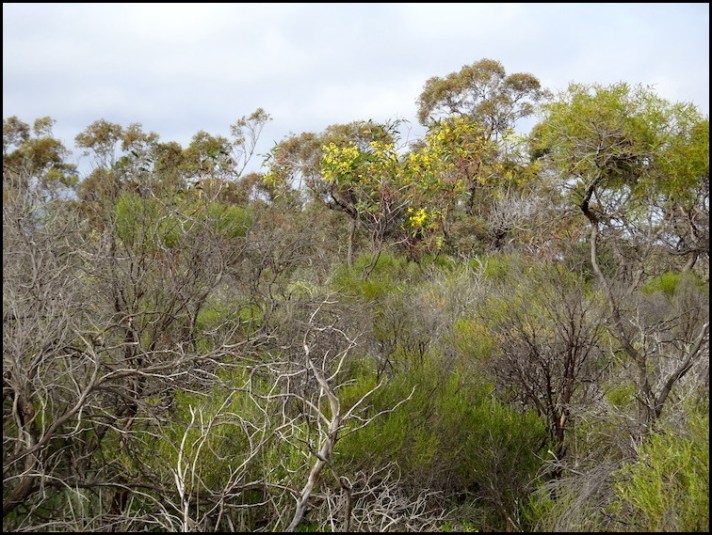
Sanderston Cemetery Reserve – some of the 66 native plants and 12 introduced species found in the reserve.
About 12 km further on, in the direction of Mannum, we pulled into another reserve, the TP Bellchambers Reserve, on the site of an old quarry and home to the protected Silver Daisy Bush.
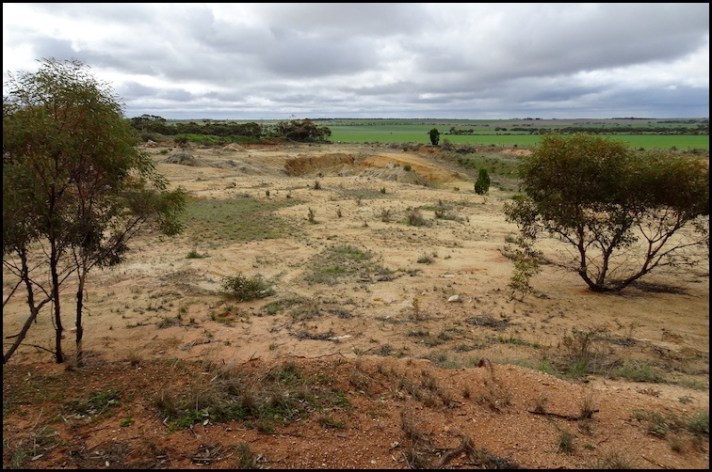
TP Bellchambers Reserve with evidence of the former quarry.

A short walk in the Reserve
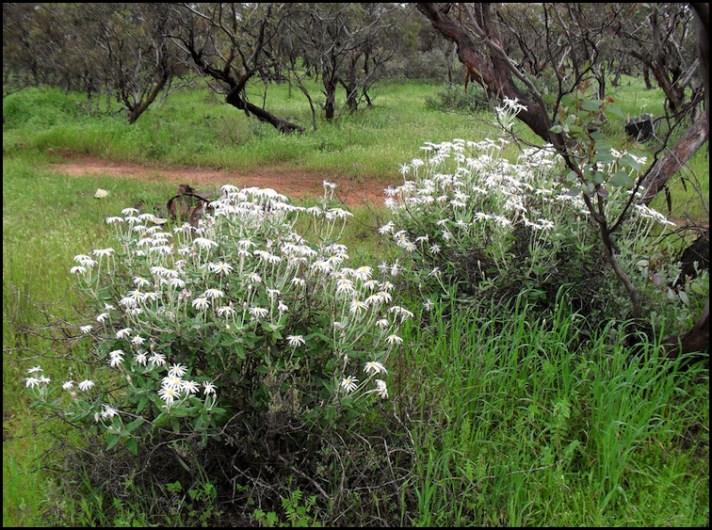
Silver Daisy Bush – Sadly, not in bloom at the time of my visit. Hence, a picture courtesy of https://www.walkingsa.org.au/
Bellchambers was a lifelong naturalist and conservationist, writing quite extensively for local papers and in two books. One quotation from Mr. Bellchambers which I find quite thought-provoking, if I may?
“Nature always provides a surplus for legitimate use, far in excess of needs, to ensure continuance of species…Unrestrained, man uses up the capital instead of the surplus and this must, by natural law, end in disaster.” — T.P. Bellchambers
A short drive from here and we arrived at the Mannum Waterfalls (upper carpark) where we did a short walk to and around the falls. The walk up above the falls was a little steep in parts, but nothing to worry about for someone of average fitness. The usually dry falls were particularly stunning, given the abundance of water when we visited.
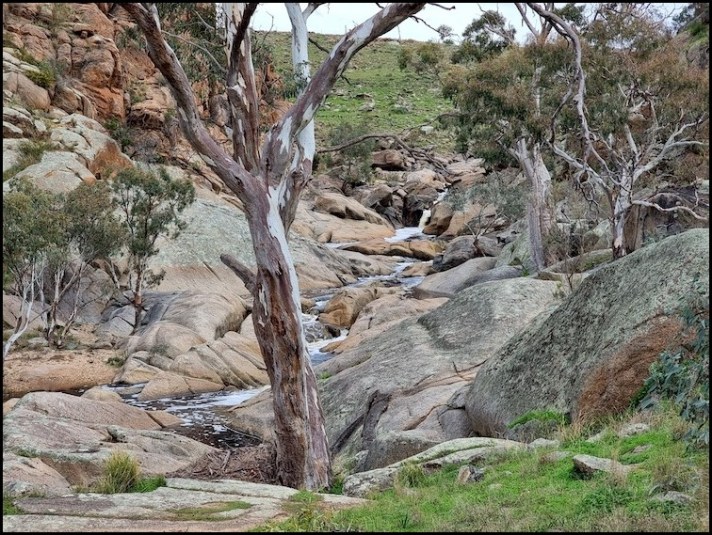
Mannum Waterfalls

Mannum Waterfalls
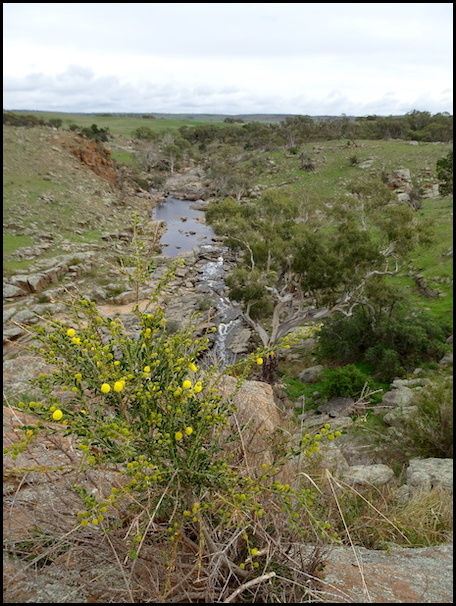
Mannum Waterfalls

A couple resting at the base of the multi level falls.
Having admired the falls, I then walked down to the lower falls car park by Reedy Creek, which took about half an hour. After visiting the upper falls area, Andy drove down to the lower falls car park where he picked me up.
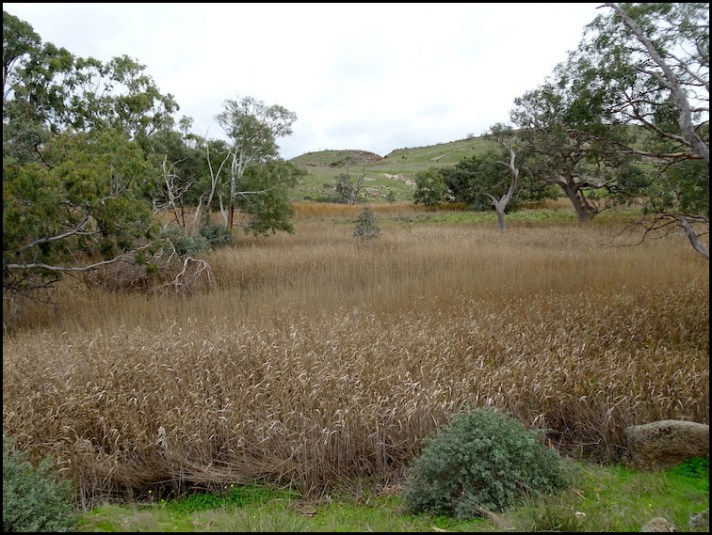
Reedy Creek

One of those rare occasions where I have managed to get a semi-decent shot of some birdlife, which appears to be particularly camera-shy in Australia.
After enjoying a quick picnic lunch which we had prepared for the drive we drove into the township of Mannum. To keep this review to a reasonable length I will write a seperate review on our very short visit to Mannum ( Day 302 Pt 2.).
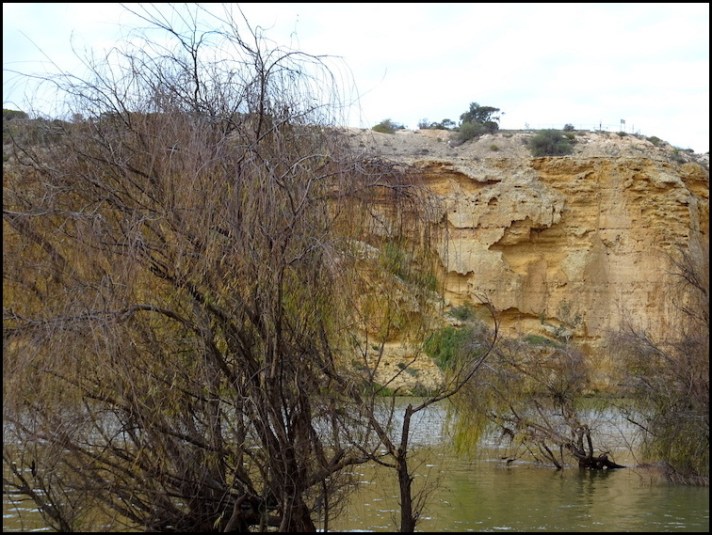
Leaving Mannum, we headed due north along the Murray River towards our campground at Swan Reach. En route, we pulled in at a few points to admire the Murray River.
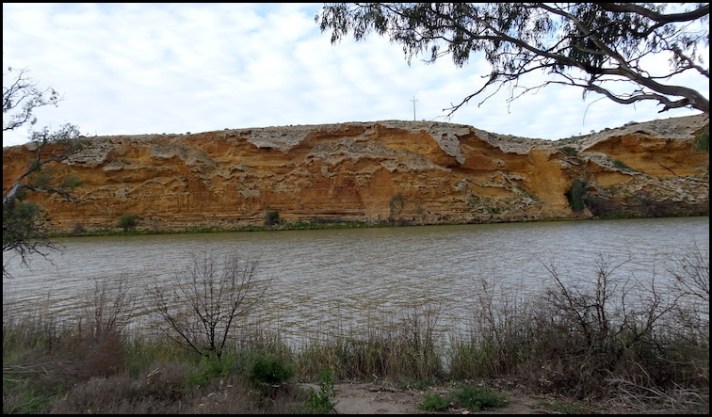
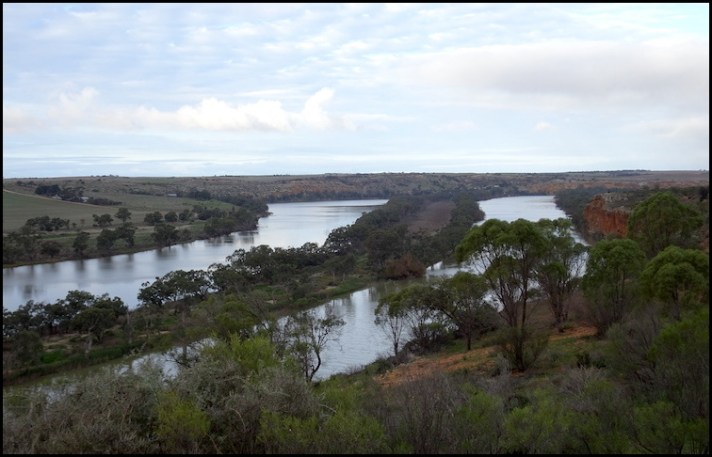
Back at the campground, we had a quick shower and a short rest before heading out for dinner at the Swan Reach Hotel. We enjoyed an excellent chicken parmigiana and equally good fish and chips, washed down with a few beers. Afterwards, we retired for the night after yet another very pleasurable day.
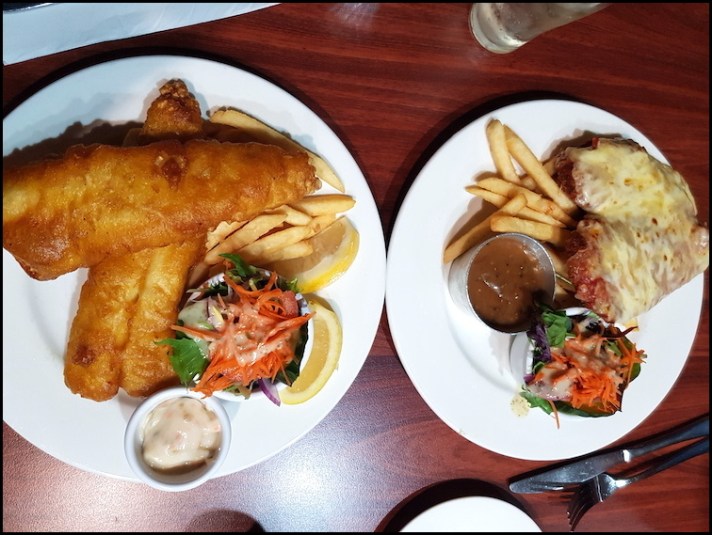
Dinner at the Swan Reach Hotel. Yes, my observant reader will have picked up that it is almost identical to what we had a couple of nights ago in Murray Bridge!
The next review from my Adelaide to Canberra road trip can be found HERE.
Should you wish to follow this road trip from the beginning please start HERE.
 The Rambling Wombat
Those glossy brochures do tend to get a little excited about local ‘attractions’. Many times we’ve found ourselves asking “So what is it?” Yet other amazing and quite unique things barely rate a mention. This one does look like a nice drive.
LikeLiked by 1 person
You are so right. Like I said there was ample along the drive to amuse us for the most of a day…… The brochure, as I recall, suggested three hours for the drive so it seems we overindulged in parts lol,.
LikeLiked by 1 person
That Shell Hill is amazing, both from a distance with that single tree and close-up where you can make out the oyster shells! Lovely waterfalls too and what looks like a HUGE portion of fish to end the day 😀
LikeLiked by 1 person
It truly was amazing and took us by surprise, Sarah. I had never seen anything like it before. Food portions are big in country Australia.. quality is hit and miss but this trip we have been lucky so far.
LikeLiked by 1 person
You are also kindly invited to join my international digital project on clinate change as detailed here
Everybody can participated as it concerns the whole world. Why is homo sapiens so stupid? A possible approach and beginning – an international campaign has just started here, by letter and email, but also via global mailart- and networker-platforms in this regard worldwide. All is possible if we will just try it!
Cheers,
Ulli from Berlin
LikeLike
I’m still following your journey on Google Maps Albert you’ll be glad to know. Australia almost demands to be seen in the way that you’re covering it, and although I’ve always had an interest in the world at large, I always remember my geography teacher at school (who came from Australia) telling us as much as he could about the Murray River.
LikeLiked by 1 person
You are totally correct.. not a place to be hurried. Though Sydney, the Barrier Reef and Uluru ( Ayers Rock) are must visits .. and thousands of miles apart there is so much more. My love is the red dirt outback where we spent many months last year .. hopefully I will write that trip up over our summer period when it’s too hot to travel down south.
LikeLiked by 1 person
I’d certainly like to read about that Albert.
LikeLiked by 1 person
I’m the same as Anita! Those oyster shells are amazing. I never knew they existed. Thanks for the enlightenment. Mel
LikeLiked by 1 person
Thanks Mel, They were new to me too…. so that makes at least three of us.
LikeLiked by 1 person
Winner! 🙂
LikeLiked by 1 person
Wow saw those five million year old fossilised oyster shells. They are historic. Anita
LikeLiked by 1 person