

In 1857 Sydney acquired a small number of these ornate cast iron drinking fountains from Macfarlane & Co, a prominent Scottish iron foundry. Continue reading “Oxford Square – Canopy Drinking Fountain”
In 1857 Sydney acquired a small number of these ornate cast iron drinking fountains from Macfarlane & Co, a prominent Scottish iron foundry. Continue reading “Oxford Square – Canopy Drinking Fountain”

Since 1945, more than seven million people have migrated to Australia making it one of the most culturally diverse countries in the world. Adding those who arrived between 1788, when the first Europeans settled in Australia, and 1945 brings the total to over ten million. Continue reading “Welcome Wall”
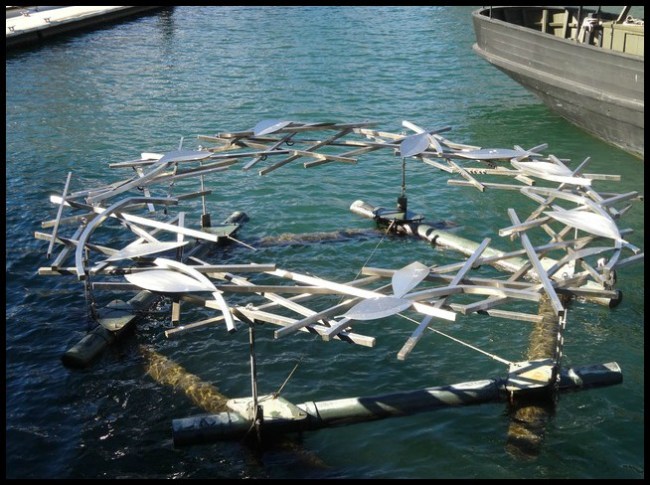
The arrival of the Royal Australian Navy’s (RAN) fleet into Sydney Harbour on 4 October 1913 was a great moment in Australian history. Australia now had direct control of the seas around the continent and no longer had to rely on the British Royal Navy. Continue reading “HMAS AE1 Memorial (…’the ocean bed their tomb’)”

Lest my reader be surprised at seeing a lighthouse on the waterfront of the perfectly calm Darling Harbour I should explain that it is an exhibit of the adjacent Australian National Maritime Museum (ANMM). Given it size, it perhaps goes without saying that the lighthouse is part of museum’s permanent galleries collection. I actually say this because, being part of this collection it is free to visit the lantern room, though you do have to be on a tour to do so. More on that later. Continue reading “Cape Bowling Green Lighthouse”

In my separate review, Big Boats at the Maritime Museum, I gave brief details on the larger vessels at the Australian National Maritime Museum which I feel are worth boarding and thus buying a BIG ticket at A$30 to do so, especially so if the special exhibition on at the time of your visit is of interest as the BIG ticket gives access to it as well. Continue reading “Little Boats at the Maritime Museum”

The most important decision you will need to make when you visit the Australian National Maritime Museum (particularly if the special exhibition on at the time of your visit holds little or no interest for you) is whether or not you want to board the museum’s small fleet of ships/boats or view them from the boardwalk. Continue reading “Big Boats at the Maritime Museum”
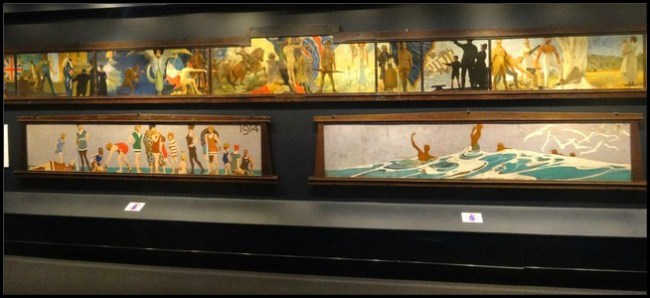
In January 1921 an honour roll listing the names of the Bondi Surf Bathers’ Life Saving Club members who had served and died during World War I was unveiled in the clubhouse. The Bondi Surf Bathers’ Life Saving Club, based at Bondi Beach was the first surf life saving club in Australia, created in 1907, and is also, without doubt, the most famous in their red and yellow gear. Continue reading “Bondi Surf Bathers’ Life Saving Club Murals at the ANMM”

The Wharfie’s Mural, part of which is on display in the Australian National Maritime Museum, is a classic example of working class art in Australia.
Socialist realist in style, the mural depicts the lives and struggles of Australian waterside workers as well as major themes in the history of Australian (and indeed international) workers more generally from the mid 1800s to WWII and beyond, all the time exalting the struggle of workers against oppression and extolling the power of unity. Continue reading “The Wharfie’s Mural at the Maritime Museum”

Given Darling Harbour’s maritime history it is very appropriate that Australia’s national maritime museum should be located here.
The Australian National Maritime Museum (ANMM) can be roughly split into three parts – the permanent galleries, special exhibitions and a collection of ships, boats and the like, outside and on the harbour itself. In addition to the exhibits the museum has a souvenir shop and a couple of eating options though there are many more (better) eating options within metres of the museum. Continue reading “Australian National Maritime Museum”

The European history of New South Wales, and indeed Australia, will always be traced back to the site of the first British settlement at Sydney Cove (now Circular Quay). That said, it wasn’t long until the industrial and maritime hub of the Colony, and the new city of Sydney, moved around the corner, as it were, to the adjacent Darling Harbour, or Long Cove/Cockle Bay as it was called until 1826 when the not so modest State Governor, Darling, renamed it after himself. Continue reading “WOW – Darling Harbour”
 The Rambling Wombat