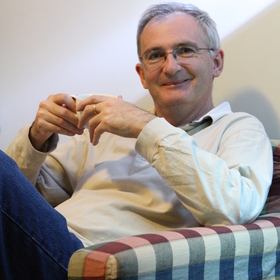

The famous Scottish bard, Robert (Rabbie) Burns, never set foot in Australia and never once mentioned Australia in any of his work. Continue reading “A Tribute to Robert Burns”
The famous Scottish bard, Robert (Rabbie) Burns, never set foot in Australia and never once mentioned Australia in any of his work. Continue reading “A Tribute to Robert Burns”

What an amazing sight it must have been, over a million people on the harbour and lining the streets of Sydney for an event, 166 years in the making. Continue reading “Queen Elizabeth IIs First Landing In Australia”
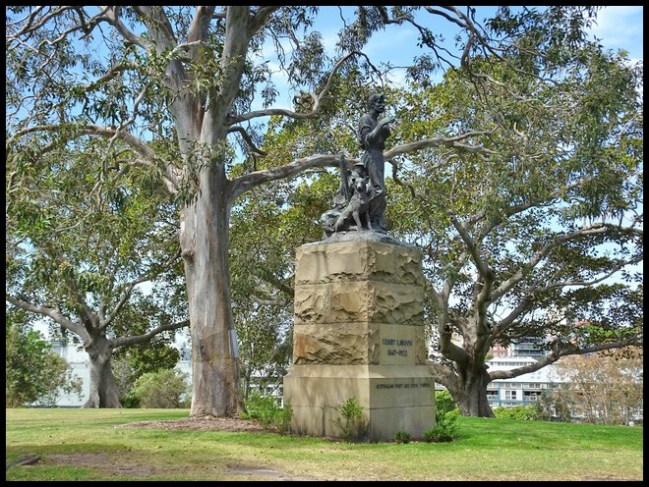
To be honest, Australia cannot boast many literary greats and the average Aussie is more at home on the beach, at the footie, or having a beer at a barby than he or she is pouring over the classics or attending the Opera.
This is not to say that Australia lacks culture or class. Continue reading “An Australian Literary Great”

While equestrian statues were popular additions in many cities around the world in the early 20th century, few were erected in Sydney. This one of King Edward VII, successor to the long reigning Queen Victoria, is a rare example of such statutory in Sydney though the original intent was to construct this tribute to the King, and equally importantly to Empire, in the then newly established National Capital of Australia, Canberra. Continue reading “Flamboyant Edward VII”

The Tharwa General Store is a beautiful old weatherboard building dating back to the 1922. The store was acquired by C.C Jeffery in 1926 and has remained in the family ever since making it one of the Territory’s longest operating family businesses. This is one of those places where you buy a beer, a hot pie and a pair of knickers in the local post office! Continue reading “Tharwa General Store and School”

I have remarked elsewhere on this blog that for a long time before the arrival of European settlers and the 1861 ‘formal settlement’ of Tharwa, Aboriginal people had been using this area as a crossing point for the Murrumbidgee River as they made their way up and down from the mountains. Continue reading “Onyong’s Grave”

It is rather refreshing after visiting great cathedrals of Europe or indeed those of larger Australian cities to head out into country Australia and come across little wooden churches, in a popular Carpenter Gothic Style, like St Edmund’s in Tharwa. Continue reading “St Edmunds Anglican Church”

The delightfully named Cuppangabalong Station (station is a term used in Australia to refer to a large farm) began life as a squatters settlement, established by James Wright in early 1840s. In 1855 it was bought by a 39 year old Italian count – Count Leopold Fabius Dietegen Fane De Salis – who developed it into a very successful wool business and stud farm. Continue reading “Cuppangabalong Woolshed”

The De Salis (or Cuppacumbalong) Cemetery is one of a small number of late 19th century private or family cemeteries in the Canberra region. By the end of the century private cemeteries were becoming something of a dying (pardon the pun) breed, originally having been necessary due to the lack of public cemeteries, in particular for pastoral families and their workers on stations in Australia’s interior. Continue reading “The De Salis Cemetery – Fit for a Count”
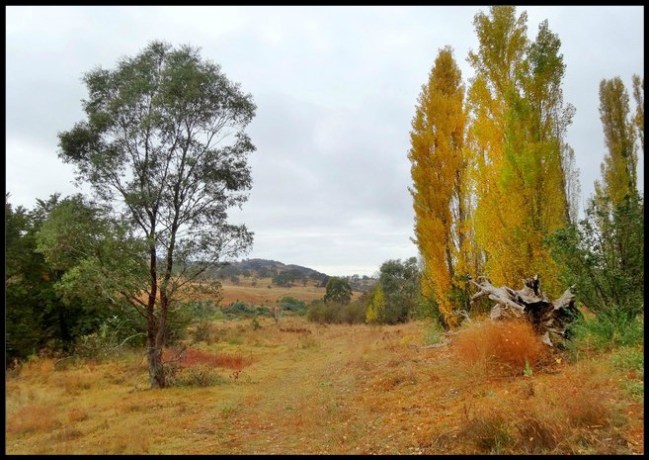
Having a strong interest in old cemeteries I was keen to visit the De Salis Cemetery – one of a small number of early 19th century private cemeteries in the Canberra region. Continue reading “Tharwa Explorer Walking Track”
 The Rambling Wombat