
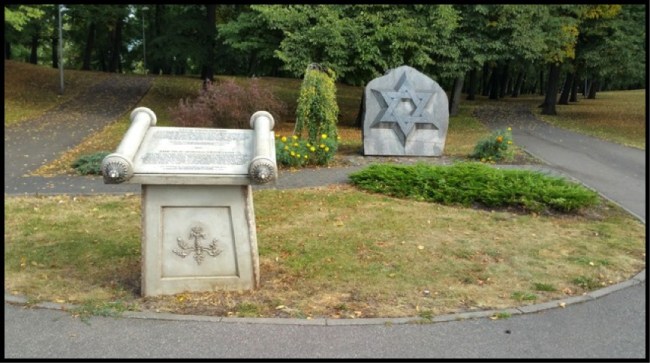
Prior to 1725 Jews were not permitted to bury their dead in Riga and the closest Jewish cemetery was some 40kms away at Jelgava. Continue reading “Old Jewish Cemetery”
Prior to 1725 Jews were not permitted to bury their dead in Riga and the closest Jewish cemetery was some 40kms away at Jelgava. Continue reading “Old Jewish Cemetery”
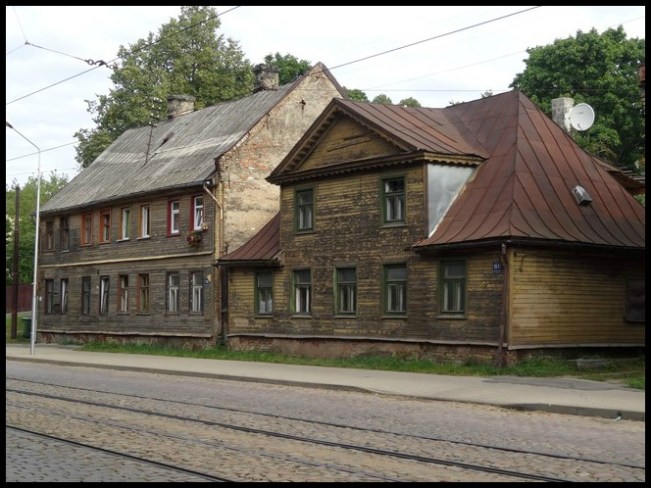
One of my fondest memories of Riga is the half day or so we spent wandering around the Moscow District (Maskavas forštate), also (or rather officially) called Latgale, and in so doing discovering one of the lesser-explored parts of Riga. The Moscow District, Riga’s first suburb outside the walled Old City, dates back to the 14th century though nothing of the medieval period remains to be seen to-day. Continue reading “Take a Walk in the Moscow District”

Riga is justifiably famous for its Art Nouveau buildings and decorations, the most spectacular, flamboyant and ornate of which can be seen in Alberta and Elizabetes ielas and surrounding streets, a short walk to the north east from the Old City. Continue reading “Art Nouveau in the Old City”

Tucked away in Mazā Pils iela you will find the Three Brothers – three Medieval to Baroque period houses, in a terrace like format. In medieval times houses at this location would have been on the outskirts of the city and home to craftsmen and their families. Today, the houses are home to the Latvian Museum of Architecture (No 19 – the centre house) and the State Inspectorate for Heritage Protection which you likely would not have cause to visit. Continue reading “The Three Brothers”


Of late I have taken a liking to street art – aka graffiti. Lest my Reader think that I have developed anti-social tendencies in my advancing years, I assure you I am absolutely against wanton destruction of public or private property by tasteless tagging and the like. Continue reading “‘Graffiti’ in the Old City”

Riga’s medieval city walls had eight gates. Today only one of those gates, that giving access to Jacob’s Barracks from the Old City, Swedish Gate, remains. Continue reading “Swedish Gate”
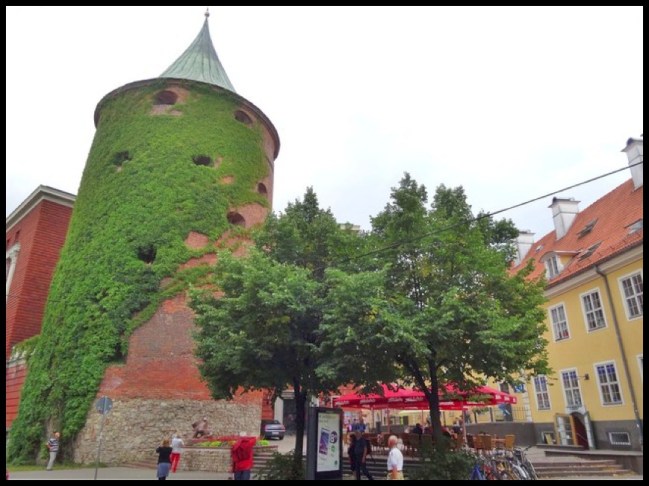
Dear Ladies, and Gentlemen as appropriate, Riga’s Powder Tower is not a fashionable place to powder your nose. Rather, it part of the Latvian War Museum but more on that later. Continue reading “Powder Tower”
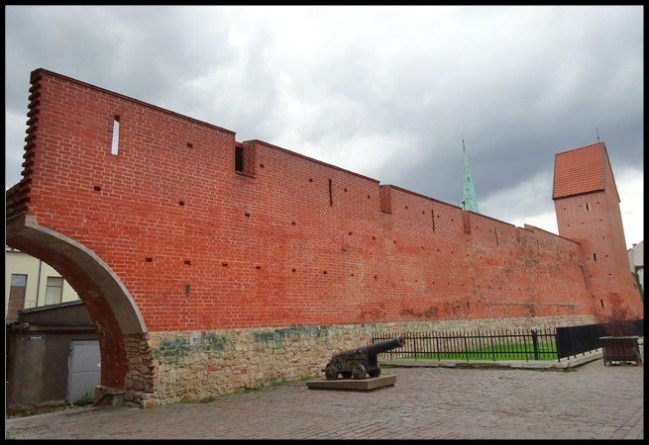
Like many medieval cities, Riga encircled itself with defensive walls. Originally these ‘walls’ were merely a deep ditch. This was later replaced by a rampart with a wooden fence on top. Over time, due to advances in munitions, these ramparts and wooden walls were replaced with dolomite (stone) walls. Continue reading “Riga City Walls”
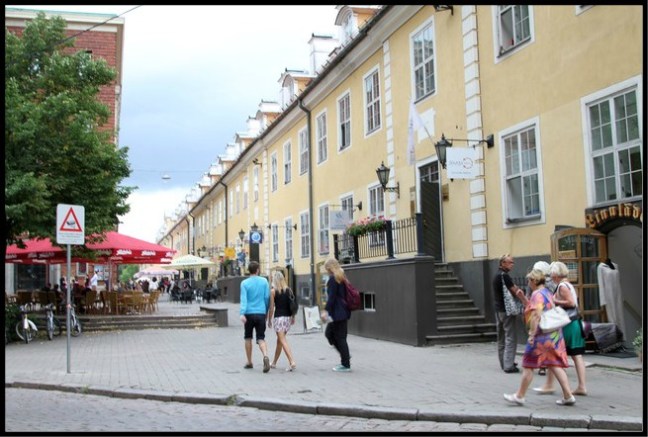
The Great Northern War saw Latvia move (not that it had any choice in the matter) from occupation by Sweden to occupation by Russia in 1710 and resulted in Riga’s fortifications and barracks being severely damaged. Continue reading “The Former Jacob’s Barracks”


‘Subtle hints of linden blossom, birch bud, valerian root, raspberry, bilberry, and ginger as well as touches of nutmeg and black peppercorn tease the palate and come alive in the glass’. Continue reading “Riga Black Balsam”
 The Rambling Wombat