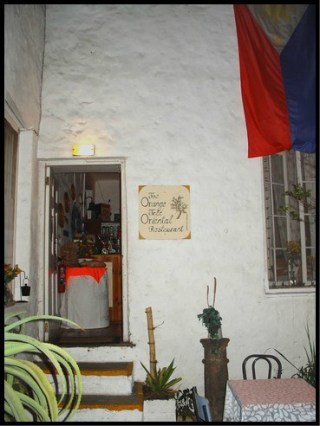
There are very few places in Jamestown open on a Sunday Night for dinner and this in one of them. As such, we were surprised when we went to dinner at around 7.30pm and no one was there and apart from one person to pick up a takeaway order no-one came in all evening. Continue reading “Orange Tree Oriental Restaurant: “Booking not required!””→
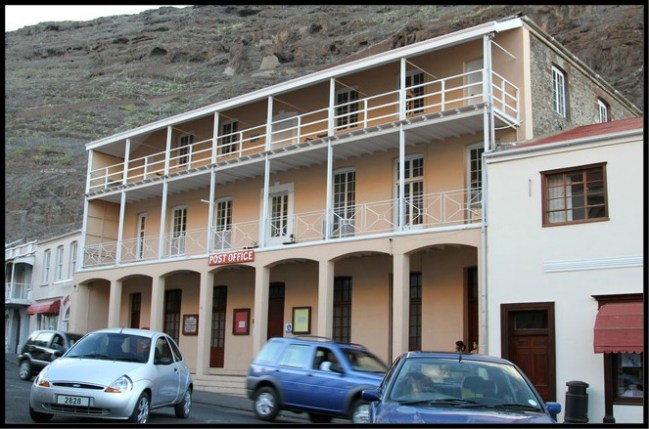
The postal history of St. Helena extends back well before 1815 but it wasn’t until 1815 that the first Post Office was established on the Island shortly after which the first handstruck stamp was introduced. The first adhesive stamp, a 6d blue imperforate stamp portraying Queen Victoria, was issued on 1 January 1856. Continue reading “The Post Office and Philatelic Bureau”→
This rather plain though pleasant concrete clock-tower adjacent to the Market is a memorial “to those who fell in the Great War” (World War I). It was designed by a British Resident Engineer, Captain Mainwaring and paid for by using funds (£30) left over after the Cenotaph, by the sea, was completed. Continue reading “Jamestown Memorial (Bridge) Clock”→
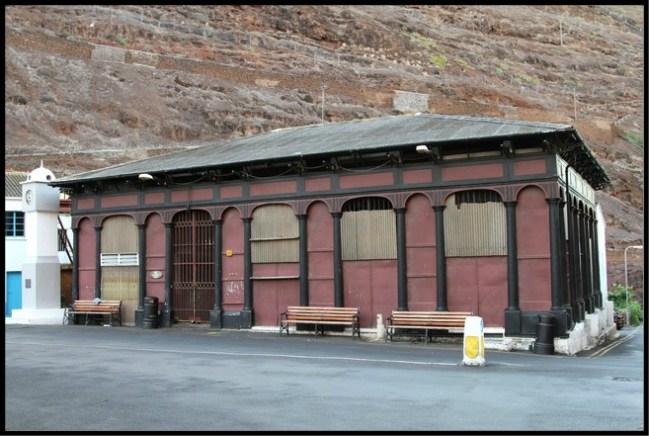
Being a major fan of local markets I made my way to Jamestown Market with great anticipation. In truth I didn’t have far to go – about 200m from my hotel.
The market is housed in a smallish building, on the ground floor and on a mezzanine level which runs around the internal walls, leaving an atrium in the centre of building. In terms of shopping I found it was rather abysmal – Continue reading “Jamestown Market”→
Prince’s Lodge is a beautiful colonial house belonging to, English born St Helena historian, Robin Castell (who actually resides in South Africa), who, in addition to numerous other books on St Helena, publishes albums of photographs illustrating the history, geography and sociology of Saint Helena. Continue reading “Prince’s Lodge and the Castell Collection”→
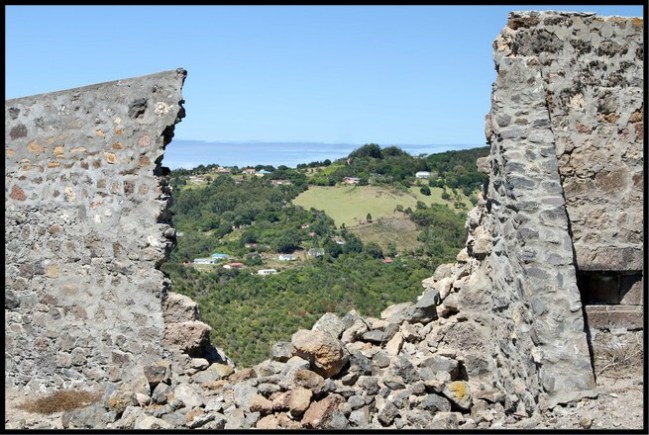
Unlike the other main fortifications on St Helena, this fort is situated well inland at 584 metres above sea level and has commanding views both to sea and to the valleys below. The island’s other main fortifications are all by the sea. Continue reading “High Knoll Fort – Fort Of Many Uses.”→
Alas, unlike on my next stop on Ascension Island, time did not permit me to explore in any detail either the flora or fauna on St Helena other than admire from a distance which, of course, I did. I would love to have had the time to get out and take advantage of some of the great walks which are possible on the Island.
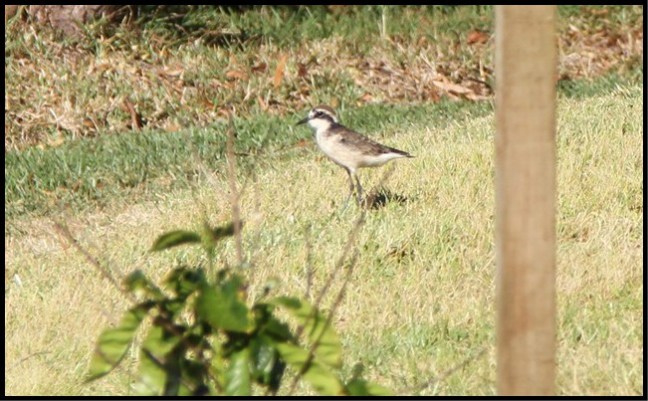
While not an avid birdwatcher, I did however determine that I wanted to see the only endemic bird on the island – the St Helena Plover, commonly referred to as the Wirebird due to its longish spindly legs. I figured (rather I was told!) that my best chance of a sighting was on Deadwood Plain or the St Helena Golf Club both close to Longwood. Continue reading “Go Find a Wirebird”→
The main reason people go to Plantation House is generally not to see the house itself, beautiful though it is, but rather to see the Governor’s tortoises and in particular Jonathan. How old Jonathan is, is very much a matter of conjecture but estimates range from 150 to 190 years old. As such, Saints claim that Jonathan is the oldest living land creature in the world. Continue reading “The Governor’s Pets”→
Plantation House is the official residence of the Governor of Saint Helena. The Governor is the representative of Queen Elizabeth II in the United Kingdom’s overseas territory of Saint Helena, Ascension and Tristan da Cunha. The Governor’s office is in the Castle, down in Jamestown. Continue reading “Plantation House – The Governor and Jonathan”→





 The Rambling Wombat