

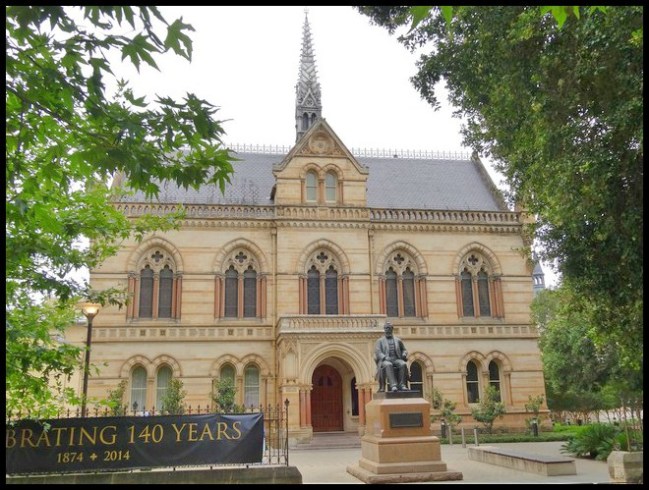
The University of Adelaide, the State of South Australia’s oldest university, was established in 1874 and teaching began with a Latin class in 1876. Today it is one of Australia’s premier universities and offers degrees in arts, science, law, medicine, music, mathematics, philosophy, languages and mining engineering. Continue reading “The University of Adelaide”


 Nowadays we regularly read of the antics of the younger British Royals as if it were news. Far from it, the royals have always lived it up.
 Captain James Cook is most often credited as being the person who discovered Australia, in 1770. In actual fact, Cook claimed the eastern part of the continent for Britain in that year and it was Dutch man, Willem Janszoon, who first landed on the continent on the Cape York Peninsula (in Queensland) and met with Aboriginal people in 1606. It wasn’t until 1803, almost 200 years after this initial European discovery, that someone proved that Australia was an island continent.
 The Rambling Wombat