
Prior to the railway coming to Young this site was occupied by the town’s first public school which opened here in 1864 (rebuilt 1873). Continue reading “The Last Train Departed at ………..”

"I travel not to go anywhere, but to go. I travel for travel's sake. The great affair is to move." RLS
Prior to the railway coming to Young this site was occupied by the town’s first public school which opened here in 1864 (rebuilt 1873). Continue reading “The Last Train Departed at ………..”

Without knowing a little of the history of country New South Wales towns such as Young, Cooma and Goulburn (and there are others) your initial encounter with court houses in these places will undoubtedly cause raised eyebrows. Like me, you will wonder why such grand court houses were built in what are today are rather modest towns in most other respects. Continue reading “Former District Court House”
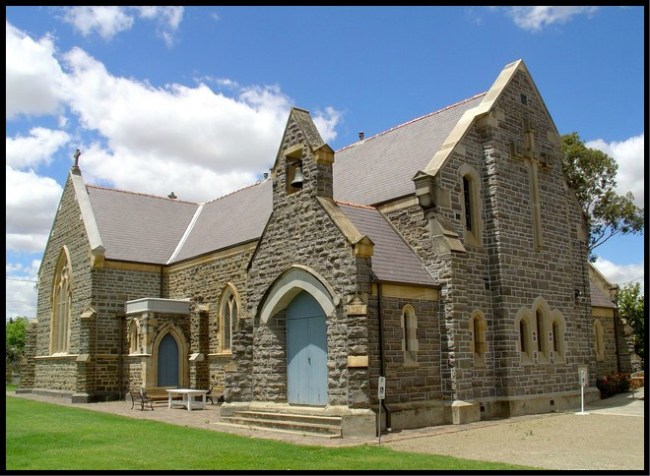
The first white settler to arrive in Young was the aptly named James White an ex-convict who arrived in 1832. Having befriended Cobborn Jackie, a chief of the Waradjeri Aboriginal tribe, he secured a homestead site at Burrangong Creek, Young. White and his family lived here pretty much undisturbed until June 1860 when gold was found at one of his sheep camps – Lambing Flat. Continue reading “St John the Evangelist’s Anglican Church”
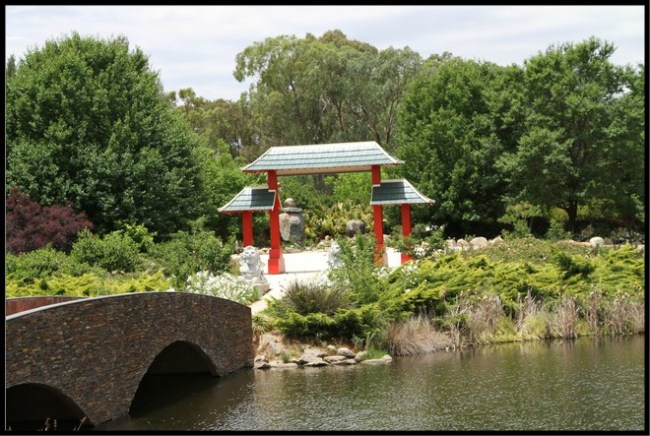
In 1860 around 2000 Chinese prospectors were drawn to Young, lured by the possibility of making their fortunes in the goldfields. Within months gold reserves were dwindling and European miners, resentful of the well organised and successful Chinese miners, banded together to drive Chinese prospectors out of town. See my Reading the Riot Act review for more detail on the shocking treatment meted out to the Chinese at this time. Continue reading “Lambing Flat Chinese Tribute Garden”

I am sure many readers will have heard of people “reading the riot act” or indeed have announced that they would do so themselves. Less, I imagine, would be aware that the phrase is some 300 years old dating from the public reading of the 1714 Riot Act – an Act of the British Parliament also applicable in Australia. Continue reading “Reading the Riot Act”
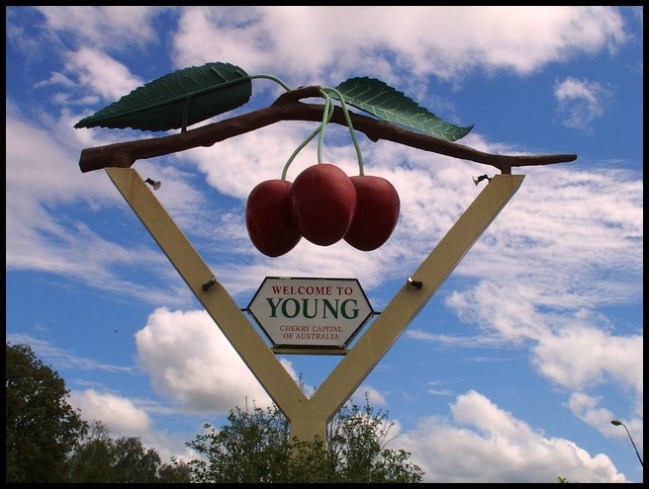
Young is a small town of around 7,000 in the South West Slopes region of New South Wales – less than two hours’ drive from Canberra and four hours from Sydney. It is, today, the self proclaimed ‘Cherry Capital of Australia’. Continue reading “Young – Cherry Capital Of Australia”
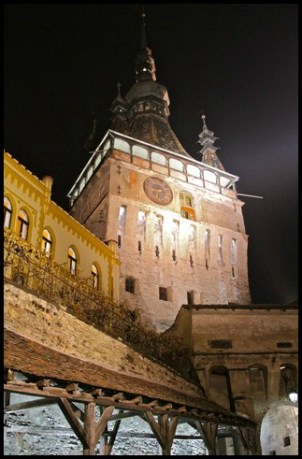
In another review I recommended you spend at least one night in Sighisoara.
While the town, and in particular the Citadel, is small and could be “done” in half a day you would miss so much by so doing. This is a place for strolling around. Take your time wander the streets. Sit down, have a coffee or bite to eat and then wander again. Repeat process again. Continue reading “Sighisoara By Night”
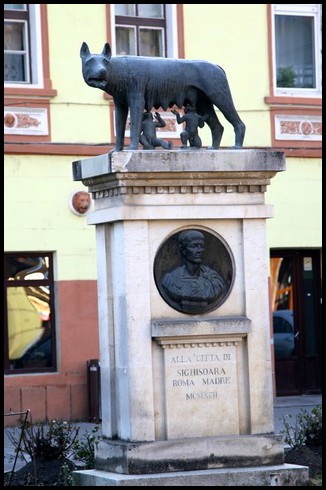 On a walk between the Citadel and the train station I came across this statue of the Capitoline wolf feeding Romulus and Remus, the mythical founders of Rome. One face value the existence of this statue here appears somewhat odd. Continue reading “Romulus And Remus – In Transylvania”

You can see this striking black and white Neo-Byzantine style Eastern Orthodox church on the northern bank of the Tarnava Mare river in Elisabeth Park from the Citadel (next picture). To visit it, just head for the train station – it’s about half way from the citadel to the station – take the pedestrian bridge across the river. Continue reading “Holy Trinity Orthodox Church”
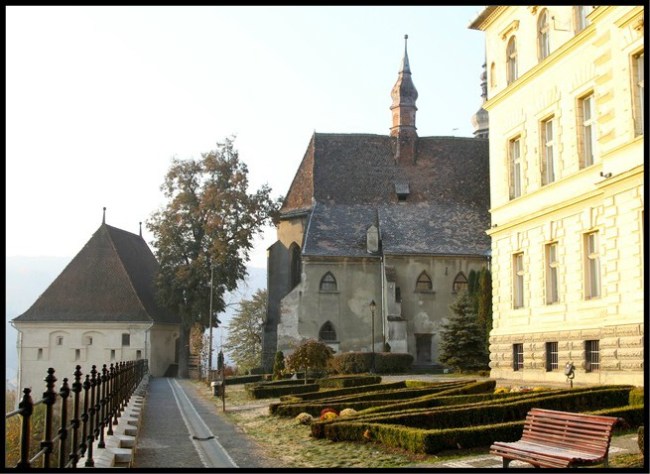
As you may have read in my general review on Sighisoara Citadel, the Citadel dates back to the 12th century when Transylvanian Saxons, were ordered here by the King of Hungary to settle and defend the Carpathian frontier against the steppe peoples. For this and also to keep later would be intruders at bay the fortified settlement of walls and towers was constructed and enhanced over time. In all 14 towers were built. These towers were built by various craft guilds – from which they derived their names. Continue reading “In Defence Of Sighisoara – Towers”
 The Rambling Wombat