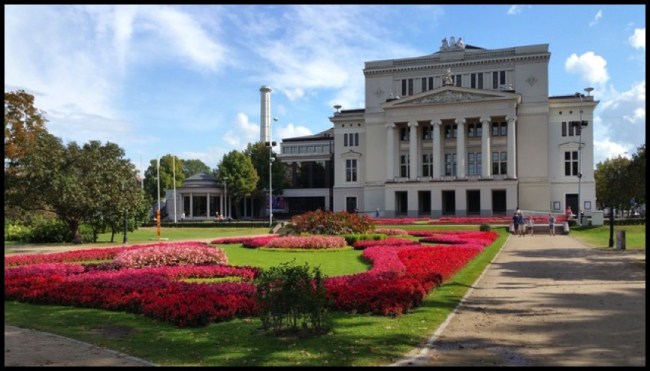
Latvian National Opera

104

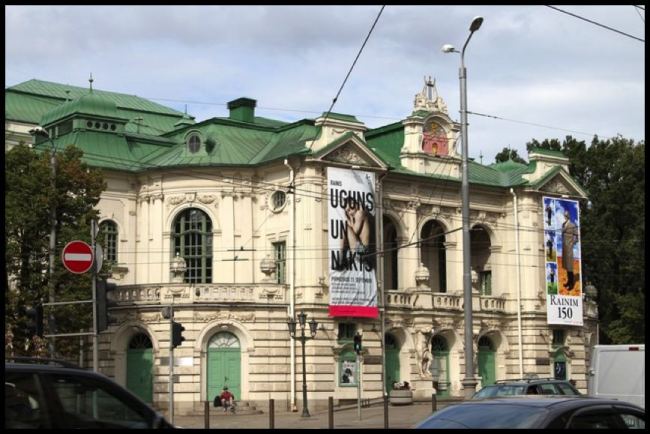
The distinctly neo-classical building that is now the Latvian National Opera and home to the Latvian National Opera and Ballet was designed by St Petersburg architect Ludwig Bohnstedt and built in 1863 as the Riga German Theatre, a German language theatre. A Russian language theatre, the Latvian National Theatre opened in 1902. At this time Latvia was part of the Russian Empire and German traders predominated in the business and financial life of the city, hence the need for Russian and German theatres. Continue reading “Latvian National Opera”

Bastion Hill and Memorial Stones

81

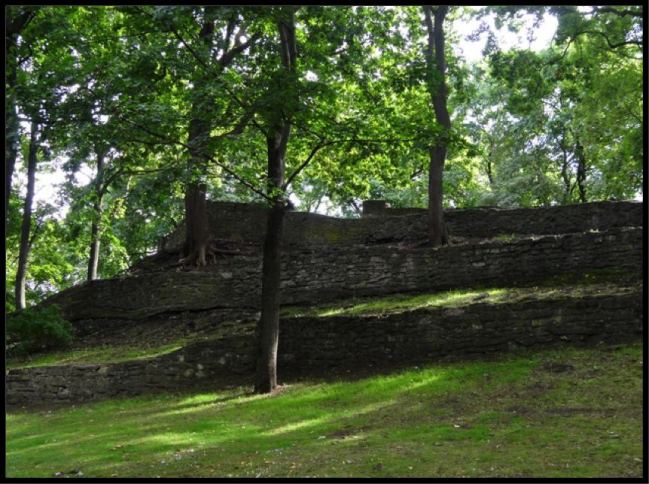
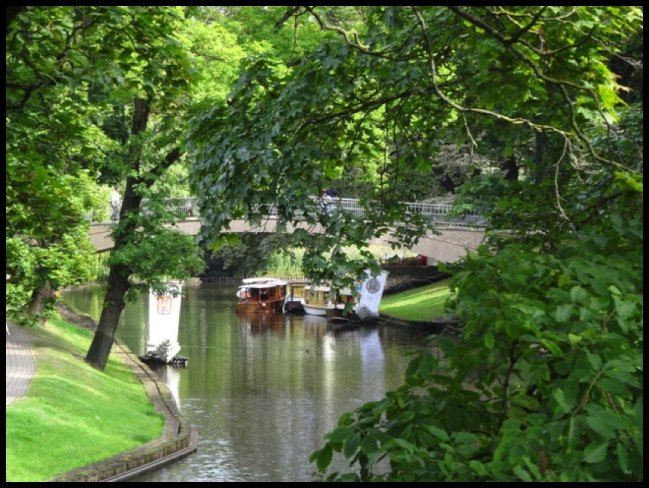
This small hill within what is now called Bastion Hill Park (Bastejkalns) is an artificial hill created between 1857 to 1863 when the city ramparts were dismantled after the Crimea War. By that stage, due to advances in warfare and weaponry, the ramparts no longer served any useful military purpose. Material from the ramparts was used to build up the banks of the former moat, now the winding Pilsētas kanāls, and create the 15m high Bastion Hill. The whole area was planted and developed and became Bastion Hill Park (Bastejkalns), now a delightful park between the Old City and the more modern city. Continue reading “Bastion Hill and Memorial Stones”

Bastion Hill Park

71

Bastion Hill or Bastejkalns Park is a delightful little park located on the eastern side of the Daugava River between the Old City and the newer central part of Riga. The park itself is divided in two by, or perhaps more accurately runs along the banks of, the winding Pilsētas Canal, formally a moat and part of the Old City’s defensive system which was pulled down in the mid 19th century making way for the park. Continue reading “Bastion Hill Park”