
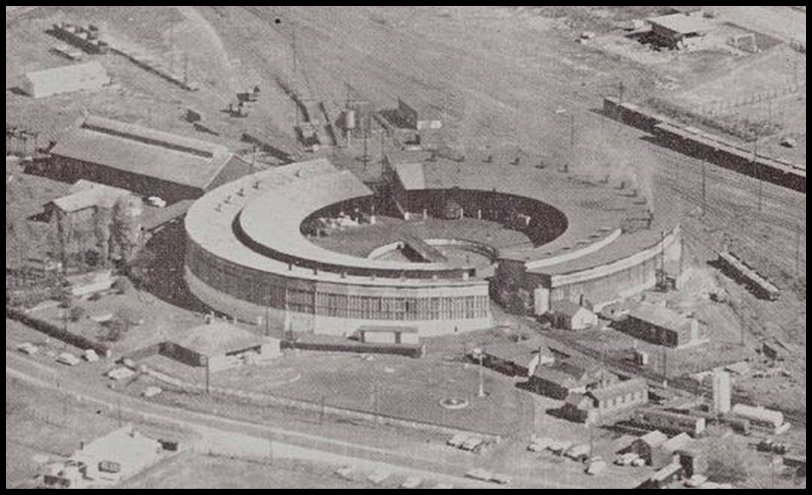
Based on a quick look at my main picture above you could be forgiven if you thought this review might be about a sports arena of some sort. What we actually see here is a Railway Roundhouse, in fact the largest one in New South Wales. Continue reading “Goulburn Rail Heritage Centre”
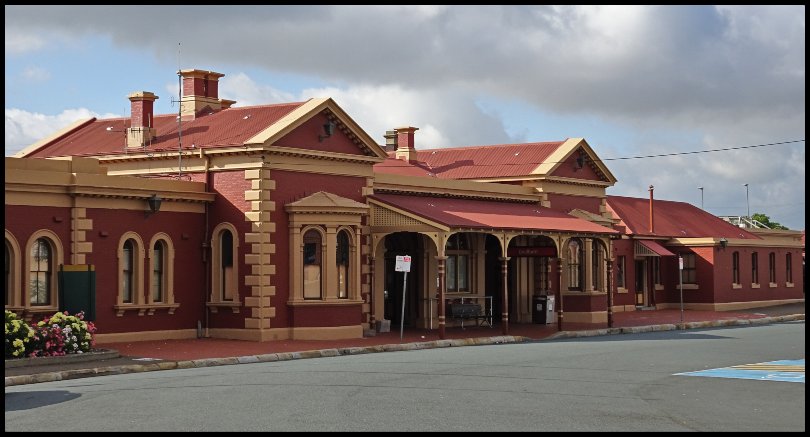
Goulburn Train Station – Building and History
For a number of years before the station was finally opened in 1869, Goulburn had been agitating for a railway link with Sydney. The Sydney Railway Company had been formed in 1849 and the first steam railway in Australia was conceived, designed and built to run between Sydney and Goulburn and so it did, in 1869. Four of the company’s six founding directors were from Goulburn and all had vested interests in getting a train (freight service) to Goulburn up and running. Continue reading “Goulburn Train Station – Building and History”

Majon Beach Guesthouse and its Beautiful Beach
After a full day’s drive from Pyongyang, topped off by a visit to the Hungnam Fertiliser Factory, I was relieved to arrive at our accommodation for the night – a ‘villa’ by the Korean East Sea (or the Sea of Japan to non-Koreans). Continue reading “Majon Beach Guesthouse and its Beautiful Beach”

Sherwood Homestead (Former) Walk Via East-West Road
There are three official walking tracks that end up at the very little that remains of the former Sherwood Homestead, about 45 kilometres from Canberra. The walks vary between 6.8 kms (this one) and 8.4 kms return. I have written a seperate reviews on the walk in from Mountain Creek Road and the walk in from the Blue Range Hut which, in itself, is of historical significance to the Canberra region and is now home to a camping site, making it the most popular starting point to get to Sherwood Homestead.
Continue reading “Sherwood Homestead (Former) Walk Via East-West Road”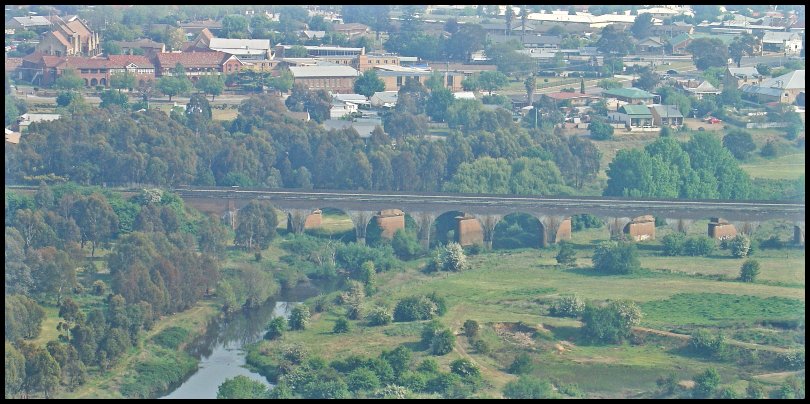
The Railway and north Goulburn
Anyone who has been to Goulburn and up the Rocky Hill War Memorial will immediately recognise the viaduct in my main picture above. When you come down into town it is nowhere to be seen and unless you know exactly where you are going it’s actually hard to find it. Big though it is, you will not stumble across it. Continue reading “The Railway and north Goulburn”
Rocky Hill Memorial Museum
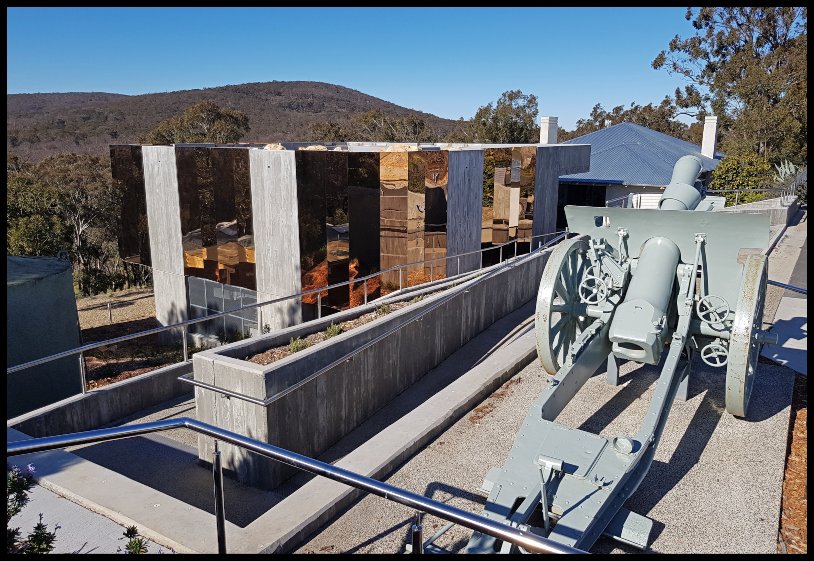
Being a regular visitor to the Australian War Memorial museum in Canberra I am used to a focus on Australia’s contribution to various wars with Australian and ally artefacts and some war trophies being used to tell that story. While the Rocky Hill Memorial certainly covers Australia’s contribution the focus here is much more on the exhibition of war trophies (enemy objects captured and taken from the field of battle by the victor) – such that visitors, especially Australians ‘can see the tangible results of’ the valour of Australia’s armed services overseas. Continue reading “Rocky Hill Memorial Museum”

Rocky Hill War Memorial
Normally War Memorials and Cenotaphs are centrally located within towns and cities and especially so in smaller country towns. Consequently, it did strike me as a little odd that Goulburn’s memorial, to those who served in World War I, should be situated a few kilometres away from the centre of the city on top of a prominent rocky outcrop. Continue reading “Rocky Hill War Memorial”
Hamhung Overview – Part B – Sightseeing incl Shots from the Window of a Bus
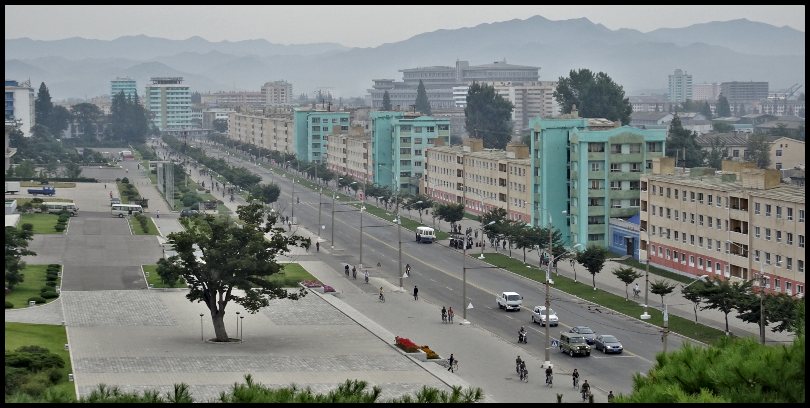
In Part A of this review I focused on a general overview of Hamhung and its history, in particular its development as an important industrial centre and port. I also briefly covered the city’s destruction as a result of American blanket bombing in the early part of the Korean War and the (disproportionately) horrific impact that the mid to late 1990s famine had on the city. The city and its people have been slow to recover from these events and for this reason it was off-limits to foreigners until around 2010. Continue reading “Hamhung Overview – Part B – Sightseeing incl Shots from the Window of a Bus”

Goulburn Jewish Cemetery
I have to say that it came as a bit of a surprise to me that Goulburn had a relatively high proportion of Jews amongst its population from the 1840s to the 1870s. The Census of 1841 recorded 22 Jews living in the town. The Census of 1846 recorded 54 Jews in Goulburn with another 59 in the adjoining Argyle County. At this time Goulburn had the third largest Jewish population in Australia, after Sydney and Melbourne. Continue reading “Goulburn Jewish Cemetery”
Mortis Street Pioneer Cemetery – Goulburn
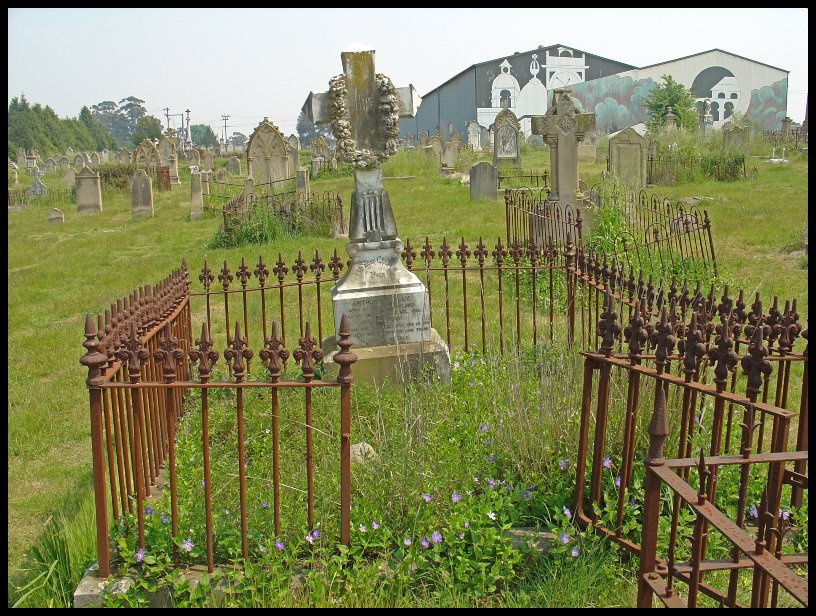
The was the first Goulburn General Cemetery (Roman Catholics, Presbyterians and Methodists could use it) and it was established in the late 1830s, slightly later than the Anglican Cemetery of St Saviour’s, located less then a kilometre from here at the other end of Cemetery Road. The cemetery was officially closed for burials when the new, and current, Goulburn General Cemetery was opened in 1904 though family members continued to be buried here in family plots until around 1954. Continue reading “Mortis Street Pioneer Cemetery – Goulburn”
 The Rambling Wombat