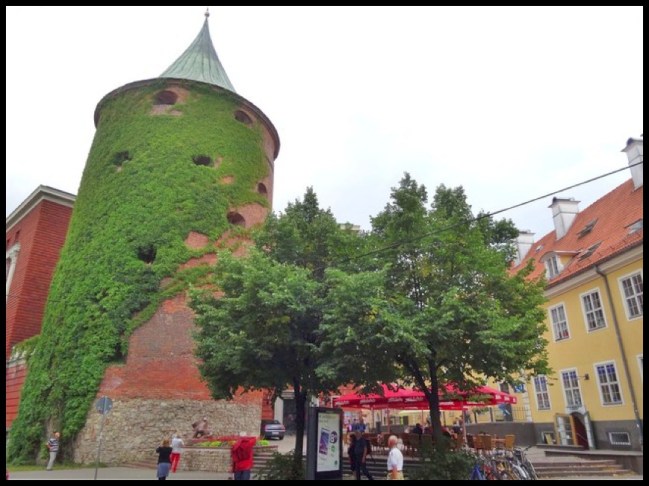
Dear Ladies, and Gentlemen as appropriate, Riga’s Powder Tower is not a fashionable place to powder your nose. Rather, it part of the Latvian War Museum but more on that later. Continue reading “Powder Tower”

"I travel not to go anywhere, but to go. I travel for travel's sake. The great affair is to move." RLS
Dear Ladies, and Gentlemen as appropriate, Riga’s Powder Tower is not a fashionable place to powder your nose. Rather, it part of the Latvian War Museum but more on that later. Continue reading “Powder Tower”
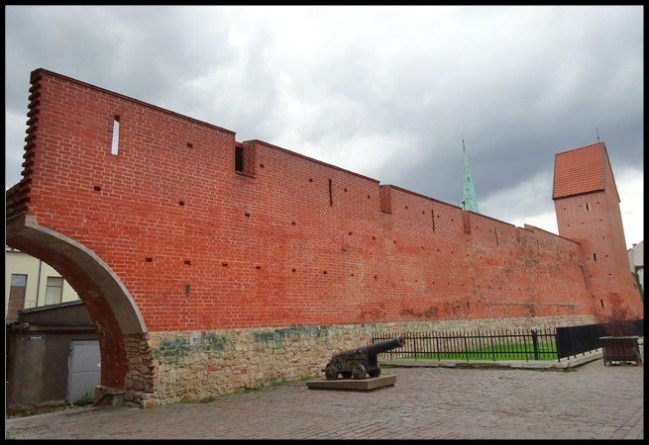
Like many medieval cities, Riga encircled itself with defensive walls. Originally these ‘walls’ were merely a deep ditch. This was later replaced by a rampart with a wooden fence on top. Over time, due to advances in munitions, these ramparts and wooden walls were replaced with dolomite (stone) walls. Continue reading “Riga City Walls”
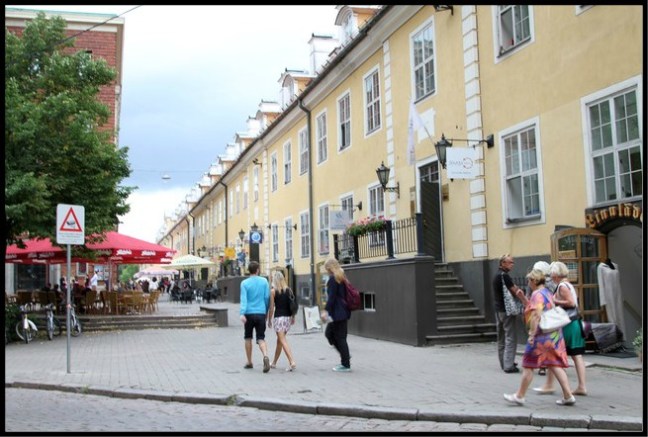
The Great Northern War saw Latvia move (not that it had any choice in the matter) from occupation by Sweden to occupation by Russia in 1710 and resulted in Riga’s fortifications and barracks being severely damaged. Continue reading “The Former Jacob’s Barracks”


‘Subtle hints of linden blossom, birch bud, valerian root, raspberry, bilberry, and ginger as well as touches of nutmeg and black peppercorn tease the palate and come alive in the glass’. Continue reading “Riga Black Balsam”

In 1282 Riga joined the North German city trading union, Hansa. The Hanastic League governed all trade along the Baltic seacoast until the 19th century. The League founded the Guild of the Holy Spirit in Riga with the mission of ”fostering conviviality, genteel socialising, feasting, charity and spirituality” among its merchant and master-craftsmen members. Sounds to me like a year round Oktoberfest though that is probably a little less genteel and lacking in the spirituality department! Continue reading “Great & Small Guild Halls”
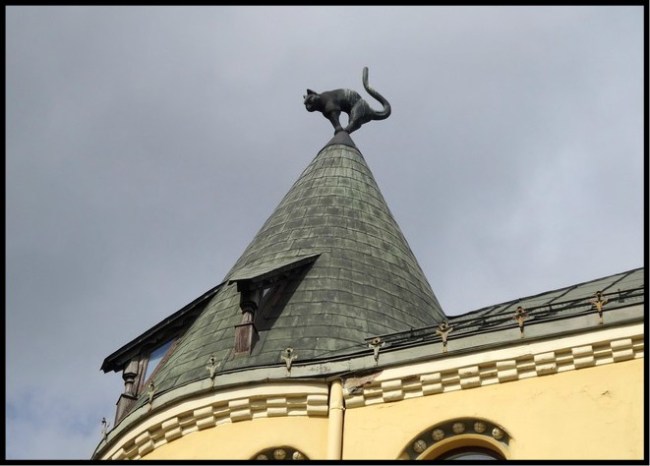
The Cat House takes its name from two angry black cats, one perched on each of the two turrets of this rather grand 1909 Medieval / Art Nouveau styled house, located across the road from the Great Guild. Continue reading “Time to Get Catty – The Cat House”

Through the Middle Ages and into the modern era German traders and merchants, via the Hanseatic League, were generous to Riga and indeed were instrumental in the building and prosperity of the city for centuries. During World War II the German Luftwaffe was equally generous when it came to dropping bombs on the city and destroying many of its historic buildings. Some of these bombs demolished buildings in the area that was subsequently cleared to create what became Livu Laukums (Square). Continue reading “Livu Laukums – Full of Colour”
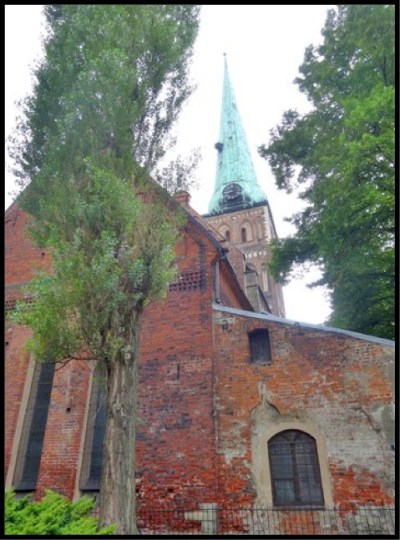
The earliest reference to The Metropolitan Cathedral Basilica of Saint James the Greater, more commonly referred to as St James’ or St Jacob’s, is 1225 though it was probably built a bit earlier than this, being one of the four churches established by Bishop Albert who is credited with founding Riga in 1201. Continue reading “Ask not for whom the bell tolls -St Jacob’s”


On 4 May, 1990 Latvia announced its independence from the USSR. This was not recognised by the USSR. Agitation for independence had begun in 1987, spurred on by the Soviet policy of perestroika, introduced by President, Michael Gorbachev. Continue reading “Barricades Monument”

The generally acknowledged founder of Riga, Bishop Albert, laid the foundation stone for Riga Cathedral (originally St Mary’s) on 25 July 1211.
Today’s cathedral, the seat of the Archbishop of the Latvian Evangelical Lutheran Church and the largest medieval church in the Baltics dominates the Doma Laukums (square), in the centre of the Old City. Continue reading “Riga Cathedral And Cloisters”
 The Rambling Wombat