
Our Lady of Sorrows was the first stone Catholic church to be built in Riga after the Reformation – in 1785 – over 200 years after the beginning of the Reformation. Continue reading “Our Lady of Sorrows Catholic Church”
"I travel not to go anywhere, but to go. I travel for travel's sake. The great affair is to move." RLS
Our Lady of Sorrows was the first stone Catholic church to be built in Riga after the Reformation – in 1785 – over 200 years after the beginning of the Reformation. Continue reading “Our Lady of Sorrows Catholic Church”

Riga Castle is the official residence of the President of Latvia though, as I have indicated on my House of Blackheads review, the President currently resides there (2015) and has done so since mid 2012 as the Castle is being renovated. Continue reading “Riga Castle – Musical Chairs”
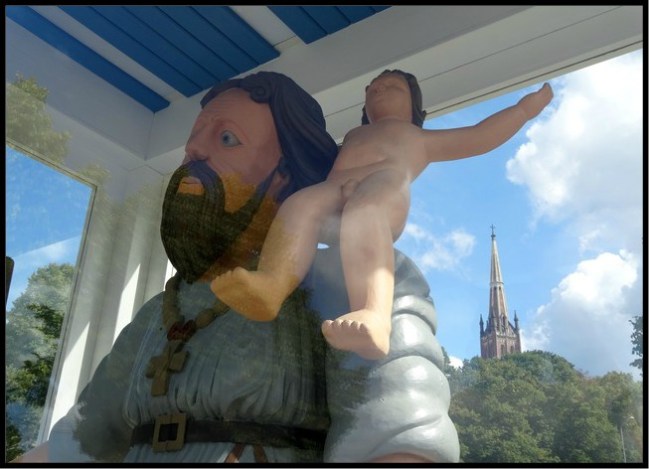
The story goes (though details vary) that in the third century there lived, on the right bank of the Daugarva River, a gentle giant called Offero. Offero made a living by ferrying people across the river on his shoulders, day or night and in all kinds of weather. Continue reading “Big Christopher”
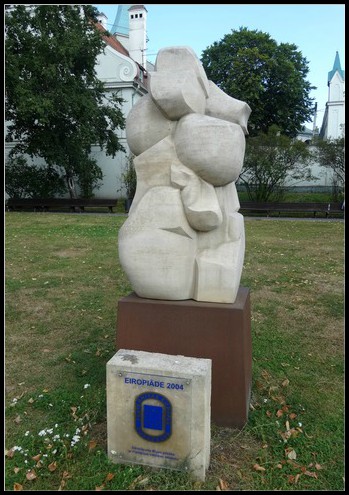
In 1991 Latvia shook off the shackles of the Soviet Union, ending 51 years of forced occupation and rule of the country by Nazi Germany (1941-44) and the Soviet Union (1940-41 and 1944 -1991).
In 2003 the people of Latvia (or 73% of them) turned out at polling stations to take part in a referendum on joining the European Union. Opponents of membership argued that Latvia should not give up the sovereignty it had so recently gained from the Soviet Union while supporters, among other arguments, put forward to view that membership would actually protect Latvia from any future Russian pressure. Continue reading “From Soviet Union to European Union”
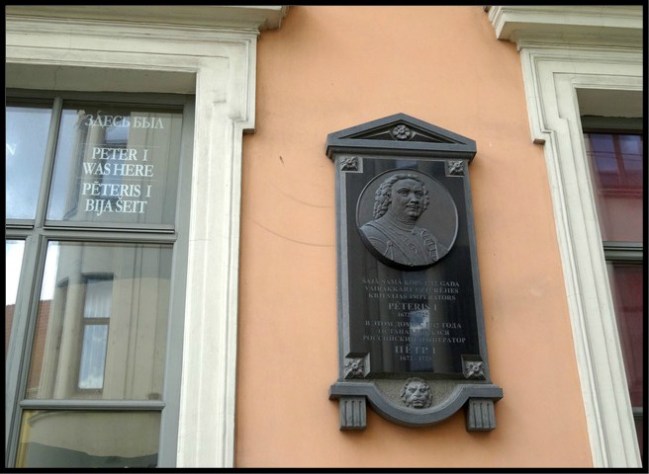
1940 was not the first time that Latvia played enforced host to the Russian/ Soviet bear. In 1710 Russia, under Tsar Peter I (Peter the Great), defeated Sweden in the Great Northern War and took control of both Latvia and Estonia from Sweden. Peter is reputed to have personally launched the first shells in the siege of Riga, in November 1709. Russia held Latvia for over two hundred years, until WWI. Continue reading “Peter I Was Here – And Still Is, Secretly!”
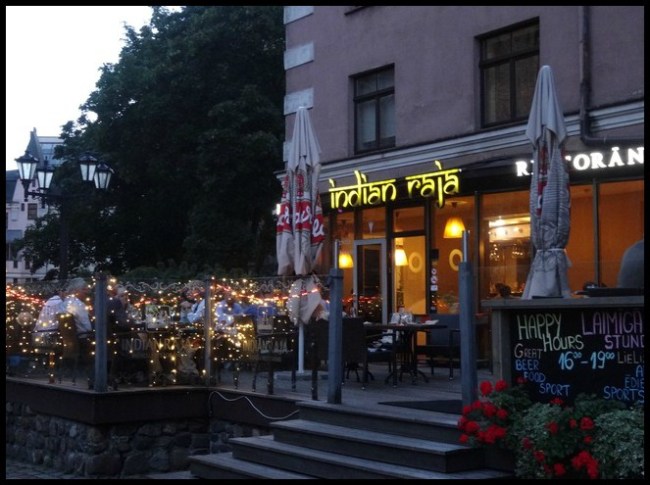
Despite my love for Indian food, in recent times my constitution has become such that I tend to steer clear of this cuisine. As I suspect my reader is not that terribly interested in my internal functionings I won’t provide further detail here.
In Riga, of all places, I got a craving for some Indian food and no, I didn’t live to rue the day so this review does not conclude with me sitting on the toilet! Continue reading “Indian Raja: “Unexpected Quality””

In the Brothers Grimm fairytale, The Bremen Town Musicians, the musicians, a donkey, a dog, a cat and a cockerel, all past their prime and rejected by their owners, set out to make a new life for themselves as musicians in Bremen, Germany. They never made it to Bremen. Continue reading “The Bremen Town Musicians”

Located in the shadows of the much larger St Peter’s Church, Riga is St John’s Church. Like St Peter’s, it dates back to the early 13th century. Continue reading “St. John’s – Riga”

On Sunday, 9th January 1905 (Bloody Sunday) hundreds of workers protesting against oppressive labour practices and seeking improved living conditions were killed by the Tsar’s guard in St Petersburg. This heavy handed response by Tsar Nicholas II set off the failed 1905 Revolution. Some say it also spurred on the successful 1917 Revolution, which saw the Bolsheviks seizing power from the Tsar and the creation of the communist Soviet Union. Continue reading “1905 – Bloody Sunday Monument”
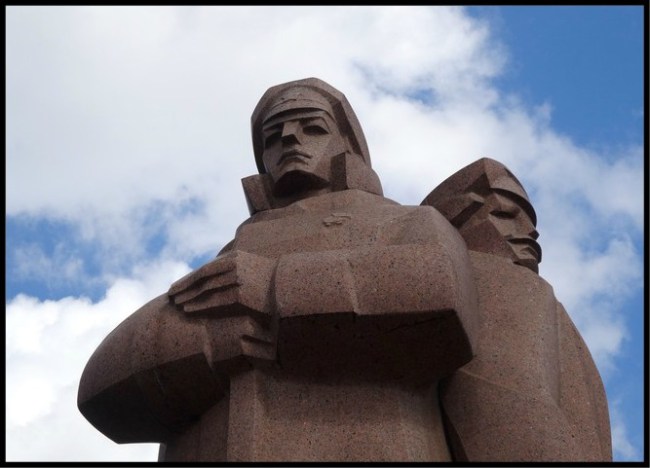
Ever since my first (and indeed only) visit to the former Soviet Union about 30 years ago I have had a fascination and liking for the brutalist style monuments and sculptures found there and in other countries of generally socialist leaning. Sadly – with one significant exception, that being North Korea – this style of art is no longer produced, and that which was produced is often decaying, has been moved to monument graveyards or has be deliberately destroyed because of the political nature there-of. My liking for the art form is purely related to its grand and bold scale, its gravitas as it were, rather than the brash and perfunctory political statements it so often makes. Continue reading “Latvian Riflemen Monument”
 The Rambling Wombat