
Earlier in the morning we had visited the Victorious Fatherland Liberation War Museum (note that the link is to my 2014 visit review) in Pyongyang, an amazing museum by any measure, with its focus on the history of what foreigners refer to as the Korean War. On completing our tour of the museum, we jumped on our bus and headed north, on a ‘field trip’, to visit one of the sites mentioned by our guides in the museum. Our destination was the Konji-Ri Revolutionary Site which was the headquarters of the Korean People’s Army (KPA) for much of the duration of the Korean War.
Continue reading “The Konji-Ri Revolutionary Site”
Wonsan – The Drive from Hamhung and an Introduction
Pyongyang is often referred to as a showcase capital, for good reason. Anyone who is anyone lives in Pyongyang, anyone who is not anyone is only permitted to enter the city under special circumstances and they certainly cannot live there. The infrastructure, buildings, services and facilities are the best North Korea can offer.
With a few noted exceptions, North Korea outside Pyongyang is a different world but it is a world that is changing, albeit slowly. While only the fifth largest city with a population of around 365,000, Wonsan, in terms of recent development, comes (a distant) second to Pyongyang.
Continue reading “Wonsan – The Drive from Hamhung and an Introduction”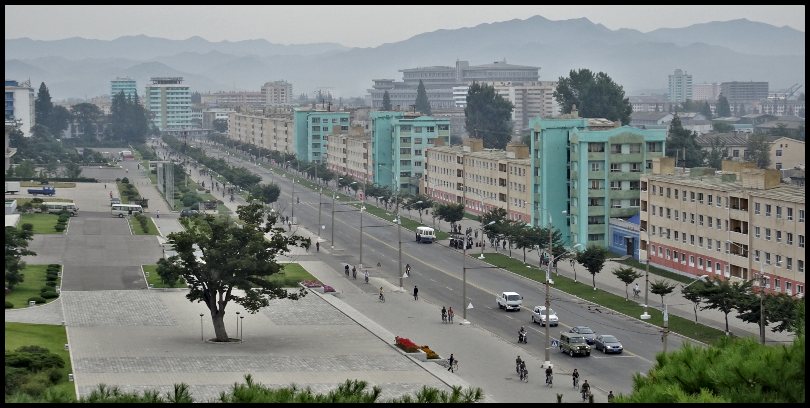
Hamhung Overview – Part B – Sightseeing incl Shots from the Window of a Bus
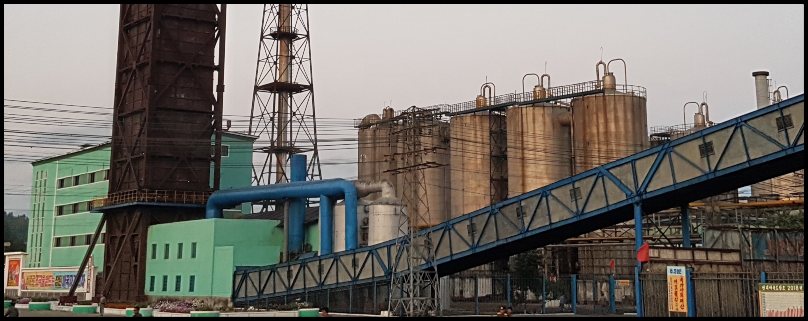
In Part A of this review I focused on a general overview of Hamhung and its history, in particular its development as an important industrial centre and port. I also briefly covered the city’s destruction as a result of American blanket bombing in the early part of the Korean War and the (disproportionately) horrific impact that the mid to late 1990s famine had on the city. The city and its people have been slow to recover from these events and for this reason it was off-limits to foreigners until around 2010. Continue reading “Hamhung Overview – Part B – Sightseeing incl Shots from the Window of a Bus”
Hamhung – Overview Part A – Introduction and Background
Hamhung, on the east coast of North Korea, is the country’s second largest city and a major industrial centre and port. It is the capital of South Hamyong Province and has a population of nearly 800,000 or less than a third that of the capital, Pyongyang which lies some six to eight hours away by road and much more by train. It took me ten hours to get there as we had a couple of scheduled stops, and one unscheduled one, along the way. Continue reading “Hamhung – Overview Part A – Introduction and Background”
Taedongmun Cinema House
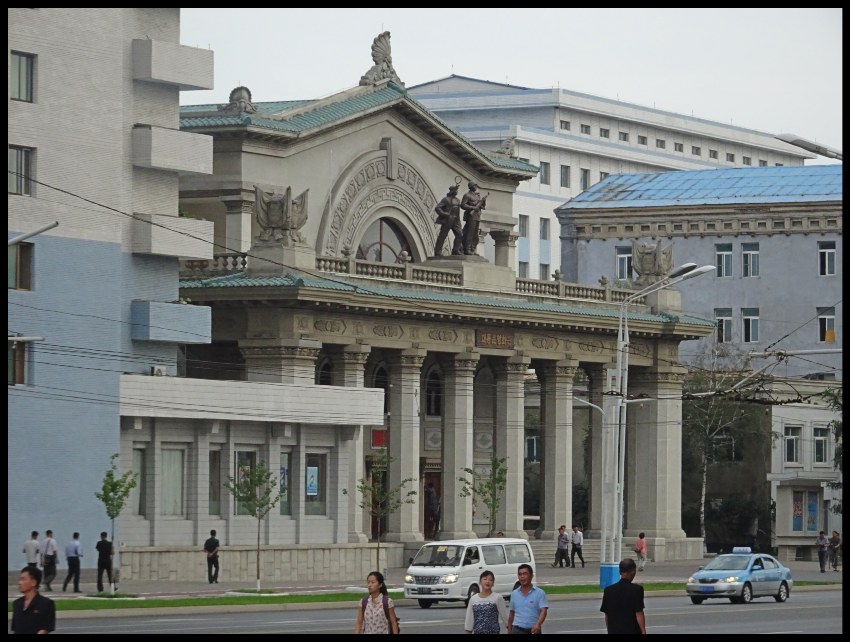
We passed this building on a number of occasions but didn’t actually stop or get to go inside. While suspecting a theatre, I didn’t know what the building was so, as I was really taken by the look of the exterior, I decided to investigate further. My investigations tell me that this is the Taedongmun Cinema House. Continue reading “Taedongmun Cinema House”
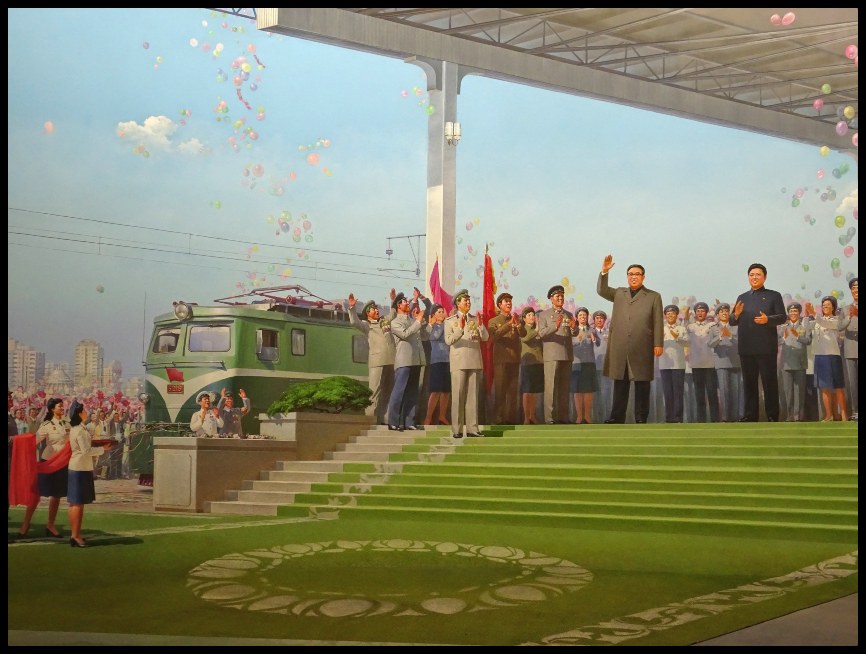
Pyongyang Railway Museum
Being a fan of all things railway I greatly looked forward to visiting this museum and, being in North Korea, I knew it would have that something extra. It did not disappoint. Continue reading “Pyongyang Railway Museum”
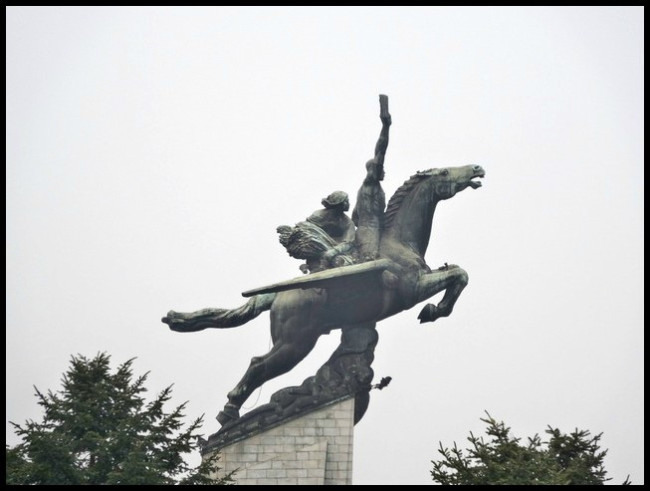
Chollima Morphs To Mallima Under Kim Jong-un
If you have read some of my Panmunjom entries you will be aware that the Korean War, which started in 1950, continues to this day. However, hostilities, barring a number of minor and not so minor infractions, came to an end in 1953 with the signing of a military Armistice Agreement outside Panmunjom, a small village, in what is now the Demilitarised Zone, around the border with South Korea. Continue reading “Chollima Morphs To Mallima Under Kim Jong-un”
Australian National Korean War Memorial

A plaque within this memorial, on ANZAC Parade, provides a brief history of the Korean War and Australia’s involvement there-in. I reproduce that in full here for the interest of readers of this page. Continue reading “Australian National Korean War Memorial”
The Forgotten War (Korean War)
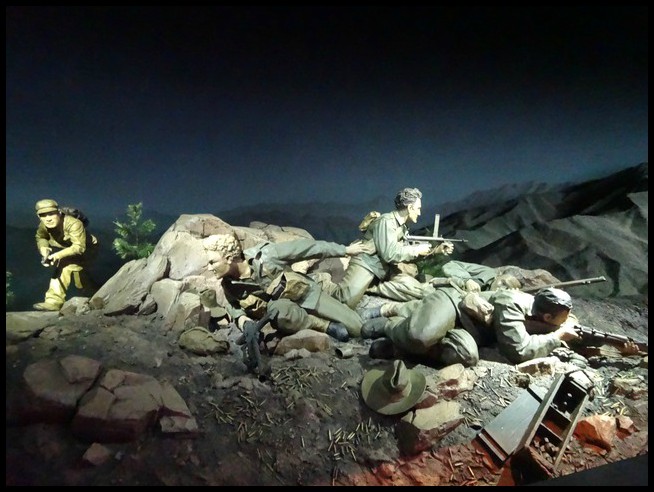
The ‘Conflicts 1945 to Today’ galleries at the Australian War Memorial commemorate Australia’s post WWII war and peace-keeping operations. The galleries cover Korea, Malaya and Indonesia, Vietnam, Afghanistan and the two Gulf Wars.
In this review I would like to go into a little more detail on what is often referred to as the ‘Forgotten War” – the Korean War. Continue reading “The Forgotten War (Korean War)”
Pohyon Temple – Mt Myohyang
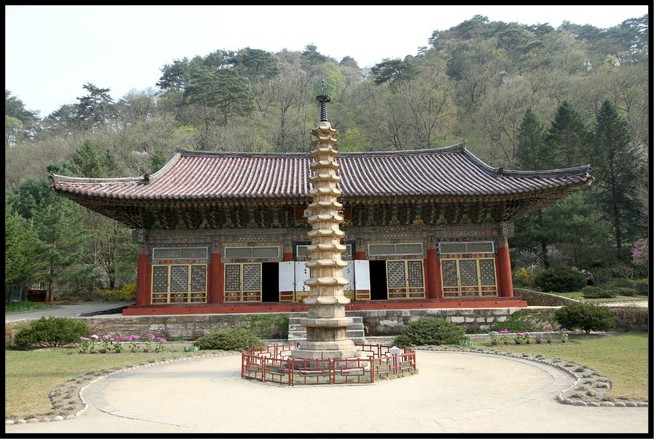
Pohyon Buddhist temple, one of the few places of worship in North Korea open to foreign visitors, dates from 1042 and the Koryo dynasty. It was founded by a monk named Kwanghwak and is named after the saint that guards the morals of Buddha. The current incarnation of the temple mainly dates from post the Korean war (1951-53) when the temple complex was extensively damaged by US bombings with over half of the buildings completely destroyed. Continue reading “Pohyon Temple – Mt Myohyang”
 The Rambling Wombat