
Between Kerang and Lake Boga (about 40 kilometres north of Kerang) lie over fifty lakes of varying size, some with water, some dry. Collectively the lakes are referred to as The Kerang Lakes and today we visited a small number of the more accessible and thus more popular of these lakes.
Continue reading “A drive around The Kerang Lakes – Day 312”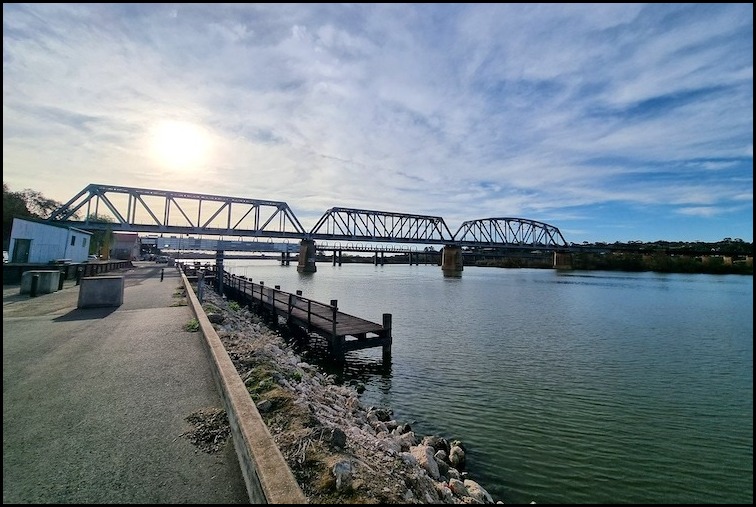
A Walk Around Murray Bridge – Day 299 (Pt 2.)
The city of Murray Bridge is situated on the lower reaches of the Murray River – the third longest navigable river in the world, after the Amazon and the Nile. It is about 80 kms from the South Australian state capital of Adelaide. Surprise, surprise its name derives from a bridge built across the River Murray in 1879. The city is a typical rural hub surrounded by a major agricultural area focusing on the dairy industry, chicken raising, pig breeding and vegetable growing. From a tourist perspective the main attractions are paddle steamer trips along the river and a visit to the nearby Monarto Safari Park.
Continue reading “A Walk Around Murray Bridge – Day 299 (Pt 2.)”
It’s Green! – St Peter and St Paul’s Old Cathedral
Yes, it is indeed green!
It is green, I can assure you not because of the Irish connection (that will become evident shortly) but rather, because it is built from a locally quarried green diorite porphyrite igneous stone. It is finished with a Marulan sandstone dressing (I make it sound rather like a salad!). The deep purple roof slates are from Bangor in Wales. Continue reading “It’s Green! – St Peter and St Paul’s Old Cathedral”
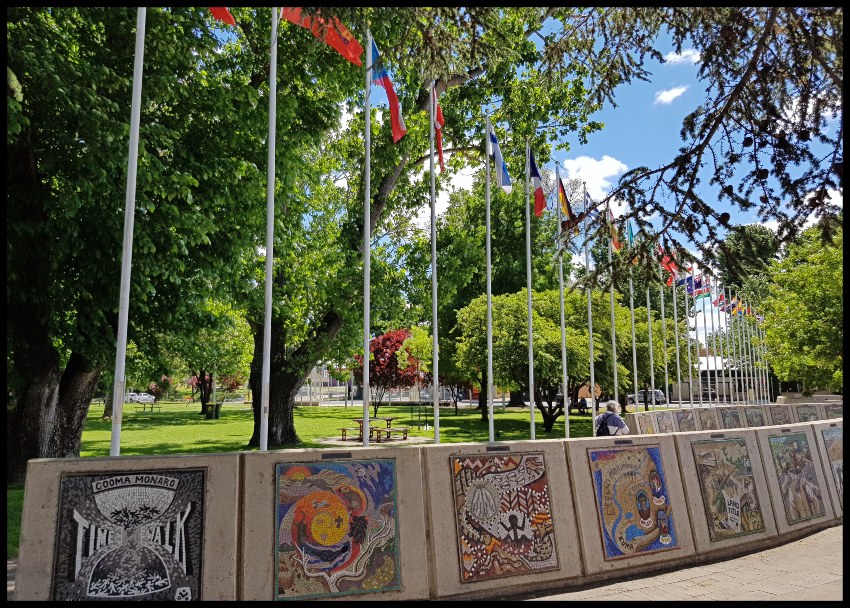
Let’s do the Time Walk in Cooma!
Ok, it’s the Time Walk and not the Time Warp but the name did remind me of Rocky Horror!
The Time Walk is a very interesting and rather unique presentation of the history of Cooma and the Monaro District from Aboriginal times to the present day, though with a concentration on the last two hundred years. Continue reading “Let’s do the Time Walk in Cooma!”
Breakout Creek Wetlands – Nice Detour From Coast

In another review I alluded to the fact that the area around Henley Beach and Grange was formerly highly prized farming land by virtue of the existence of rich alluvial soils. The large expanse of alluvial soil was due to the fact that the Torrens River, until 1934, stopped short of discharging into the sea, being stopped by the bank of sand dunes which runs along this part of the coast. Unable to escape, the river regularly flooded leading to fertile soil in the area. Continue reading “Breakout Creek Wetlands – Nice Detour From Coast”
Henely Beach – Mosaics
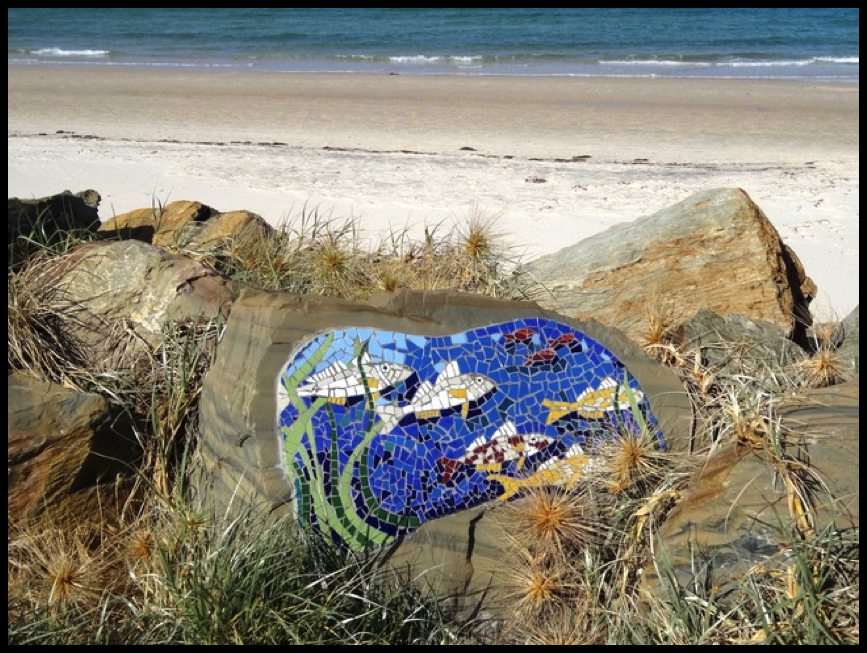
One of the most enduring art forms over the last few thousand years has been that of mosaics, which I simply love. Mosaics by the ocean, well you have to adore them! Continue reading “Henely Beach – Mosaics”
The Hall of Valour

The Hall of Valour, symbolically positioned directly underneath the resting place of the Unknown Soldier at the Australian War Memorial, “honours the deeds of ordinary Australians under the extraordinary conditions of war.” Continue reading “The Hall of Valour”
Hall of Memory
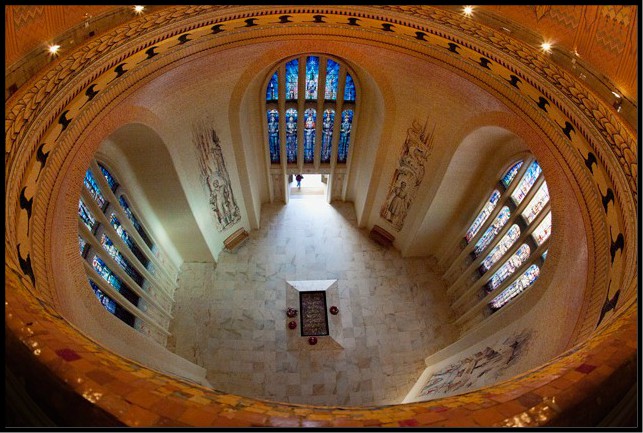
The centrepiece of the Australian War Memorial is the absolutely stunning and evocative Hall of Memory, containing the Tomb of the Unknown Australian Soldier. It is located at the far end of the commemorative courtyard, past the Pool of Reflection. Walk straight ahead when you enter the War Memorial. Continue reading “Hall of Memory”
Parliament House – Canberra

For me this is one of the most architecturally interesting and satisfying buildings not only in Australia but in the world and is certainly a major contrast to the previous building – Old Parliament House – which was only ever intended to be a temporary home for the Australian Parliament, albeit a temporary home that lasted 61 years. It would be quite unfair to compare the two buildings. Continue reading “Parliament House – Canberra”
Pyongyang Metro – The Artwork

Anyone who has visited the Moscow Metro will understand where the inspiration for the Pyongyang Metro artwork/decoration came from. Indeed, the whole Metro is modeled on the Moscow one. What I saw in the Pyongyang Metro was socialist realist art at its best – in the form of mosaic murals, metallic reliefs and statues. Continue reading “Pyongyang Metro – The Artwork”
 The Rambling Wombat