I really like this impressive granite war memorial, located between the beach and the small town centre (main street), which also serves as a useful timepiece with a clock on each face of the memorial. It doesn’t really matter that the time on each clock differs by a few minutes – you’re here for leisure purposes. From a memorial perspective the clock reminds us that times passes by for all of us. On top of the memorial is a white marble Angel of Peace (the Semaphore Angel) or is it Winged Victory, with wings outspread and symbolical palm in hand? Continue reading “Semaphore – War Memorial”
Brighton Arch of Remembrance

The Arch of Remembrance has pride of place in Brighton, on the foreshore right in front the jetty. Indeed, it is a grand and formal entrance to the jetty. Continue reading “Brighton Arch of Remembrance”
ANZAC Park War Memorial

I have written separate reviews on Gundagai’s Boer War Memorial, located in front of the town’s ornate court house, and the WWI Memorial at Rusconi Place near the former railway station. Typically, and especially so in smaller country towns, World War I memorials have been expanded to also commemorate sacrifices in WWII and later wars and conflicts. Indeed this occurred in Gundagai but in 1958 a new memorial park, with a grouping of memorials to various wars and conflicts was built in what is now known as ANZAC Park, which also includes a football stadium and various other recreational facilities. This is now Gundagai’s main war memorial. Continue reading “ANZAC Park War Memorial”
Gundagai War Memorial – Cenotaph

‘Erected to the Glory of God and the honour of brave men by a grateful people.
Great War 1914 – 1918′ Continue reading “Gundagai War Memorial – Cenotaph”
Boer War Memorial

The Second Boer War (1899–1902), which ended with the Treaty of Vereeniging and the conversion of the Boer republics into British colonies, involved large numbers of troops from many British possessions right across the world. This was the last great war restricted to Empire participants and ironically Australia’s first war as a nation, following Federation in 1901. Australians made up five per cent of all Commonwealth forces serving in South Africa during the war. This was a major contribution given the size of its population. Continue reading “Boer War Memorial”
Jufuku-in Temple – Burma War Veterans Memorial

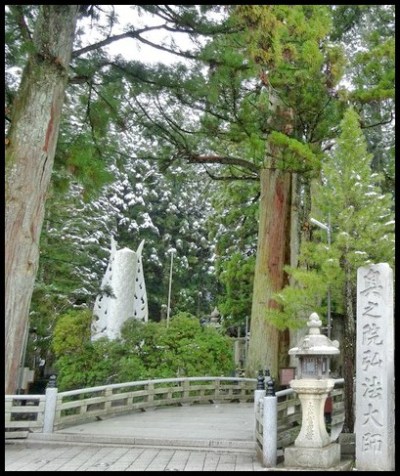
The vast majority of the many temples in Koyasan are square or rectangular in shape, dark coloured (with the notable exception of the Konpon Daito Pagoda in the Danjo Garan) and have some form of courtyard. As such the brightly coloured octagonal Jufuku-in Pagoda Temple (Manihoto) by the side of the town’s main street really stood out as I made my way from Okunoin Cemetery towards the Garan. Continue reading “Jufuku-in Temple – Burma War Veterans Memorial”
The State, Aristocracy, Big Business and Okunoin
Shingon Buddhism has been very closely tied to the State and supported by the aristocracy since its inception by Kobo Daishi in 816. The latter association giving rise to the term ‘Aristocratic Buddhism’. While many temples in the Danjo Garan (seperate reviews), and elsewhere in Koyasan, were built at the request of, or in memory of, former Japanese Emperors, high ranking military officials and the like, nowhere are these associations more evident than here in the Okunoin Cemetery. Continue reading “The State, Aristocracy, Big Business and Okunoin”
War Horse Memorial

While we are all very familiar with war memorials which remember, or act as a memorial to, people who took part in and/or died in wars one occasionally finds one to animals, most commonly horses. Continue reading “War Horse Memorial”
Light Horse Memorial
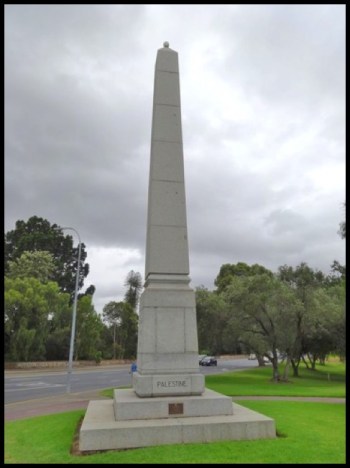
The Light Horse Memorial is dedicated to South Australian Light Horsemen who paid the supreme sacrifice in World War I, specifically in three theatres of war – Egypt, Palestine and Gallipoli. Continue reading “Light Horse Memorial”
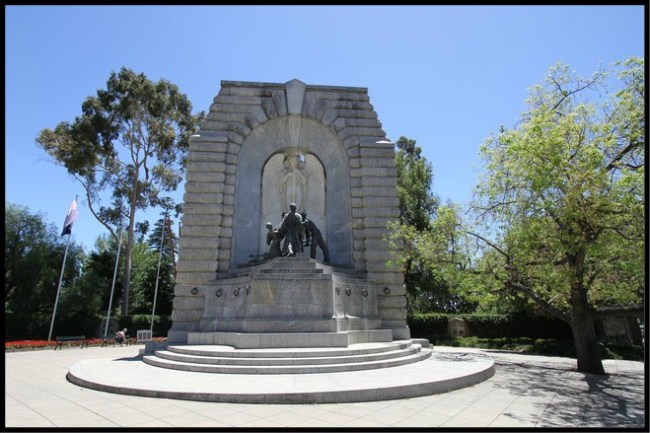
National War Memorial – Lest We Forget

The National War Memorial has a prime corner sight at the intersection of North Terrace and Kintore Avenue and was opened in 1931 to commemorate those South Australians who gave their lives in World War I between 1914 and 1918. Why it is called the “National” War Memorial is not clear as it only commemorates South Australians lost during the War – perhaps initial intentions differed. Continue reading “National War Memorial – Lest We Forget”