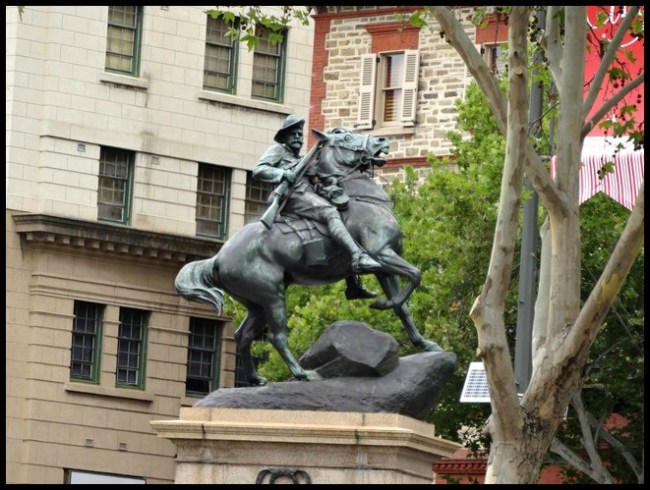
The Boer War (1899 to 1902) was the first overseas war in which South Australians fought. Continue reading “South African War Memorial aka Boer War Memorial”
The Boer War (1899 to 1902) was the first overseas war in which South Australians fought. Continue reading “South African War Memorial aka Boer War Memorial”
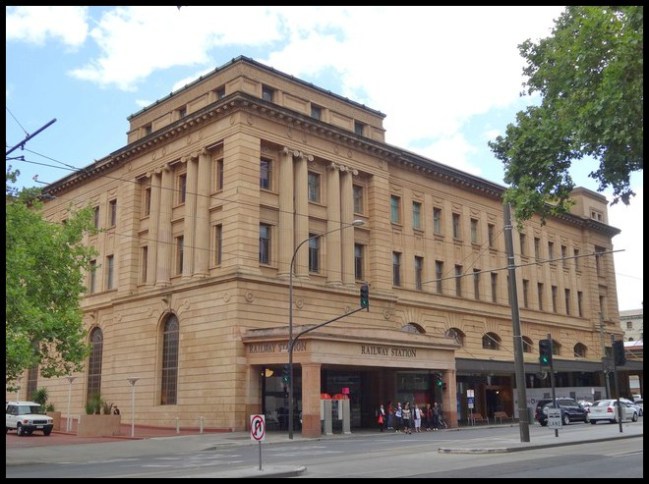
As city railway stations go, Adelaide’s central railway station (though not the grand building housing it) is small. There is good reason for this, Adelaide’s metro fleet is small and there are no longer any regular country train services in South Australia departing from here, or anywhere else. Further, interstate services including the famous Indian Pacific (Perth to Sydney), the Ghan (Adelaide to Darwin) and the Overland (Adelaide to Melbourne) now depart from Keswick Station in one of the city’s inner west suburbs. Continue reading “Adelaide Railway Station”

Given my liking for anything to do with trains and railways, I have a particular liking for Young’s former Railway Station, but for many visitors the Town Hall on Boorowa Street is Young’s most striking building. Were it not for the fact that it incorporates the towns rather tasteful and distinctive World War I Memorial it might be less so. Continue reading “War Memorial and Town Hall”
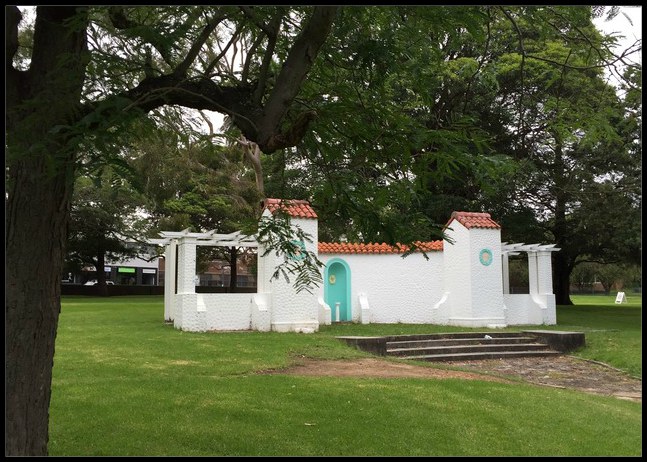
This war memorial, in the grounds of the former Callan Park Hospital for the Insane (later the Rozelle Hospital and now the Sydney College of the Arts and part of the University of Sydney) stands out from all other Australian War Memorials that I have seen. Continue reading “Callan Park (Rozelle Hospital) War Memorial”
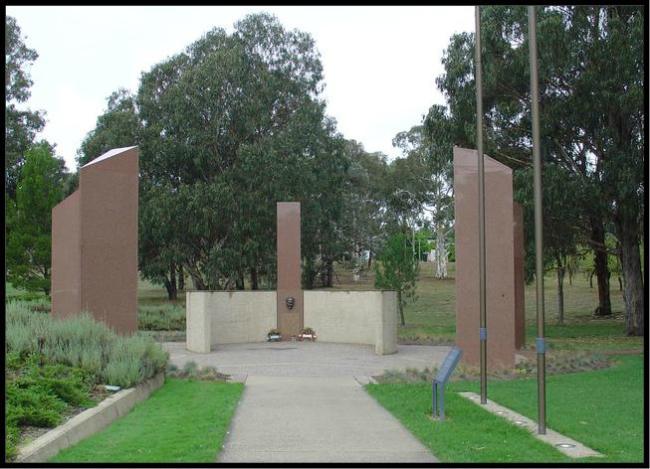
This Anzac Parade memorial, a crescent-shaped wall and five pillars derived from the symbol and star on the Turkish flag was dedicated on 25 April 1985 to commemorate the 70th anniversary of the Gallipoli landing. It honours Kemal Ataturk, commander of Turkish forces at Gallipoli and later the first president of modern Turkey, as well as the heroism and sacrifice of both the ANZAC and Turkish troops who took part in the campaign. Continue reading “Kemal Ataturk Memorial”

Unveiled in 1986 by Her Majesty the Queen and marking the 75th Anniversary of the Royal Australian Navy (RAN), the Anzac Parade memorial – also known as “Sailors and Ships – Interaction and Interdependence” – symbolises the mutual dependence of sailors and their ships, its dynamic force complemented by the image of moving water. Continue reading “Royal Australian Navy Memorial”
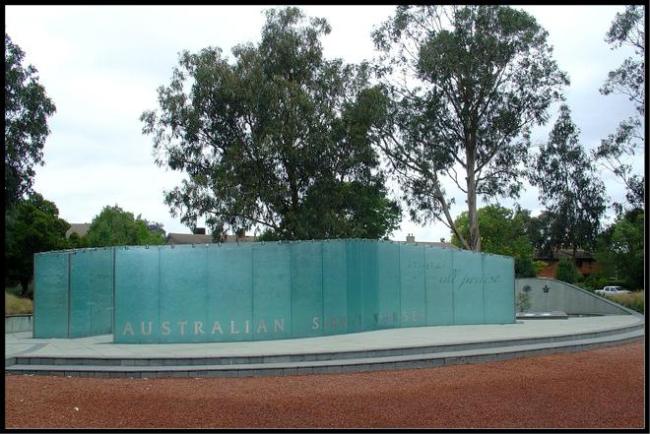
This Anzac Parade memorial was unveiled by Governor-General, Sir William Dean on 2 October 1999 to mark 100 years of military nursing and to honour those who served, died and suffered in war. Continue reading “Australian Service Nurses National Memorial”
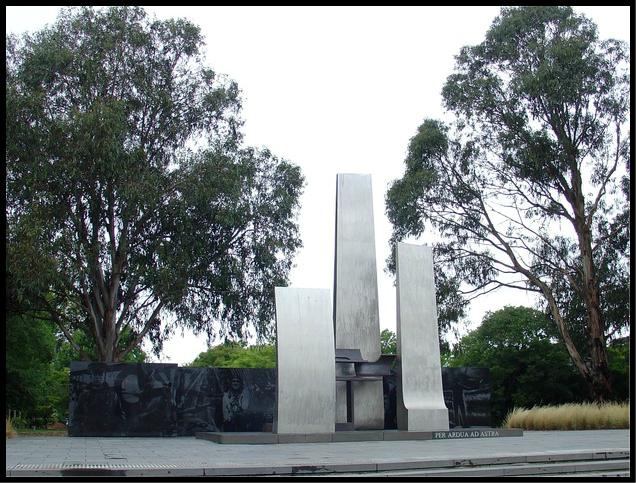
This Anzac Parade memorial to the Royal Australian Air Force (RAAF) honours the service and sacrifice of the men and women who have served in the RAAF and its predecessor, the Australian Flying Corps. Continue reading “Royal Australian Air Force Memorial”
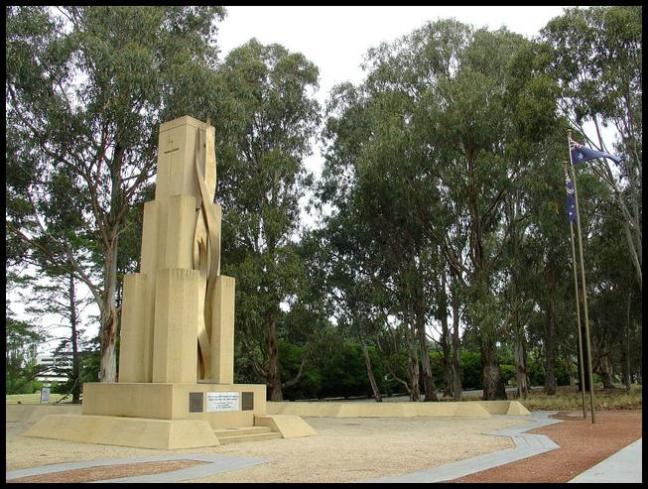
In referring to the garrison of 20,000 allied troops (14,000 of whom were Australian) William Joyce aka Lord Haw Haw, the British traitor turned German radio propagandist, likened the troops to ”rats who would be smoked out of their holes”. Not to be down heartened by this reference the troops took up the name and thus were born the “Rats of Tobruk”. Continue reading “Rats of Tobruk Memorial”
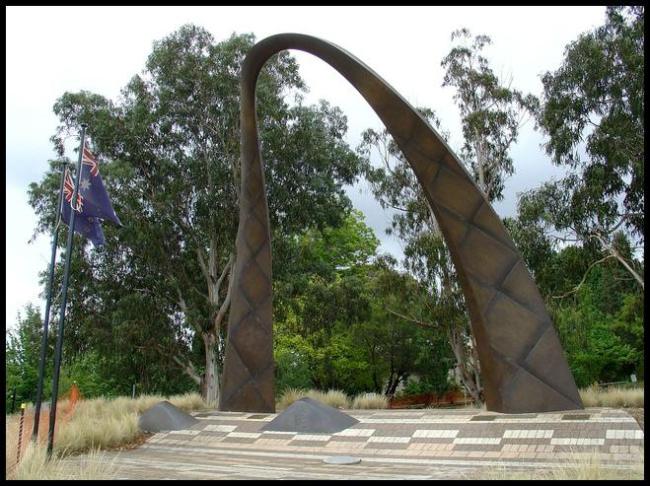
This memorial, located at the southern most end of Anzac Parade at the intersection of Anzac Parade and Constitution Avenue, is in two parts – two bronze “basket handles” one on each side of the Parade. Continue reading “New Zealand Memorial”
 The Rambling Wombat