
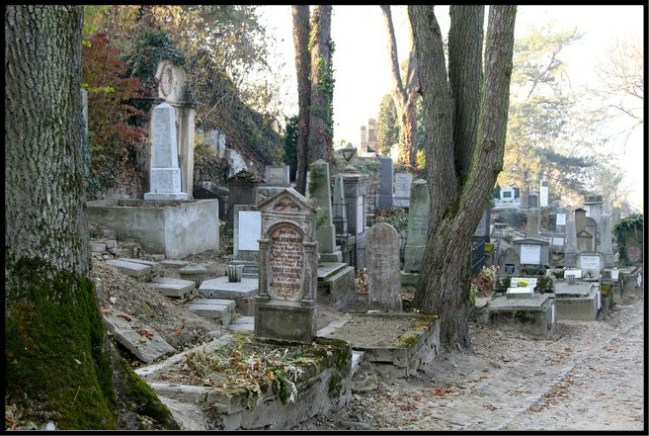
The cemetery, while tidy, is overgrown with a rambling and evocative collection of headstones which appear to be randomly scattered with many broken and falling over. Indeed the positioning of some of the tombstones clearly suggests that some of the dead have made attempts to escape. The whole place eludes an atmosphere befitting of vampires and other creatures of the night and could easily have been created as a set for a Dracula (or Rocky Horror – whoops – I wasn’t supposed to mention that again) movie. Dare, if you will, to go in after dark! It is open till 8pm (from 8am).
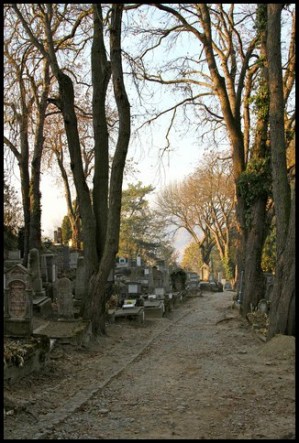 Undaunted and fearless as I am, I went in for a good look around (just after 8am!).
Located across the way from the front door of the Church on the Hill and leading down along the hillside, the cemetery interchangeably called the Evangelical, German or Saxon cemetery is almost exclusively Saxon/German in terms of interments.
The cemetery dates back to the 14th century and became the final resting place of the descendants of the Transylvanian Saxons (Germans), who were ordered here by the King of Hungary to settle and defend the Carpathian frontier against the steppe peoples in the 12th century.
While the cemetery is much older, most of the now existing headstones are from the 19th and 20th century (including a monument to those killed in WWI) though many still carry the marks of the trade/craft guilds to which the deceased belonged. This German association is even carried though to the entrance sign which is written in German and then Romanian.
Accessed from the Citadel Square by the 17th century Scholars’ Stairs.
Address: Rear of Church on the Hill, Sighisoara Citadel.
This entry is one of a group (loop) of entries on Sighisoara, Romania. I suggest you continue with my next entry – HERE – or to start the loop at the beginning go to my introductory entry – HERE.


Looks very atmospheric – a twilight visit might be worth the risk for the photos that you could get?
LikeLiked by 1 person
You might get away with it 🙂
LikeLike
This is an intriguing piece of history. They were frontiersmen, working and also defending a sliver of territory that holds back a horde
LikeLiked by 1 person