
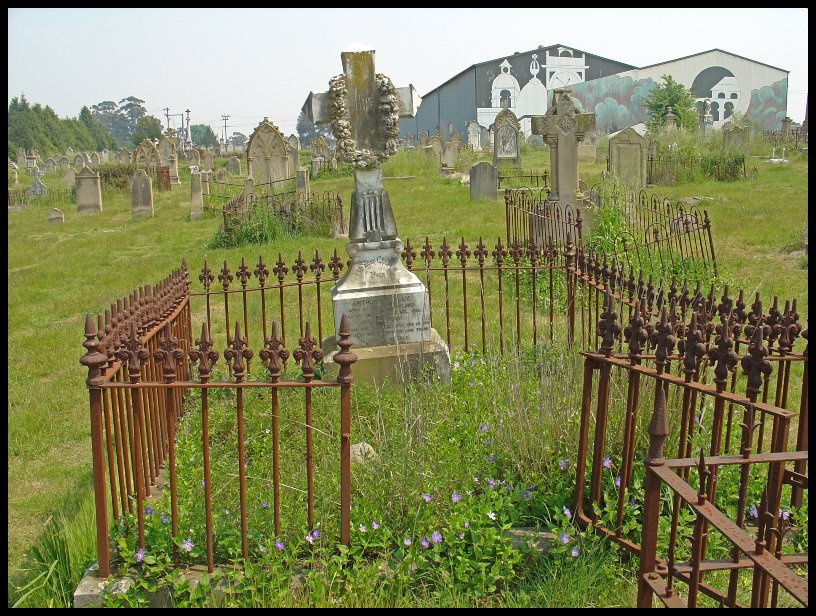
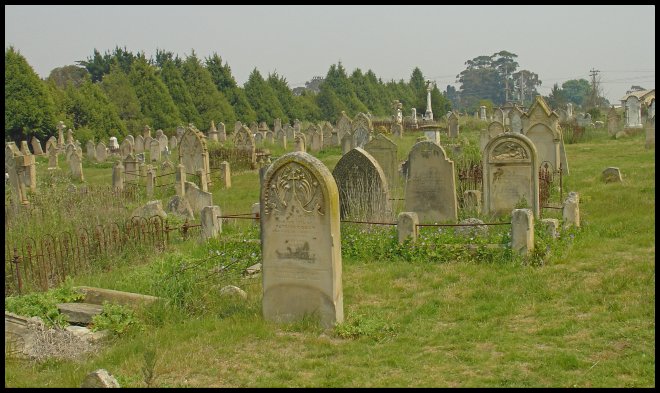
The was the first Goulburn General Cemetery (Roman Catholics, Presbyterians and Methodists could use it) and it was established in the late 1830s, slightly later than the Anglican Cemetery of St Saviour’s, located less then a kilometre from here at the other end of Cemetery Road. The cemetery was officially closed for burials when the new, and current, Goulburn General Cemetery was opened in 1904 though family members continued to be buried here in family plots until around 1954.
The cemetery goes under a number of names – Mortis Street Pioneer Cemetery, the Old Cemetery, Mortis Street Cemetery and the Pioneer Cemetery.
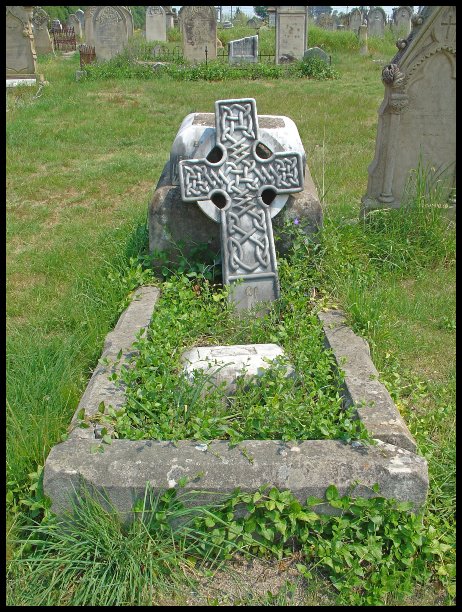
Based on headstones, the earliest recorded burial here was that of Alexander Fraser on 2 September 1839 while the oldest person recorded as buried here was Duncan McDonell on 21 September 1861, aged 101.
Among those buried here are five members (there are only three headstones) of the Durack family. The Durack family migrated from Ireland in the early 1850s just after the Famine and were pioneers in the true sense of the word. The extended family spread out all over Australia from its original base here in Goulburn, engaging in gold mining in the Kimberley (North West Australia) and all aspects of agriculture throughout the country. At its height, the family ran a string of cattle stations with a total land area roughly the size of Belgium.
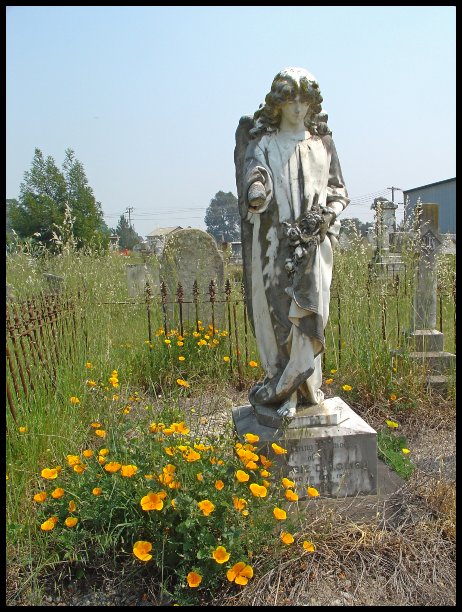
A particularly saddening fact that in reinforced, or learnt, in visiting this and many other mid 18th to early 20th cemeteries in Australia is the disproportionately large number of children and young people who didn’t make it to adulthood in those days. Life was harsh for these early pioneers and death was a constant scrooge. Subsequently looking through cemetery records, the details of interments in the Bates family plot brought this sad reality even more to life. As if the death of several children was not enough another member of the family was killed in action at the Battle of the Somme in 1918. As I understand it, the bodies of fallen soldiers were not repatriated in WWI so I assume the reference to Ronnie Bates here is just that and his remains were laid to rest in Europe.

I have so far concentrated on death, graves and headstones and given that I am writing about a cemetery I imagine this would be what you would expect me to write about.
But, Dear Reader, when you visit this cemetery the first thing you notice is neither graves not headstones but rather the artwork covering the full wall of an engineering workshop which abuts the cemetery.
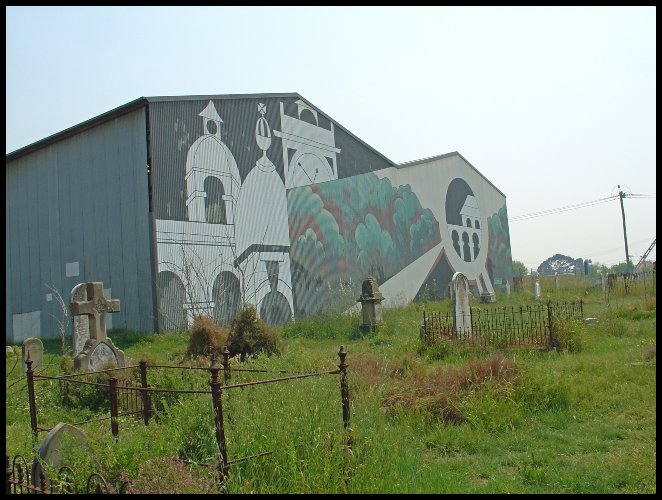
This is a piece of commissioned artwork entitled, rather unoriginally, “The Big Picture”, painted by Braidwood (local) artist Fran Ilfould in 1999. If it were located somewhere else I am not so sure that I would like it but, in its present location, I love it – unusual adornment for a cemetery though it is.
Address: Intersection of Mortis Street and Cemetery Road
My next Goulburn review– HERE
Return to the beginning of my Goulburn reviews –HERE
 The Rambling Wombat
You have inspired me to check out our own local cemetery when I get a moment. So much history there. Thanks, Mel
LikeLiked by 1 person
I was going to say ‘enjoy but that’s probably not the right word … but you know what I mean 🙂
LikeLiked by 1 person
Ha ha – Yes, I know what you mean…
LikeLike
As you probably know, wandering round old cemeteries is something I often do, and that’s what strikes me too, the infant mortality rate. Some family gravestones are almost too sad to read.
LikeLiked by 1 person
That mural makes an interesting and unusual backdrop to the cemetery – I like it 🙂
LikeLiked by 1 person
Yes many young children died in years past. Vaccines and antibiotics changed that. Mind you, plenty of us still survived or we wouldn’t be here. No doubt this is one of the reasons why families were large in days gone by, along with a lack of contraception.
In addition, I find it so sad that our cemeteries are a disgrace. Overgrown with weeds and forgotten. They could be cared for, at a small cost to the families.
LikeLiked by 1 person
In the Canberra area old cemeteries tend to be fairly well looked after but generally I agree with you.
LikeLike
Have a look at images of Jelling cenetery in Denmark or any Danish cemetery!
LikeLike