

This is the second part of an entry on my visit to Monarto Safari Park. If you have not read Part 1 I suggest you do so HERE, prior to continuing.
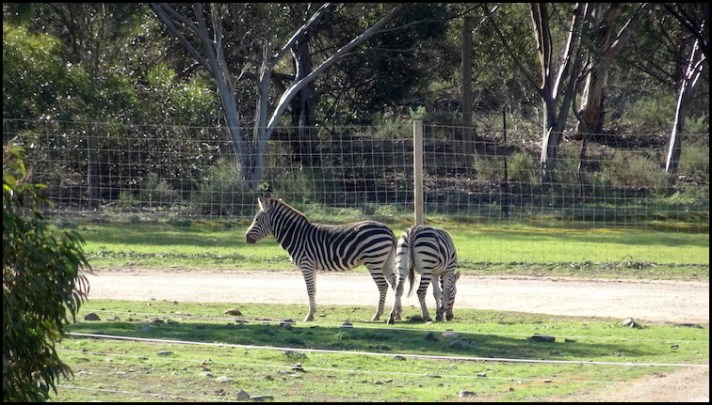
Plains Zebra
The Plains Zebra is the most common and geographically widespread of the three zebra species. It roams the savannahs of eastern and southern Africa.
Something I didn’t realise, but it makes sense, is that when zebras are threatened their unique coat patterns, when moving together in a group, can make it difficult for a predator to pick out an individual, giving the zebra a greater chance of survival.
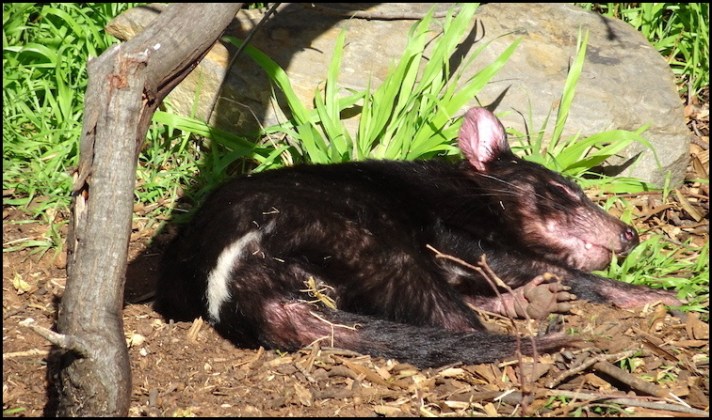
Tasmanian Devil
Tasmanian Devils are Australia’s largest living marsupial carnivore. Ugly buggers, if you ask me…but you didn’t. They were once widespread over mainland Australia, however, the introduction of the dingo is thought to have caused their extinction on the mainland. Today, the Tasmanian Devil is found only on the island state of Tasmania.
Until recently this species was considered common in Tasmania, however, due to the presence of Devil Facial Tumour Disease (DFTD) there has been a sharp decline in the population. The disease manifests as small lumps near the mouth, which over time grow into large tumours on the face and neck, and occasionally on other parts of the body. DFTD is highly contagious and affected animals appear to die within six months.
Tasmanian Devils are nocturnal creatures and in the wild spend the majority of the day sleeping in a den or dense bush.
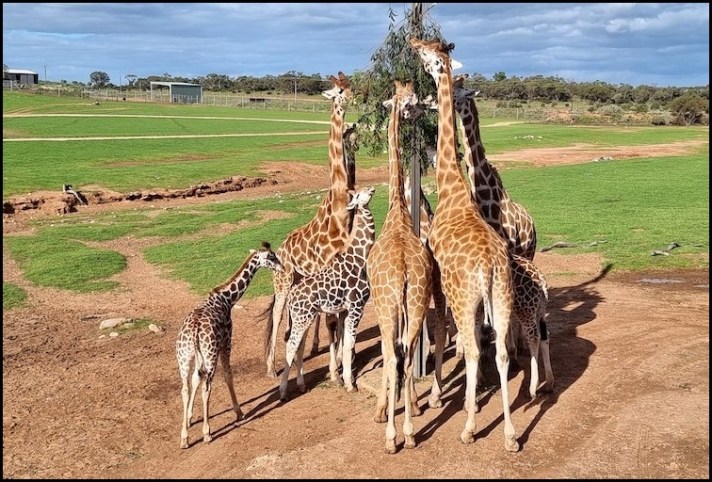
Giraffes at feeding time with two young
Giraffes are found in the arid and dry savannah regions of Africa south of the Sahara Desert wherever trees occur.
It is estimated there are approximately 80,000 giraffe roaming the savannah plains of Africa. This number is declining as their habitats shrinks due to human population growth and an increase in agricultural activity, expanding settlements and road construction. The giraffe’s main food source, acacia trees, is also on the decline.
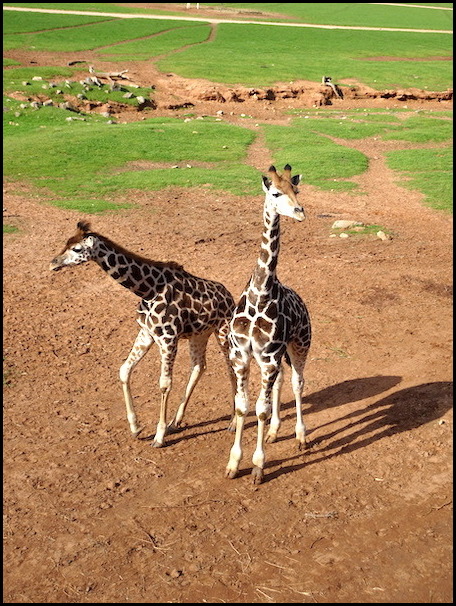
Two baby giraffes
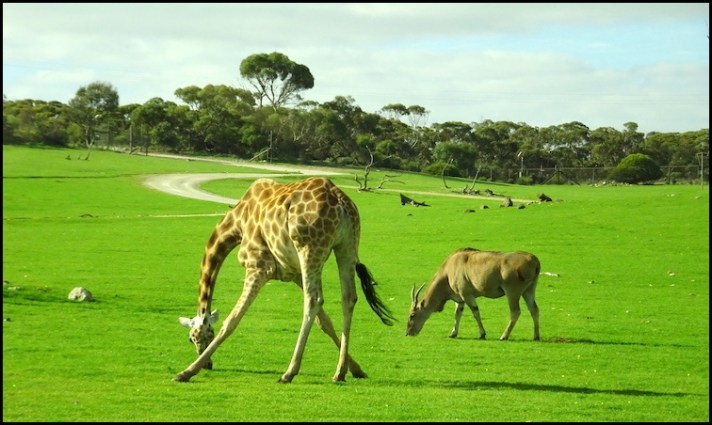
Giraffes have to spread their legs to eat from the ground. Here with an eland
Giraffes are predominantly browsing animals, meaning they tend to eat leaves and bark off trees as the main part of their diet. However the can and do eat from the ground as well but look rather clumsy in the act.
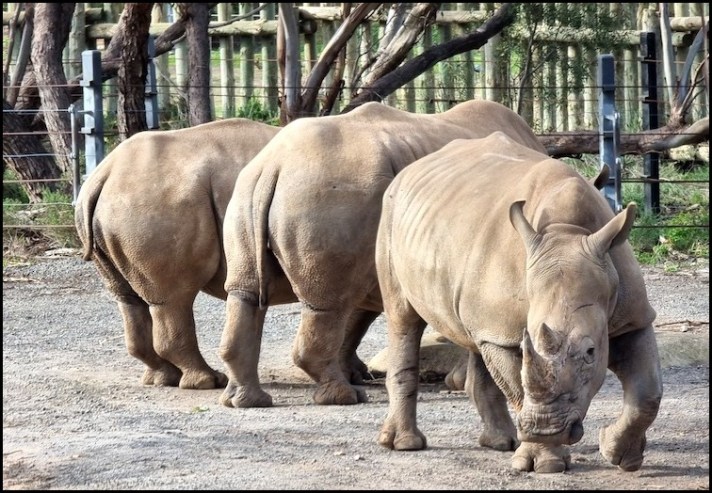
Southern White Rhinoceros
Southern White Rhinoceros roam the southern half of the African continent, in savannah and grassland habitats.
There is an estimated 10,000 wild rhinos. While this is around four times the number of black rhinos in the wild, they have become a threatened species.
One of the biggest threats to the wild population is poaching for the international rhino horn trade, which commands a high value on the black market for alleged medicinal purposes. This illegal trade has seen the incidence of poaching escalate hugely over the past decade.
Rhino horns provide no proven medical benefit; the horn is made of a protein called keratin, which is also what makes up skin, fingernails, hair and hooves. This alleged cure for a range of medical aliments has resulted in needless death of many rhinos.
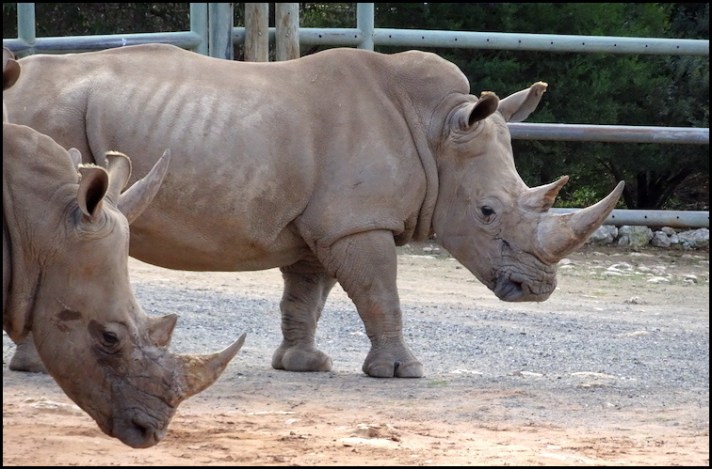
Southern White Rhinoceros
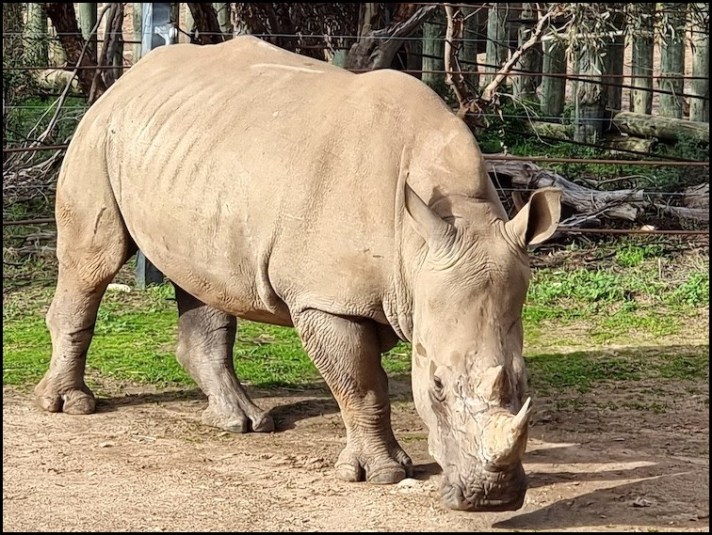
Southern White Rhinoceros
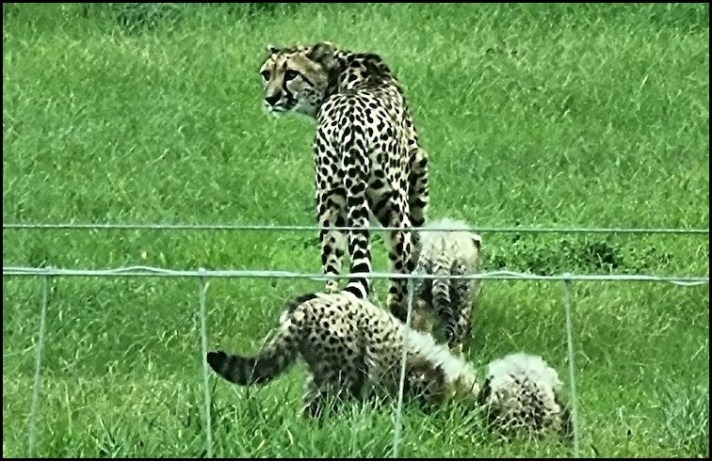
Cheetah with three young cubs
As when I went on a safari in Kruger National Park in South Africa, here at Monarto the cheetahs proved to be the most difficult animal to spot. While I completely failed to see one in Kruger at least in Monarto I saw one somewhat in the distance. As a wonderful bonus the mum had in tow three recently born and very playful cubs.
Sorry for the grainy pictures which obviously required use of an extended zoom lens.
The cheetah is the world’s fastest land animal. Uniquely adapted for speed, the cheetah is capable of reaching speeds greater than 100kph in just over three seconds and at top speed their stride is seven meters long. They have excellent eyesight which they use to scan their environment for prey.
Females live alone except for when they’re raising cubs, while males form a coalition with a sibling or unrelated male and stay together for life.
The Cheetah is Africa’s most endangered big cat with an estimated 6,700 cats remaining in the wild of eastern and south-western Africa. The problem, as with many other species fighting extinction, is complex and multifaceted, but can be attributed to issues such as habitat loss, human-wildlife conflict and the illegal wildlife trade.
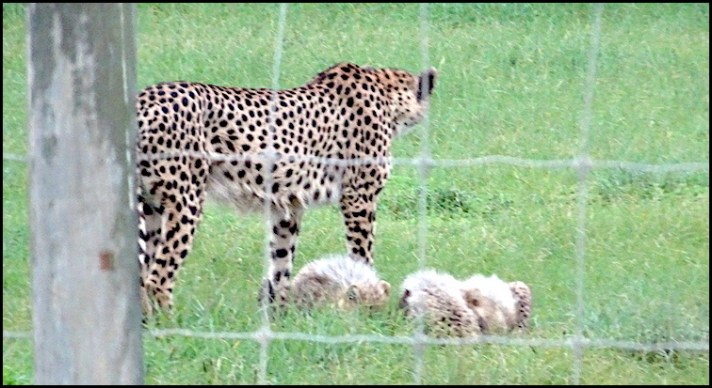
Cheetah with three young cubs
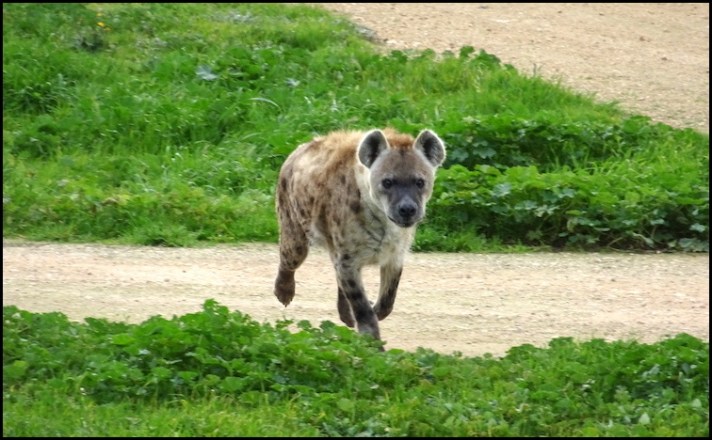
Spotted Hyena
The Spotted Hyaena is found in most African habitats, with an estimated global population of between 27,000 and 47,000. These crafty carnivores live and adapt to a variety of habitats from open grasslands, dry semi-desert, forest areas and the acacia bush.
Although they appear similar to dogs with their rounded head and ears, blunt muzzle and thick, long neck, they’re actually more closely related to cats!
Sadly, hyenas have a very bad press, not least how they were portrayed in Disney’s Lion King.
The species is often portrayed as scavengers, but they are actually very successful hunters and get up to 75% of their food from their own kills. That said, their scavenging cleans up the remnants of rotting carcasses left by other hunters and thereby assists in the reduction of the spread of germs and diseases to other animals and humans.
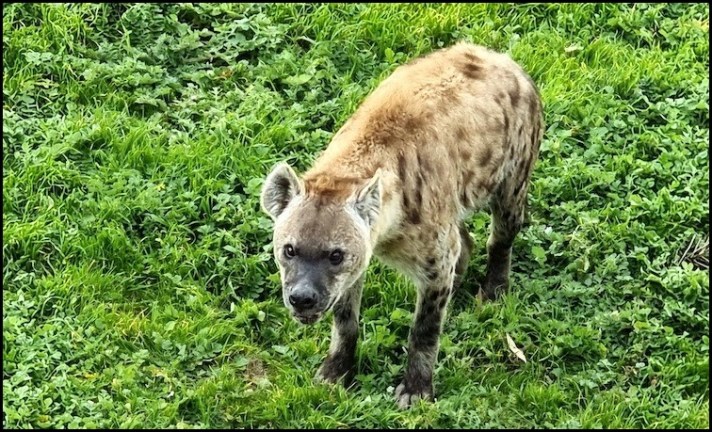
An inquisitive Spotted Hyena
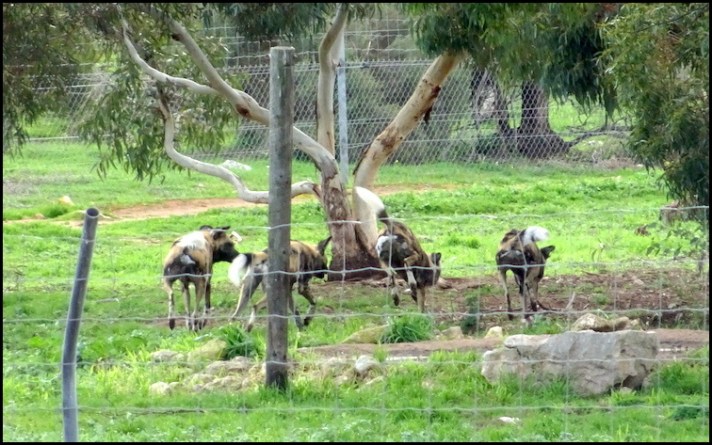
African Painted (Wild) Dogs.
African Wild Dogs roam the savannahs and lightly wooded areas of Africa and are considered to be among the continent’s most endangered species.
They, with an ancestry that can be traced back 40 million years, once roamed through 39 countries with a population of more than 500,000 individuals that thrived through the turn of the twentieth century. Today, their numbers are less than 7,000 and their population is quite fragmented.
Best known for their large, round ears and multi-coloured coat, African Wild Dogs are very social and have a rich, cooperative pack life led by a dominant pair.
They are one of Africa’s most successful predators; hunting in large packs that pursue their prey in a long, open chases. These chases may occur at great speeds of up to 66kph for up to 60 minutes and stretch over great distances. Nearly 80% of all wild dog hunts end in a kill. In comparison, the success rate of lions, often viewed as the ultimate predators, is only 30%.
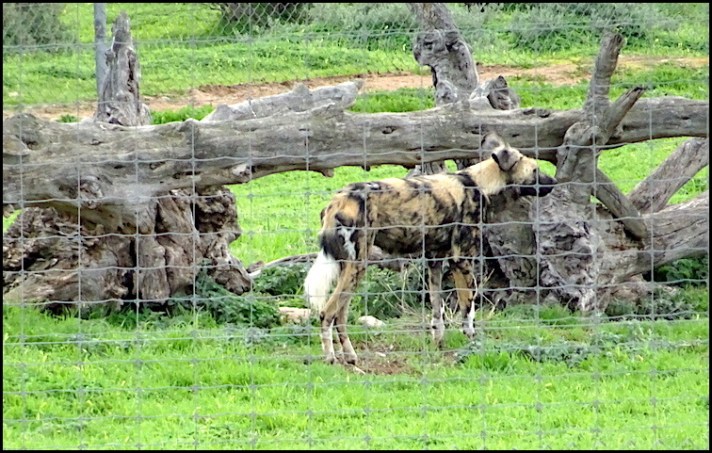
African Painted Dog
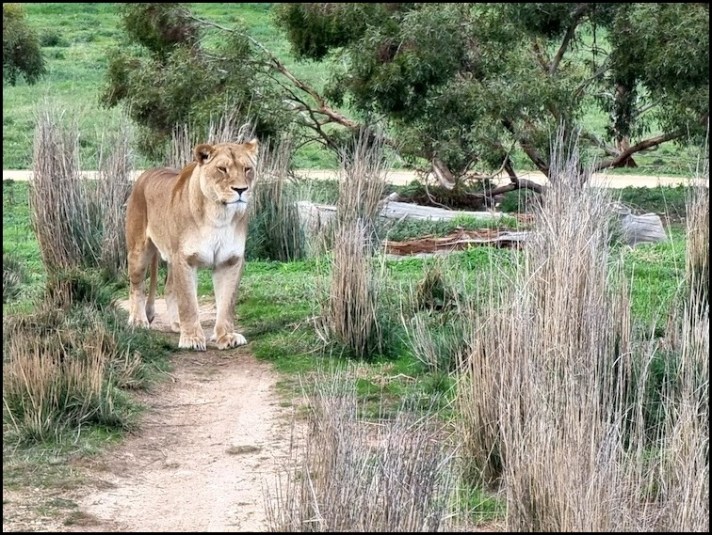
African Lion
African Lions are native to sub-Saharan Africa and live in rich grasslands and light woodlands of eastern Africa to the more arid areas of the Kalahari Desert.
Lions live in large family groups called prides, which usually consists of a dominant male, a dozen females and their offspring. Lionesses share the hunting and babysitting duties, but it’s not all easy going for the boys, who are responsible for protecting the pride and territory.
It is estimated that between 16-30,000 lions exist in the wild. Lions historically roamed throughout Africa, the Middle East and southwest Asia. Today, the population is found in an isolated pocket of India, where the Asiatic Lion is classified as endangered with less than 400 individuals remaining, and sub-Saharan Africa.
Like lion numbers, habitat for lions has declined as human population, land cultivation and numbers of livestock have steadily increased in areas lions call home. Lions are often killed to protect livestock or as retaliation kills for livestock loss.
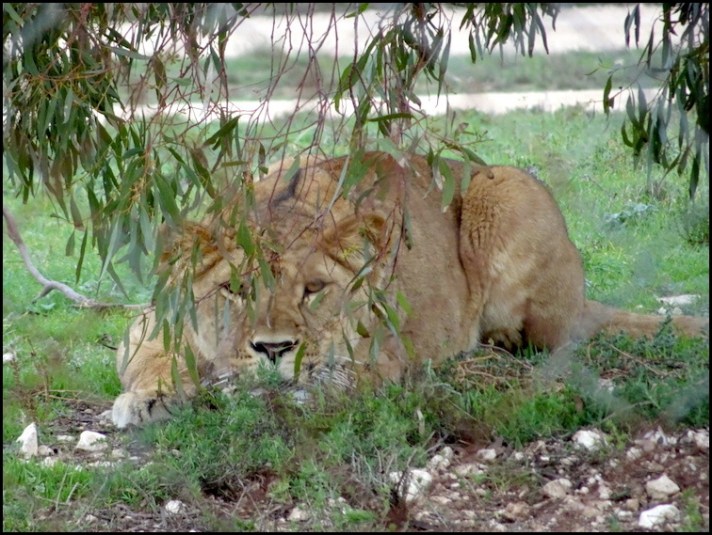
African Lion
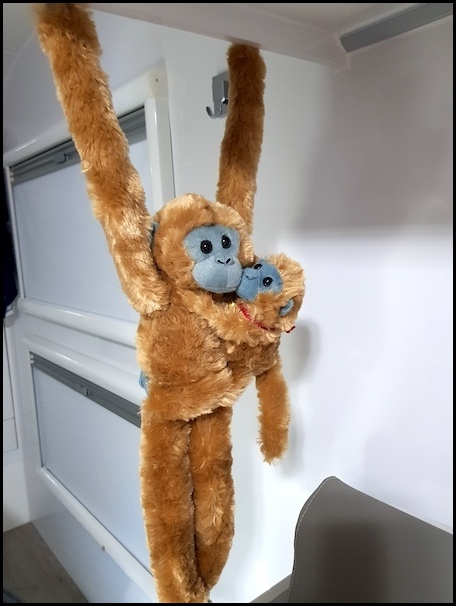
The last enclosure we visited to-day was the gift shop. Here visitors are strongly encouraged to get up close to the exhibits, touch them and buy them.
We could not resist a little something to decorate our caravan.
As per Part 1 of this entry, I would like to credit the Monarto Safari Park website (https://www.monartosafari.com.au/) from which I gleaned much of the detail in this review.
The next review from my Adelaide to Canberra road trip can be found HERE.
Should you wish to follow this road trip from the beginning please start HERE.
 The Rambling Wombat
This is my first time seeing a giraffe eating grass. Normally I saw them devouring tree leaves. Its legs are quite elastic, like a ballet dancer 🙂
LikeLiked by 1 person
Thanks for reading Len. I would not call them ballet dancers… they are very clumsy and cumbersome eating from the ground – otherwise very graceful and beautiful animals.
LikeLiked by 1 person
Slightly awkward 🙂 But its pose reminds me of new ballet dancers streching their legs. Certainly, a graceful animal!
LikeLiked by 1 person
I see where you are coming from 😀
LikeLiked by 1 person
We saw so animals all over Africa. Later we saw these White Rhinos and very photogenic. I love all of these images. Anita
LikeLiked by 1 person
Thanks Anita
LikeLike
Great to see the animals with plenty of space here! My favourites are the giraffes, cheetahs (love the cubs!) and lions 🙂 And I also love your souvenir!
LikeLike
Yes the space is what I love about this park. Seeing the cubs was amazing and i too love the souvenir – goes well in the van.
LikeLiked by 1 person
Good to see you back after a long break. Hope you are doing good. I remember your posts on North Korea.
LikeLike
Thank you so much and I am so pleased you remembered me. I am doing great .. just had a few big things on and needed a break from blogging. I trust you are well too?
LikeLiked by 1 person
I am thanks.
LikeLiked by 1 person