Yesterday evening and this morning, we spent a bit of time just wandering around the rather picturesque and photogenic little town of Sea Lake before visiting the town’s silo artwork and Lake Tyrrell, a pink (salt) lake about a 10-minute drive out of town.
Sea Lake is a small wheat-belt town (2021 popn 619) located south of Lake Tyrrell (the largest lake in Victoria). It is fairly isolated being some 350 kms from Melbourne and 450 kms from Adelaide – yay we are making progress towards Canberra or at least away from Adelaide!
In regards to its rather odd name, some sources claim that the explorer Edward John Eyre gave Lake Tyrrell the name “Sea Lake” because it looked more like the sea than a lake and while the lake was subsequently renamed the town retained the original name of the lake. There is another explanation which argues that a surveyor saw the words “see lake” on a map and mistook them for “sea lake”.
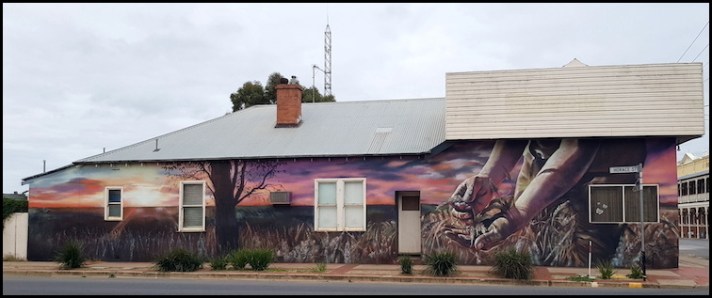
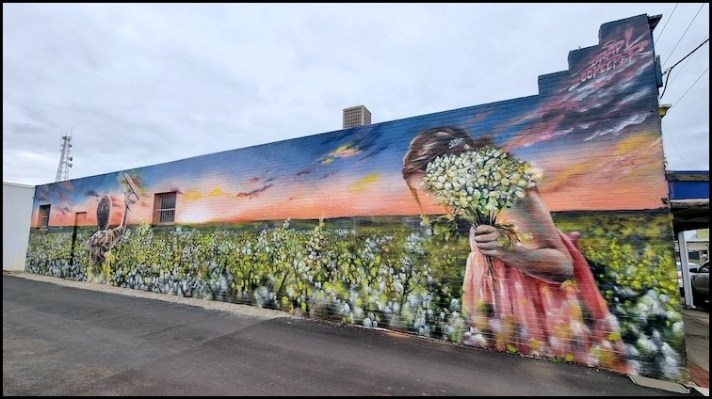
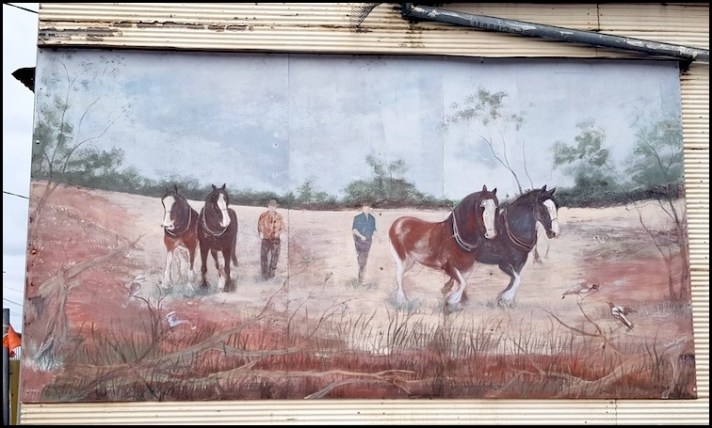
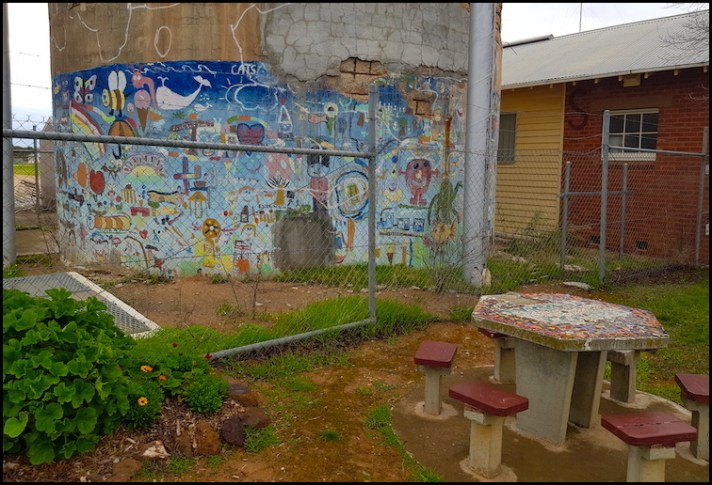
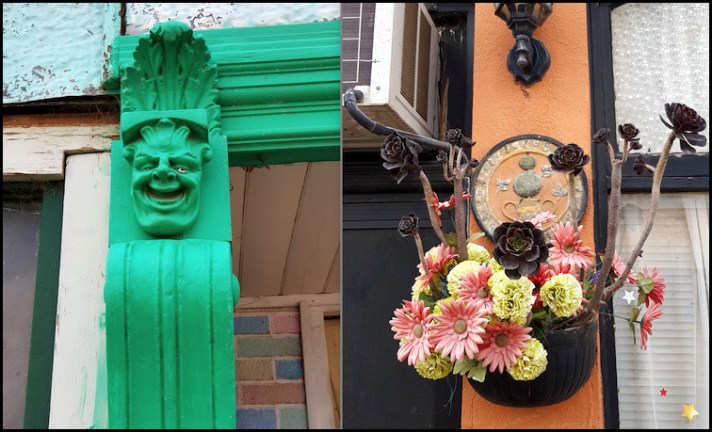
As we wandered around the town we encountered lots of art work, quaint old buildings and a few other items that caught my attention.

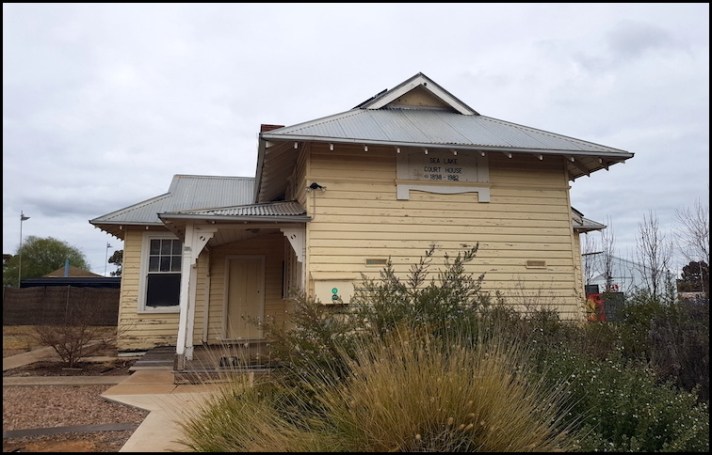
Sea Lake Courthouse 1912-1982
Prior to there being a dedicated court house in Sea Lake, court sittings were initially held in the Baptist Church. They were later moved to the Sea Lake Hall, where roller-skating sessions also took place three nights a week. By raising the rent, the hall committee forced the government into constructing a purpose-built court house. The Sea Lake Court House was constructed in the Federation Arts and Crafts Style in 1911 and opened in 1912. Electricity was not connected until 1918 when it was reported that “the bench and bar were having difficulty deciphering documents during late sittings or on dull days.” (Source: Historic Court Houses of Victoria by Michael Challinger, 2001)

An old garage/fuel station
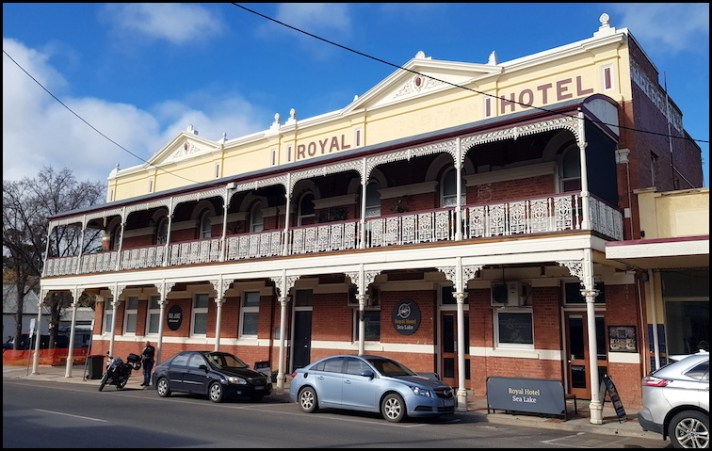
After being purchased by a group of locals, The Royal Hotel Sea Lake has been beautifully restored back to its former glory. We enjoyed dinner in the renovated dining room.
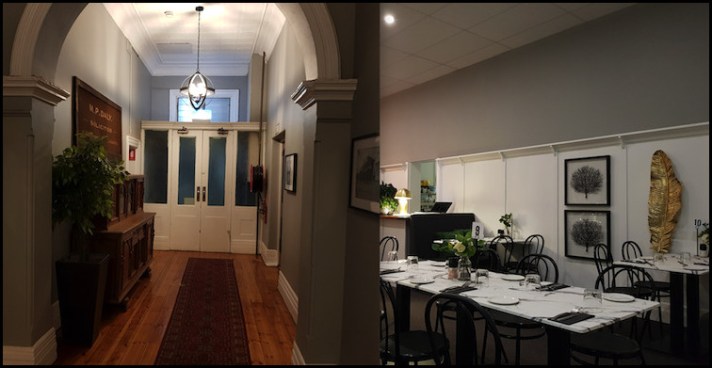
The Royal Hotel’s renovated lobby and dining room

The local RSL (Returned and Services League) building and memorial
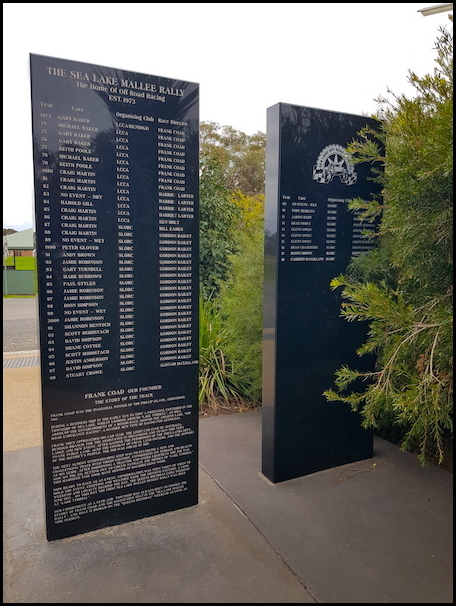
Winners board for the Sea Lake Mallee Rally
The Sea Lake Mallee Rally is the oldest currently running off-road event in Australia. Competitors battle it out over four or five laps of a gruelling 85 kilometre track around Lake Tyrrell, annually during the June long weekend holiday.
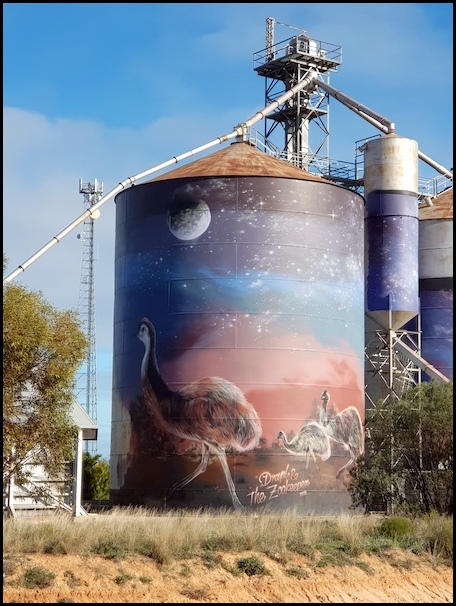
Time for a look at the Sea Lake silo art.

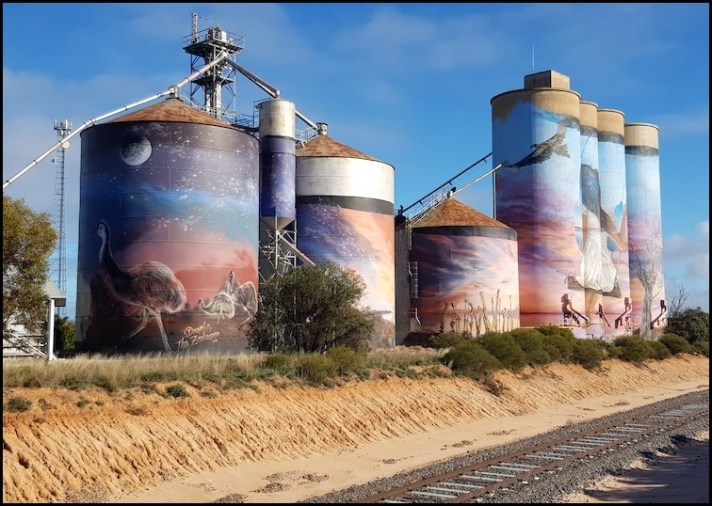
Entitled The Space in Between this work was completed by street artists Joel Fergie, aka The Zookeeper, and Travis Vinson, aka Drapl in October 2019. It pays homage to nearby Lake Tyrrell and the Boorong People (the local Aboriginal mob), with their deep and rich connection to both the night sky and the 120,000 year old salt lake.
The artwork depicts a young girl swinging from a mallee eucalyptus tree gazing out over the endless vista that is Lake Tyrrell. A powerful Wedge Tail Eagle soars above the girl and emus run off into the night.

The wooden sculptural pieces depicted on the silo to the left in the picture above are representations of Boorang ancestors. I understand that wooden sculptures like this have, in the past, been installed on the salt flats of Lake Tyrrell paying homage to Boorang people who roamed these lands. I did’t notice any when we visited the lake but then again it is a massive lake and we visited one small section.

Having seen the young girl on the swing gazing out over Lake Tyrrell it was time for us to gaze over it too though we would do so from specially installed viewing platforms and the bank rather than from a swing.

Lake Tyrrell is the largest lake in Victoria, covering approximately 210 square kilometres (80 square miles).
The 120,000 year old lake was probably formed by drifting sand blocking the passage of Tyrrell Creek. Over time it became a giant salt basin due to the flow of subterranean saline water and the run-off from the lake. It is dry most of the year with a limited timeframe when it in covered in shallow water. In 2023 and at the time of our visit, due to it being a particulalry wet year, there was more water than usual.
The lake is a short drive from Sea Lake and on trying to reach it the first thing we encountered was a viewing platform about 500 metres back from the lake from which we could see practically nothing… what a disappointment!

We soon realised that this stop was just a glorified toilet block with a few information boards and we needed to head on to the next stop at the lake itself. We could drive or walk. As we were driving along I noticed that the walking path actually went out over the lake and looked intestesting so Andy dropped me of about halfway and I walked the remainder of the way to the lakeside carpark.
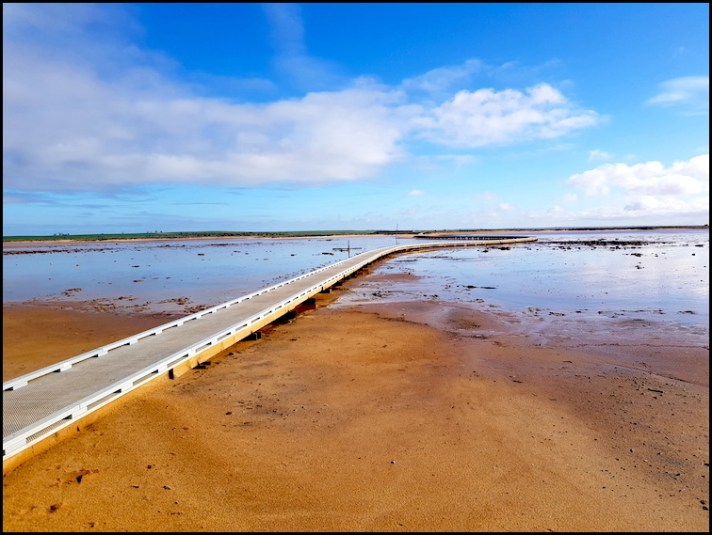
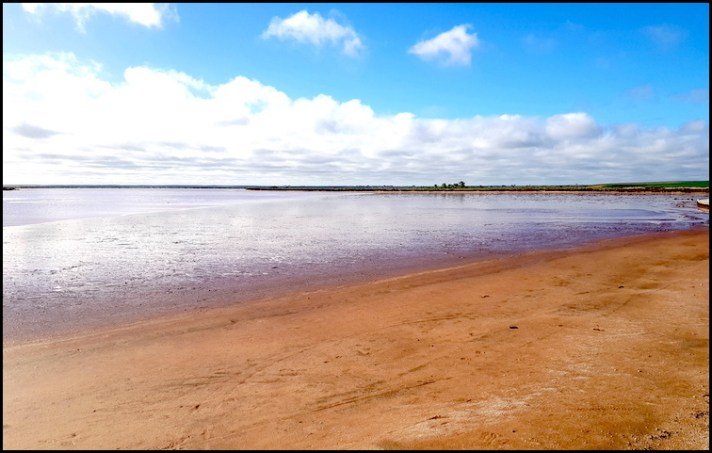
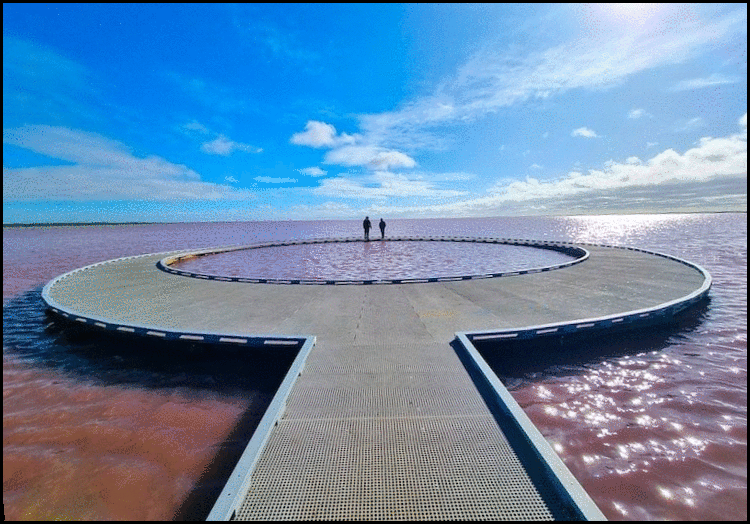
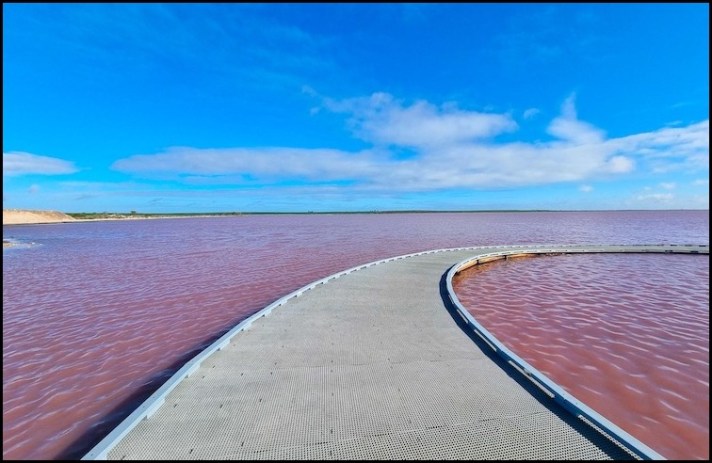
From the carpark we were able to walk out into the main lake by way of a specially constructed view platform which was worthy a visit in its own right. From here we got good views out over the lake and could see its distinctly pink colouring.

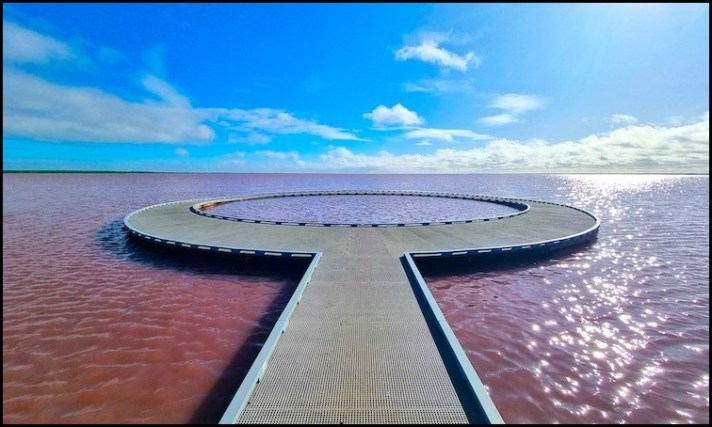
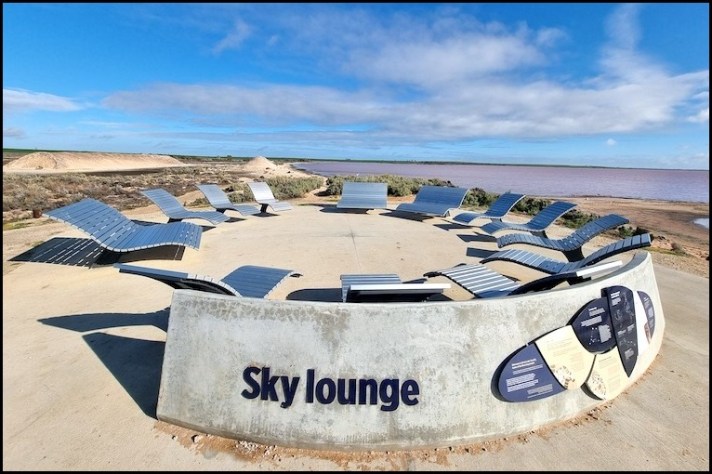
The lake is regarded as one of the best places in Australia for star gazing. Recall how I mentioned earlier the local Aboriginals’ deep and rich connection to the night sky? The Boorong people would use the stars to navigate the seasons, knowing that particular flora and fauna would be available as the constellations above changed throughout the year. Today’s star gazing visitors are afforded special lounges on which they can lie to watch the night skies. When I first saw them I wondered why a circle of sun lounges were made available. As night-time temperatures were around zero degrees centigrade when we visited we did not return for a night viewing.
Alas, the wind was a little too strong to risk putting up the drone which was a shame as I would like to have seen further down the lake though knowing that the drone’s range would not have got it anywhere near the salt harvesting area at the northern end of the lake.
When the water evaporates from these salt lakes it leaves a salt crust – more detail in an earlier review on the Pink Lakes area in the Murray-Sunset National Park. Formal harvesting of this salt crust, from Lake Tyrrell, commenced in 1896 when Henry Berry (a Melbourne salt merchant) acquired the first commercial lease to extract salt from the lake. Commercial harvesting continues to this day with the lake being prized for its extremely high salt content, much desired purity and ease of access for harvesting.
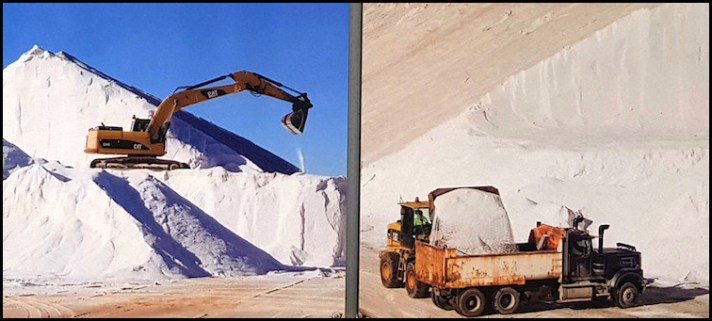
Moving salt at the northern end of the lake – picture credit Cheetham Salt Works
In 1963-64 Cheetham Salt Works took up a number of leases on Lake Tyrrell and today around 160,000 tons of salt is extracted from Lake Tyrrell by the company each year. Cheetham Salt Works is Australia’s largest producer of salt products with the Lake Tyrrell site supplying a range of market segments including industrial chemical manufacturers and hide salt treatment, animal feed and pet food segments, and salt for swimming pools.
In earlier times some harvesting did occur at the southern end of the lake, as evidenced by a scattering of abandoned equipment and a couple of old salt stock piles.

A couple of abandoned stock piles of salt at the southern end of Lake Tyrrell
All this looking at salt worked up quite a thirst, so there was nothing for it other than to return to Sea Lake and the Royal Hotel for a beer, after which we had a delicious dinner before retiring for another day.
The next review from my Adelaide to Canberra road trip can be found HERE.
Should you wish to follow this road trip from the beginning please start HERE.
 The Rambling Wombat
Thanks for sharing this blog. It takes me back to the day as a little girl with my dad who was a train driver and had to do 6 months in the bush in those days. SO I started school at Ultima for 6 months & dad and I would fish at Sea Lake. So cheers for this.
LikeLiked by 1 person
Thank you. Did you see my entries on Sea Lake? It’s a lovely little town.
LikeLike
I did see them. I so love all of this. You always write fantastic inviting pieces and I was 5 when I was there. LOL Just looked up if the primary school in Ultima was still open – 3 children!! Many thanks & please keep writing.
LikeLiked by 1 person
Stunning photography and yes I agree with Sarah regarding the silo art plus the first image. Nothing quite like a Aussie roadtrip and we have completed a few to appreciate the kms that is required to get from one place to another.
LikeLiked by 1 person
Thank you Suzanne.. a road trip really is the best way to appreciate Australia ( outside the main cities) but given the distances and time involved meaningful trips are off limits for most travellers. Thankfully I now have the time and am loving travelling around the country, slowly.
LikeLiked by 1 person
I have known a few people take a year or more to circumnavigate Australia. Well worth the time. Enjoy your travels.
LikeLiked by 1 person
We call it ‘doing the lap’. While we will cover the same ground and more, as we do not travel full time, we will do it in numerous trips as opposed to a continuous loop.
LikeLiked by 1 person
That silo art is stunning, the best you’ve shared so far! And the lake views are beautiful 🙂
LikeLiked by 1 person
Thank you Sarah. I really liked this one too and for me it comes in second to one depicting a train which I saw last year and which I will share at some point.
LikeLiked by 1 person
I look forward to seeing it!
LikeLiked by 1 person